



Precision thermal control design for on-board reference cavity in laser frequency pre-stabilization for gravitational wave detection
-
摘要:
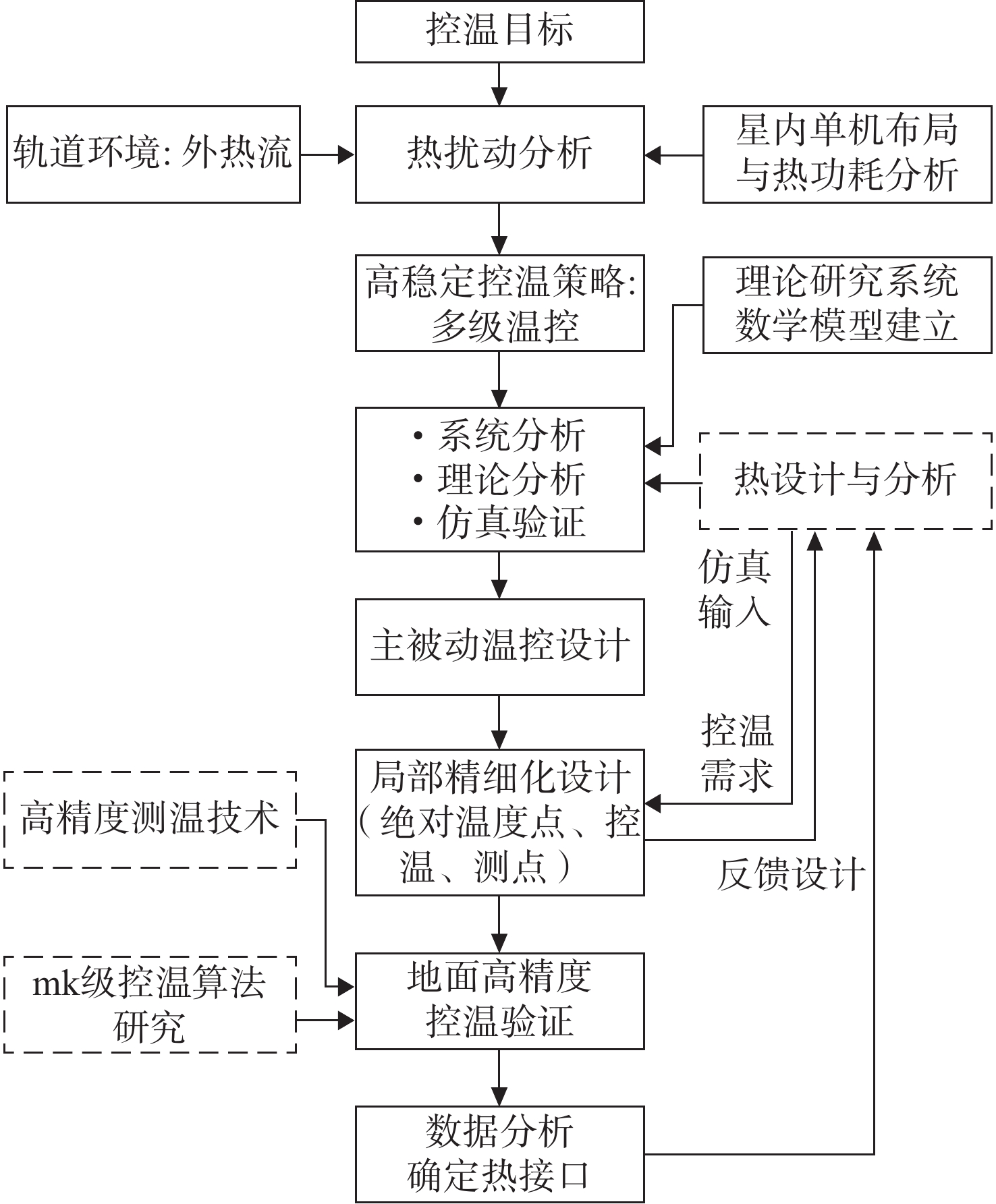
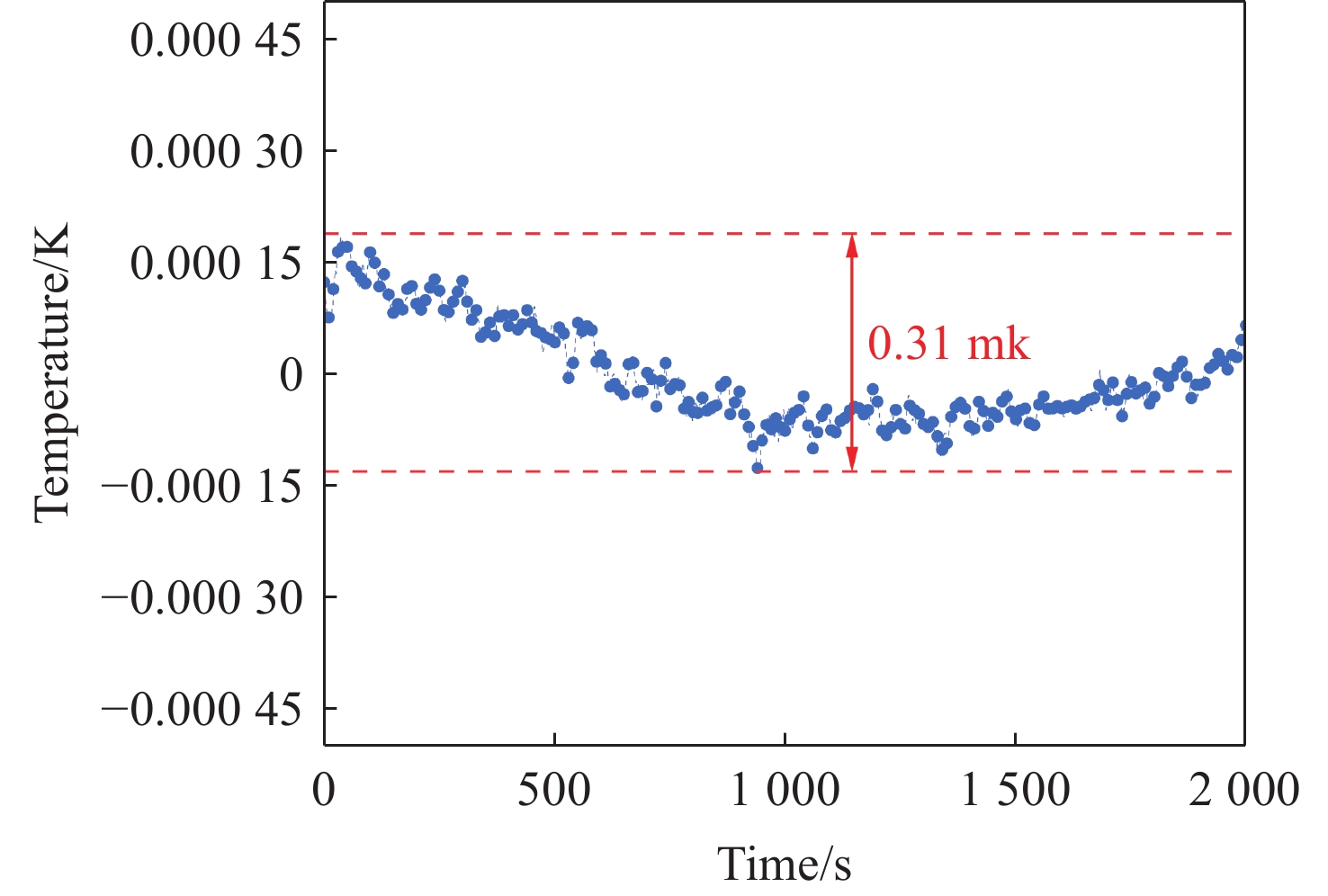
空间引力波探测任务要求星载激光具备极低的频率噪声,为此需通过激光稳频系统将自由运转激光的频率噪声(尤其是低频成分)抑制约5个数量级,达到低于30 Hz/√Hz(1 mHz~1 Hz)。这一指标对激光稳频系统的核心部件——参考腔单元的温度稳定性提出了严苛要求,须在其零膨胀温度点附近实现精密热控。本文针对星载激光稳频系统工程样机的精密热控需求,特别是参考腔单元的严苛热控需求,提出了一种“主动恒温+被动隔热”的级联精密热控方案,并完成了地面实施与验证。该方案通过构建“恒温笼”式一级主动恒温屏蔽层,耦合二级被动隔热层实现两级控温,将参考腔真空室的温度波动抑制在1 mK以下,保障光学参考腔的腔长稳定。文章详细阐述了热控总体设计、系统仿真、精细热控实施方案及地面等效验证结果。验证结果表明,在模拟星内±1 K环境扰动的条件下,设计的精密热控方案可以实现参考腔单元温度稳定在设定值,控温精度优于0.31 mK,且持续时间超过2000 s,满足空间引力波探测对星载激光稳频的精密热控指标要求,为后续工程研制提供了关键技术支撑。
Abstract:Space-based gravitational wave detection missions require the on-board laser to exhibit extremely low frequency noise. To meet this requirement, the frequency noise of a free-running laser, especially its low-frequency components, must be suppressed by approximately five orders of magnitude through a laser frequency pre-stabilization system, achieving a level below 30 Hz/√Hz (1 mHz–1 Hz). This stringent specification imposes a demanding requirement on the temperature stability of the reference cavity module—the core component of the laser frequency pre-stabilization system—which must achieve precision thermal control near its coefficient of thermal expansion (CTE) null point. In this paper, we focus on the precision thermal control requirements of the engineering prototype of a on-board frequency pre-stabilization system, and specifically on its reference cavity module. A cascaded precision thermal control scheme combining a two-stage thermal control architecture is designed and verified on the ground. This scheme employs an constant temperature cage as the first-stage active temperature-stabilized shield, coupled with a second-stage passive thermal isolation layer to implement two-stage control, suppressing the temperature fluctuation of the reference cavity vacuum chamber to below 1 mK, ensure the length stability of the optical reference cavity. The overall thermal control design, system simulation, detailed thermal control implementation, and the experimental results of equivalent ground verification are elaborated. The experimental results demonstrate that under a simulated on-board environmental disturbance of ±1 K, the designed precision thermal control scheme can maintain the reference cavity module temperature stably at the target set-point with a temperature stability better than 0.3 mK for a duration exceeding 2000 s. This performance satisfies the precision thermal control requirements of on-board frequency pre-stabilization system for space-based gravitational wave detection, providing key technical support for subsequent engineering development.
-
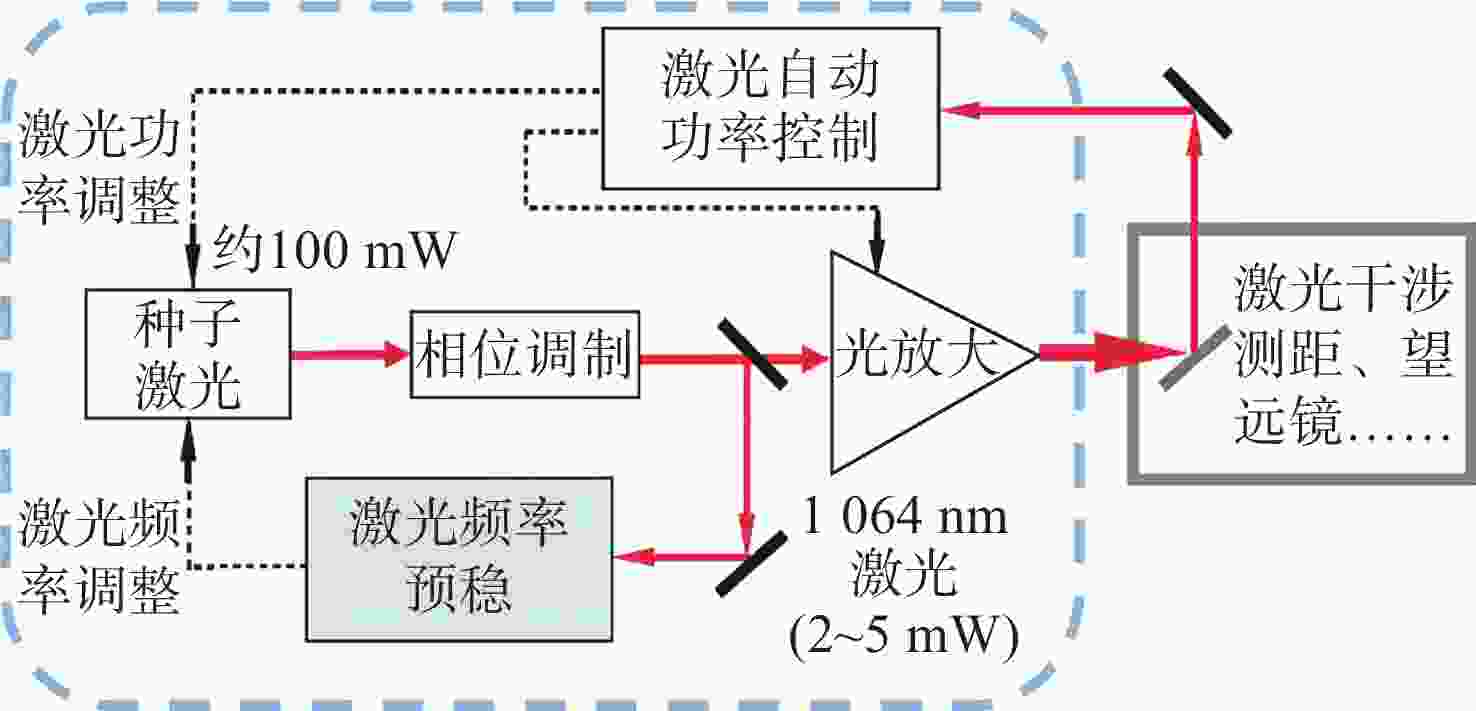
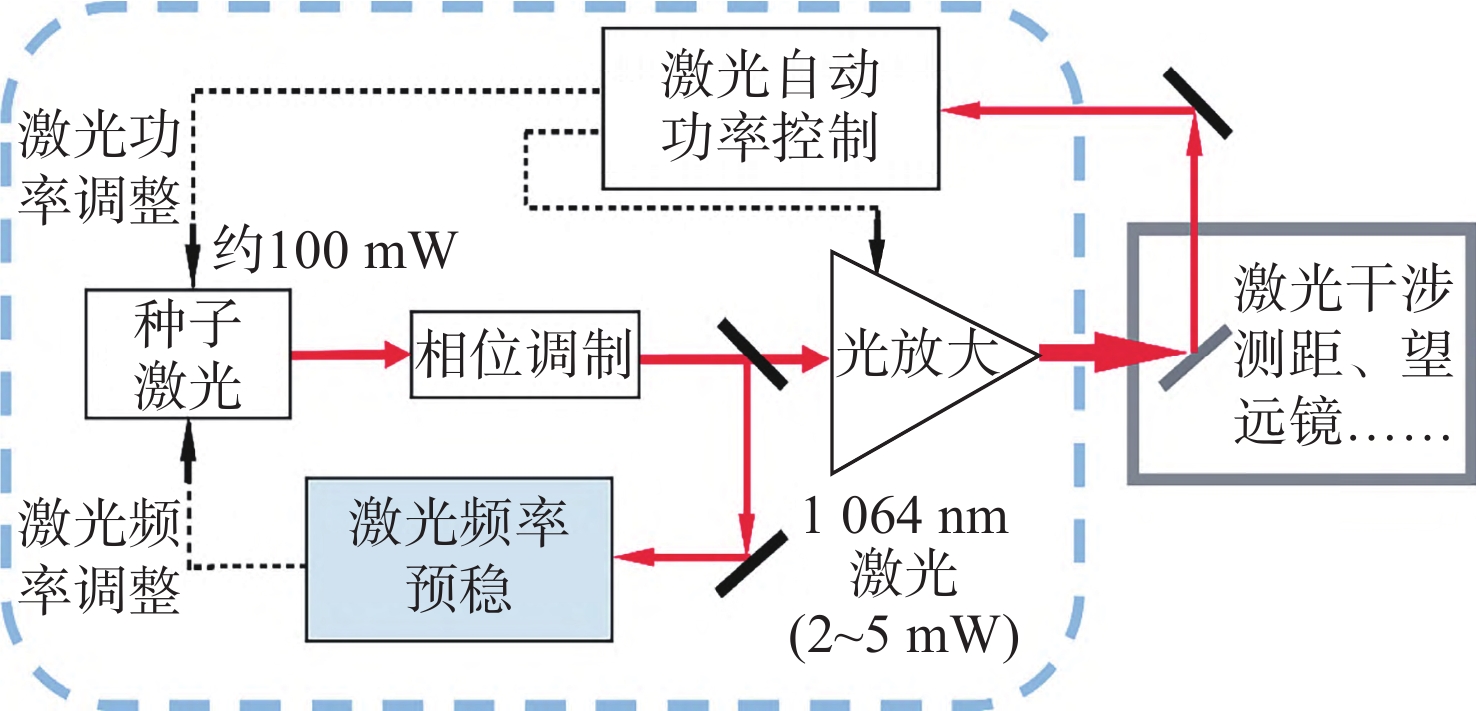
图 1 星载稳频激光系统的基本构成
Figure 1. Basic composition of the on-board frequency-stabilized laser
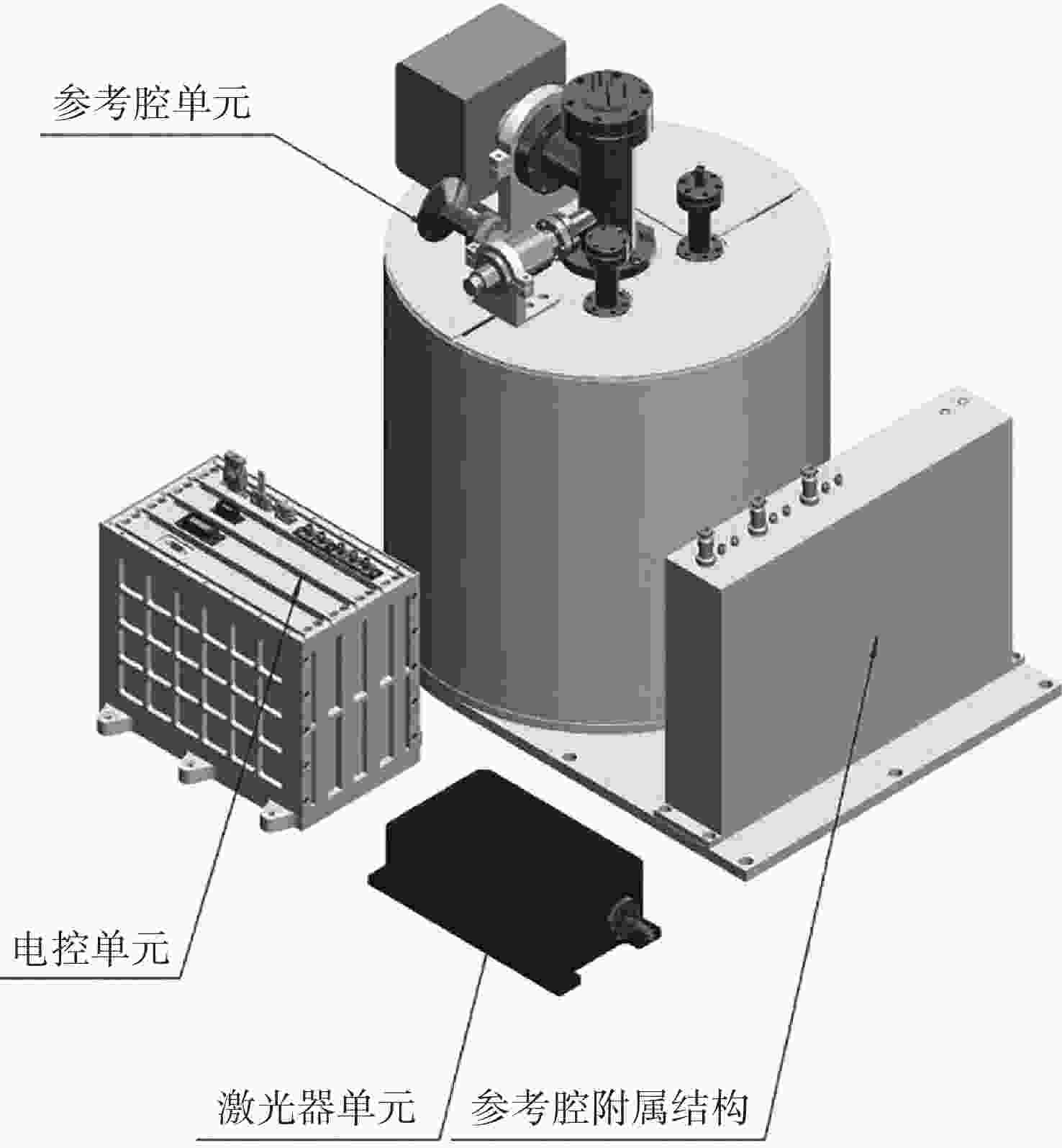
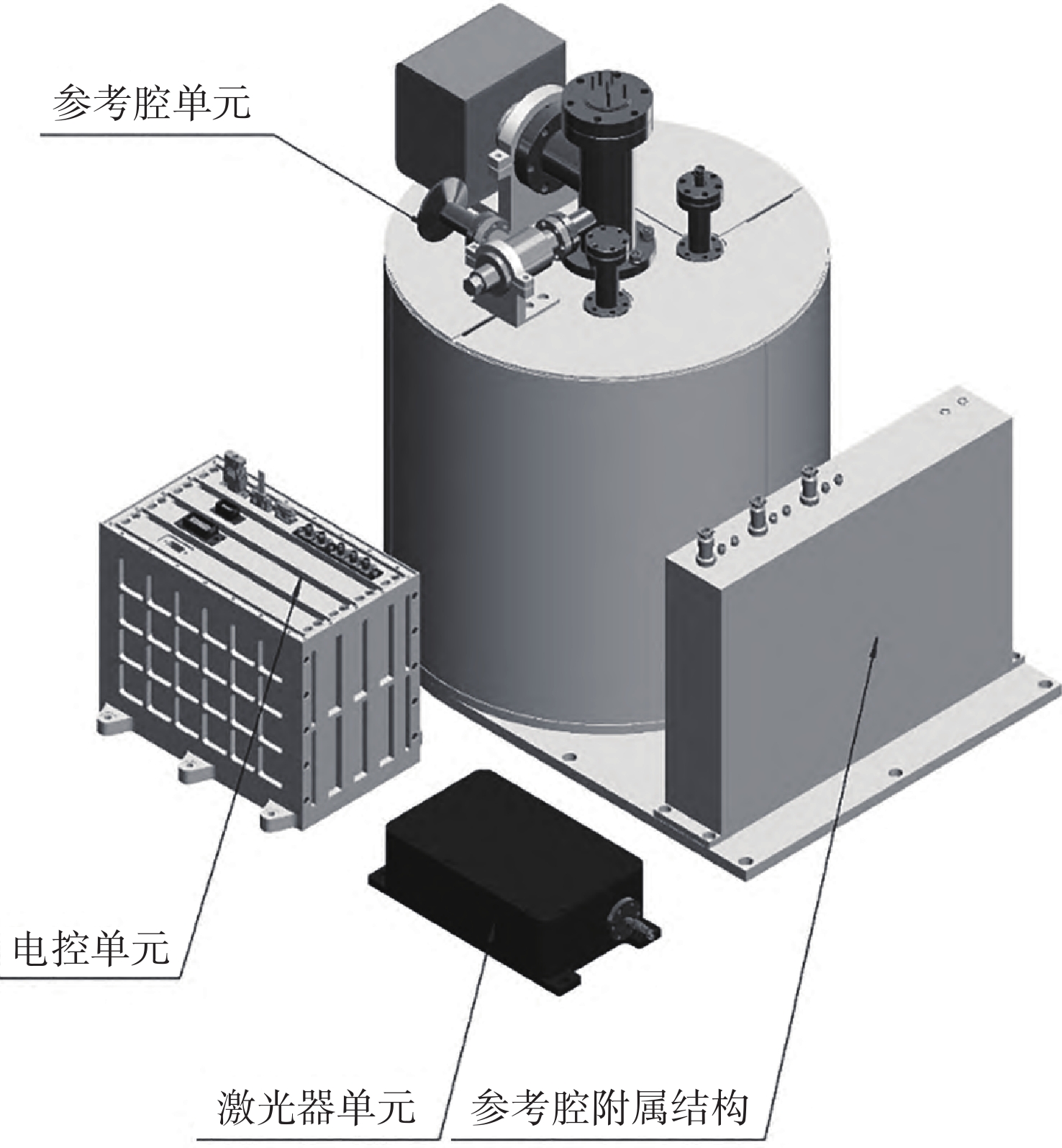
图 2 星载激光稳频系统工程样机的主要组成
Figure 2. Main components of the on-board laser frequency pre-stabilization system engineering prototype
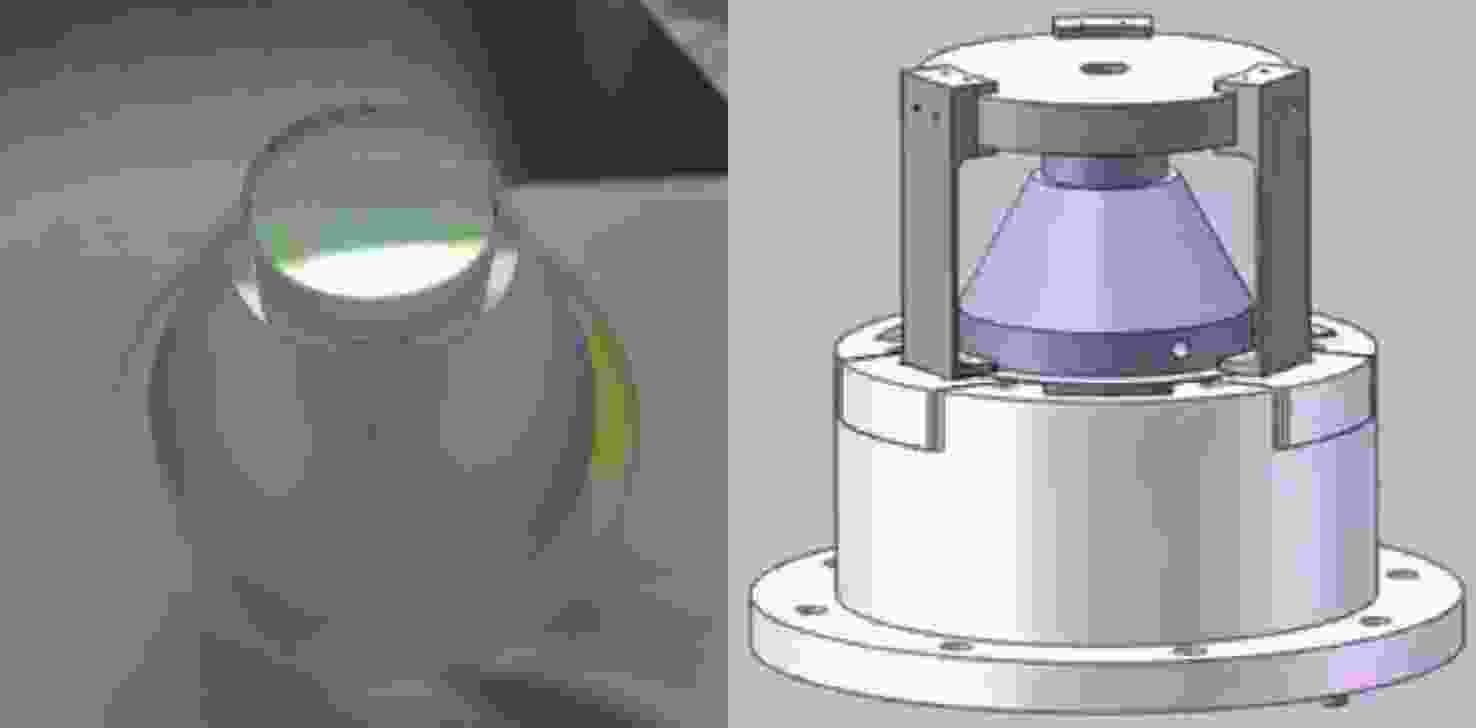
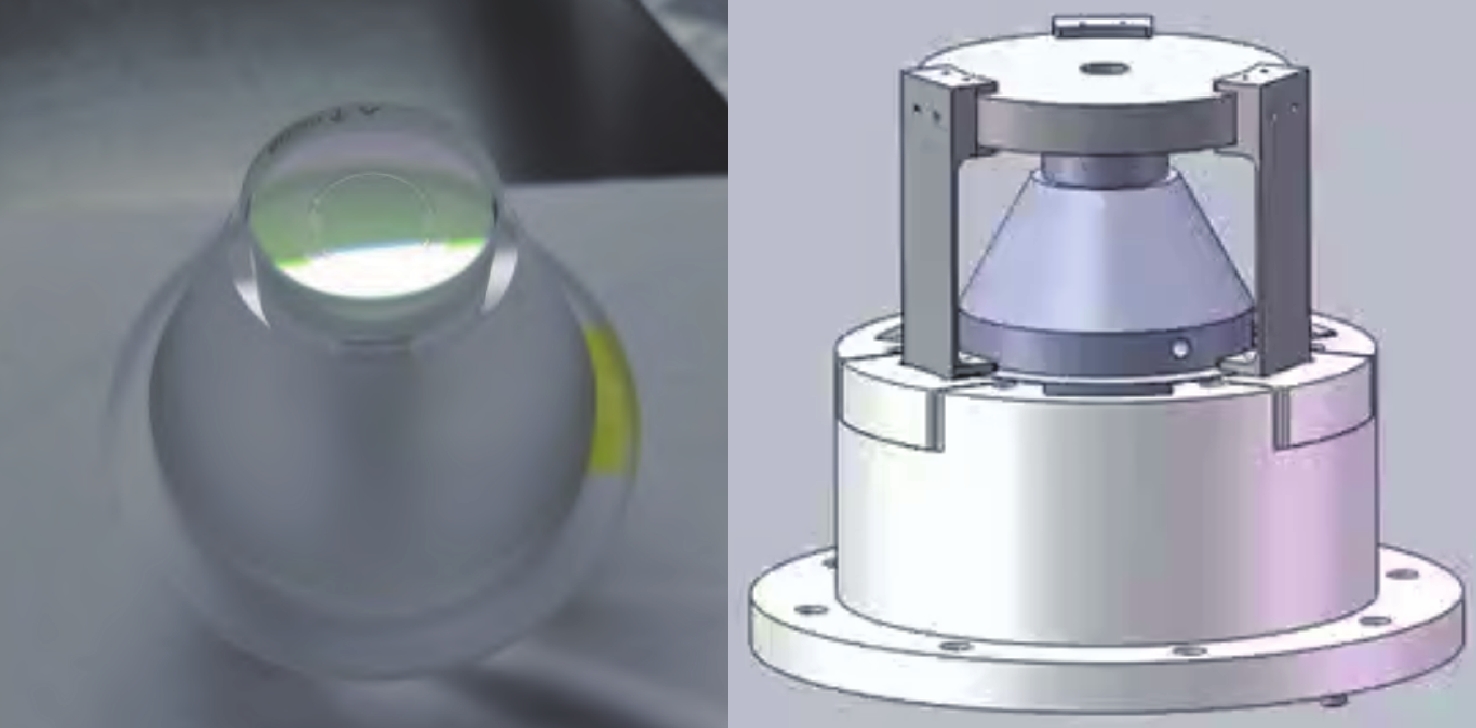
图 3 光学参考腔及参考腔真空室示意图
Figure 3. Schematic diagram of the optical reference cavity and its vacuum chamber
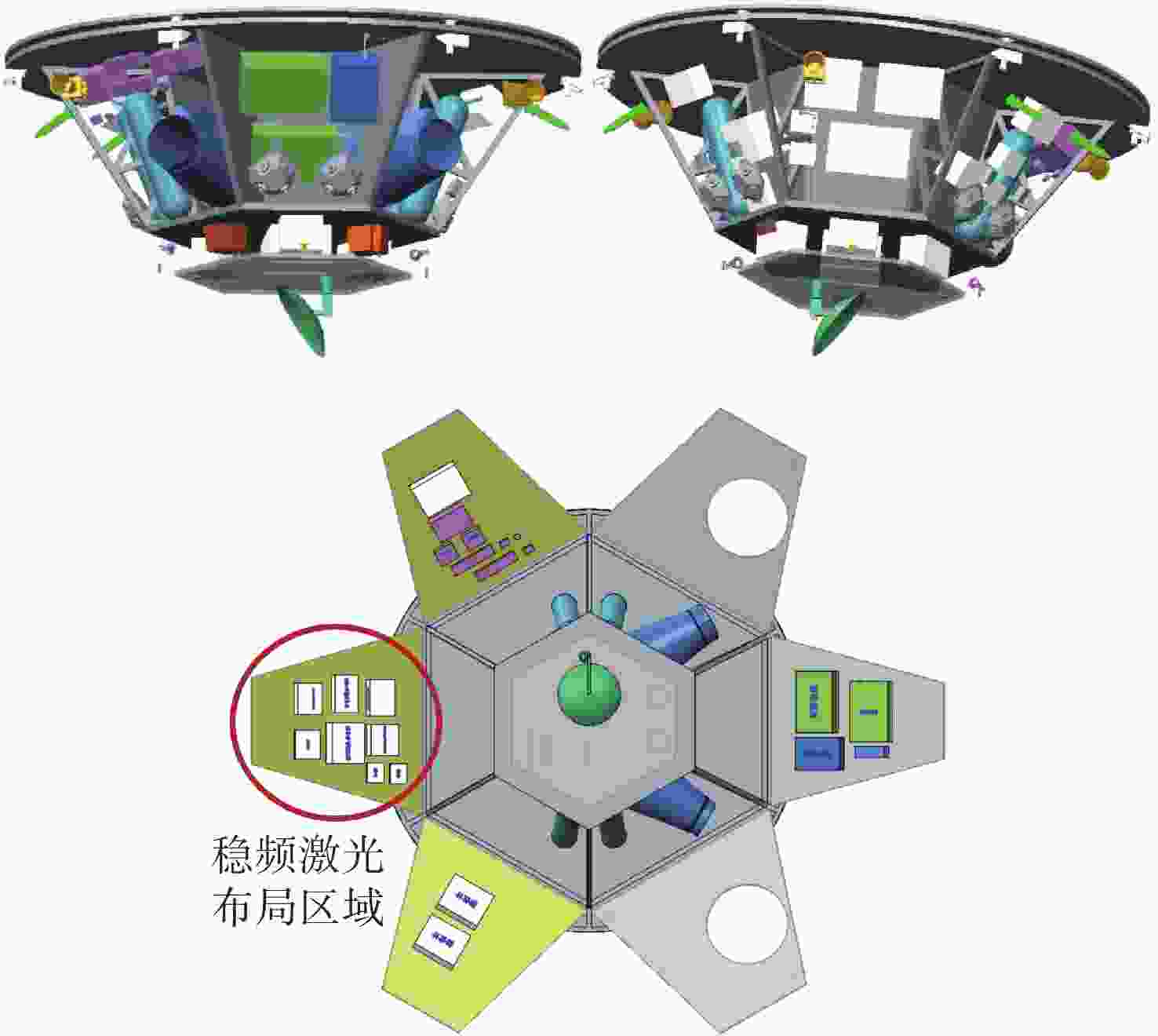
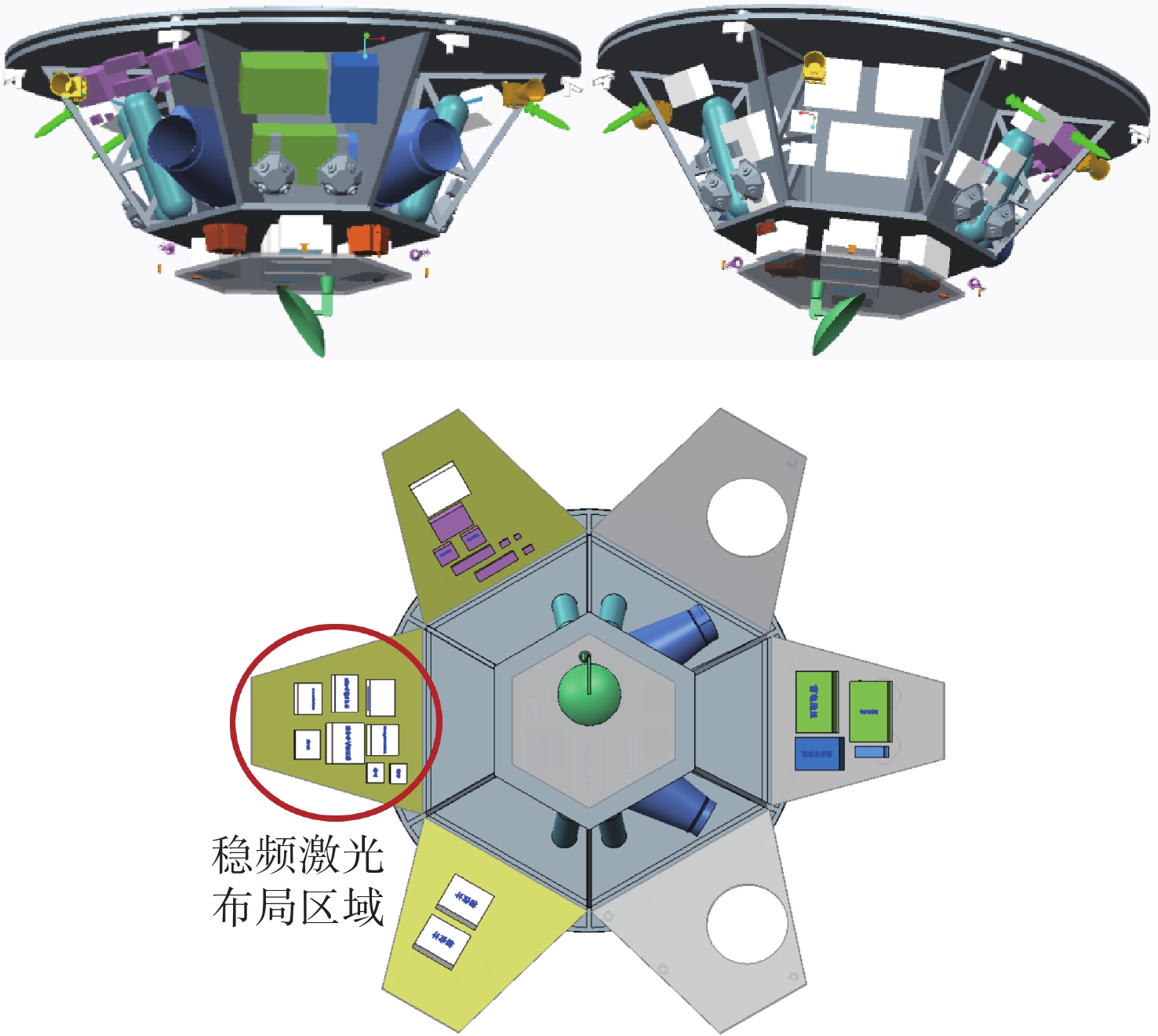
图 5 引力波卫星科学舱(上图)及激光稳频系统(下图)的初步布局示意
Figure 5. Schematic layout of the science module of the gravitational wave spacecraft (above figure) and the laser frequency pre-stabilization system (below figure)
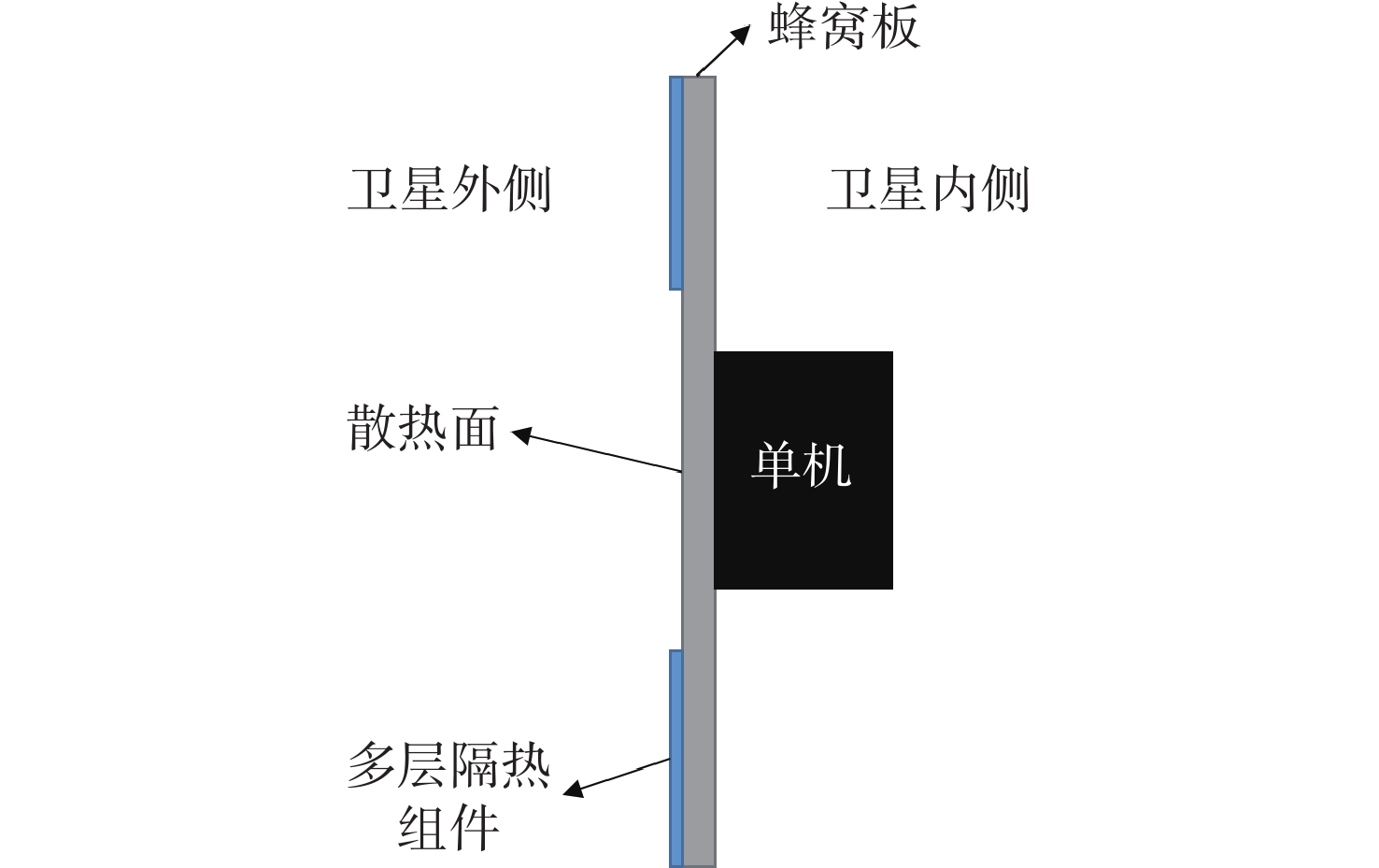
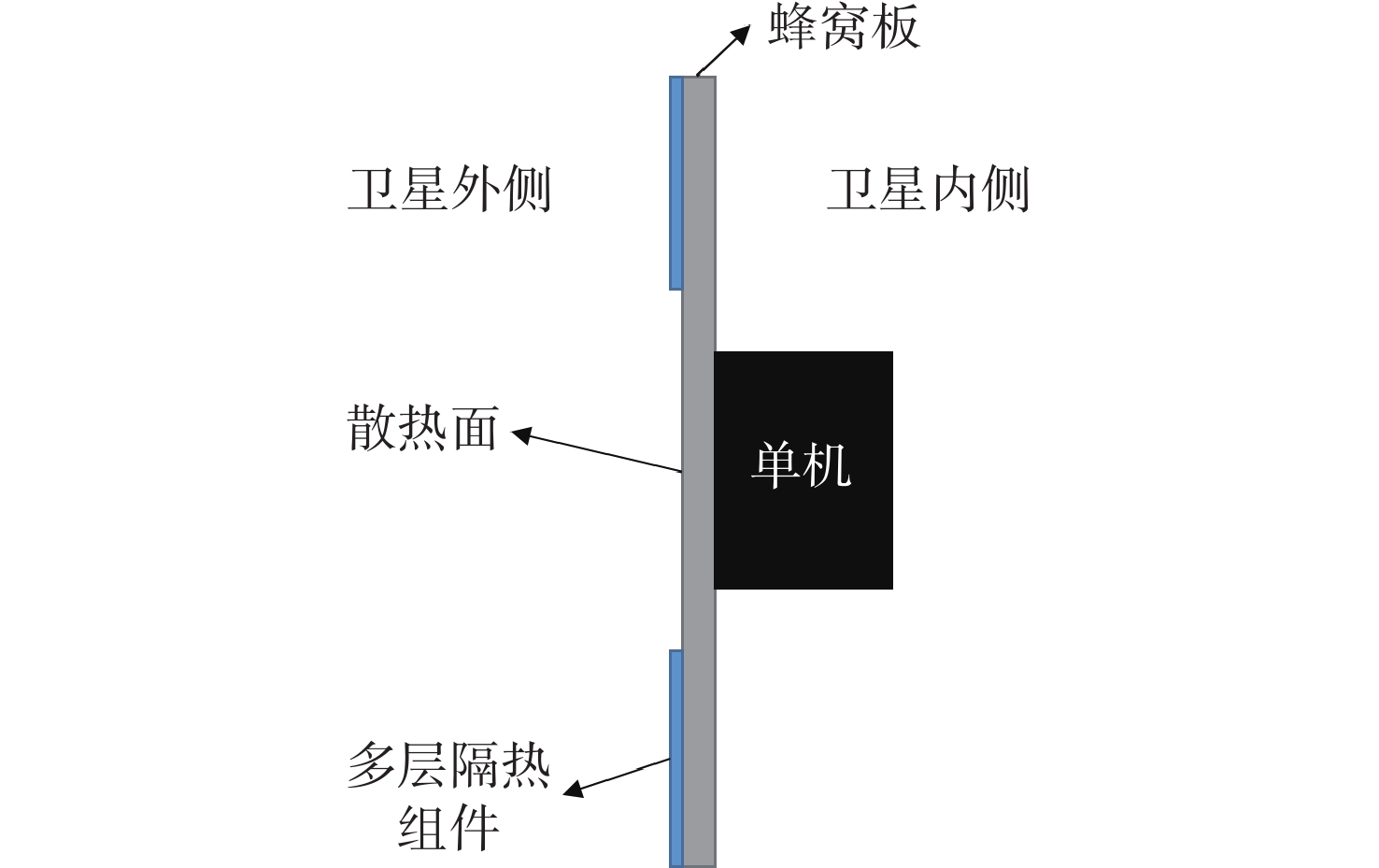
图 6 激光稳频系统单机(除参考腔单元)热控设计示意
Figure 6. Schematic of the thermal control design for the components (excluding reference cavity)
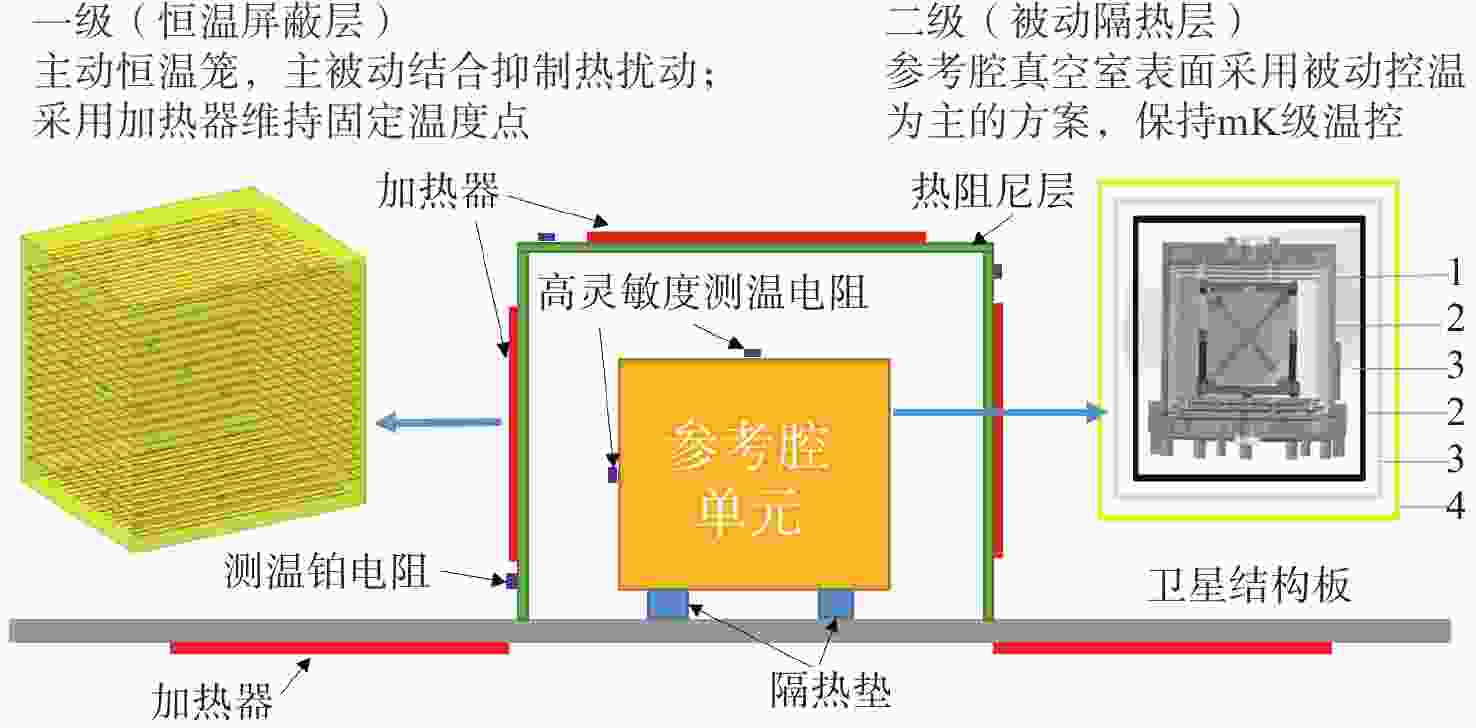
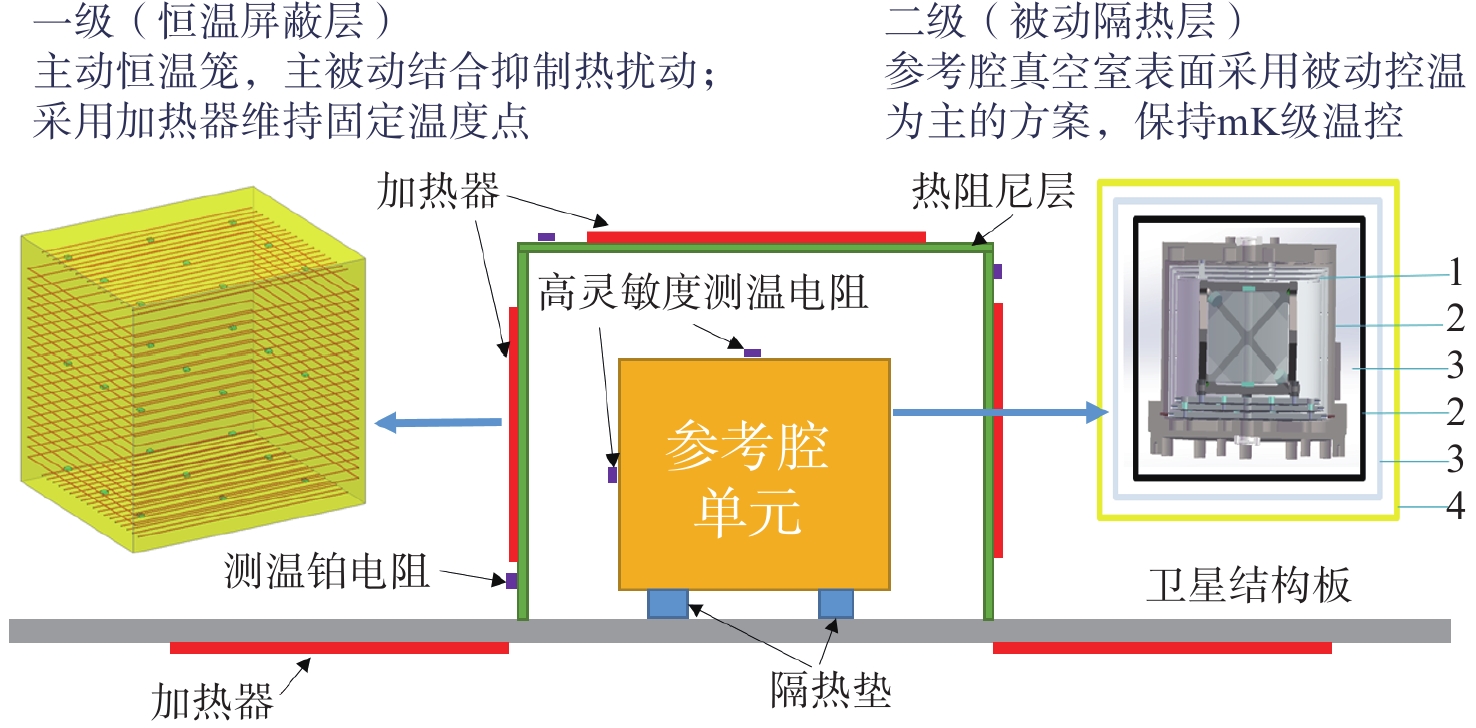
图 7 主动恒温+被动隔热两级热控架构示意图
Figure 7. Schematic of the two-stage thermal control architecture combining active temperature stabilization and passive thermal isolation
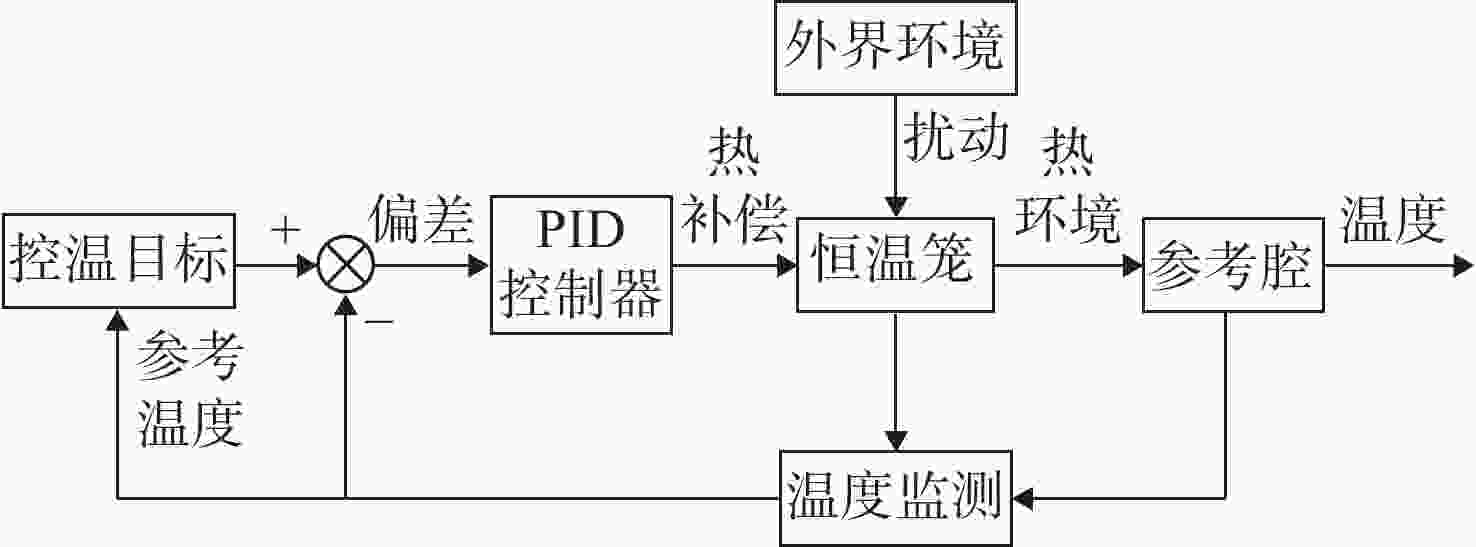
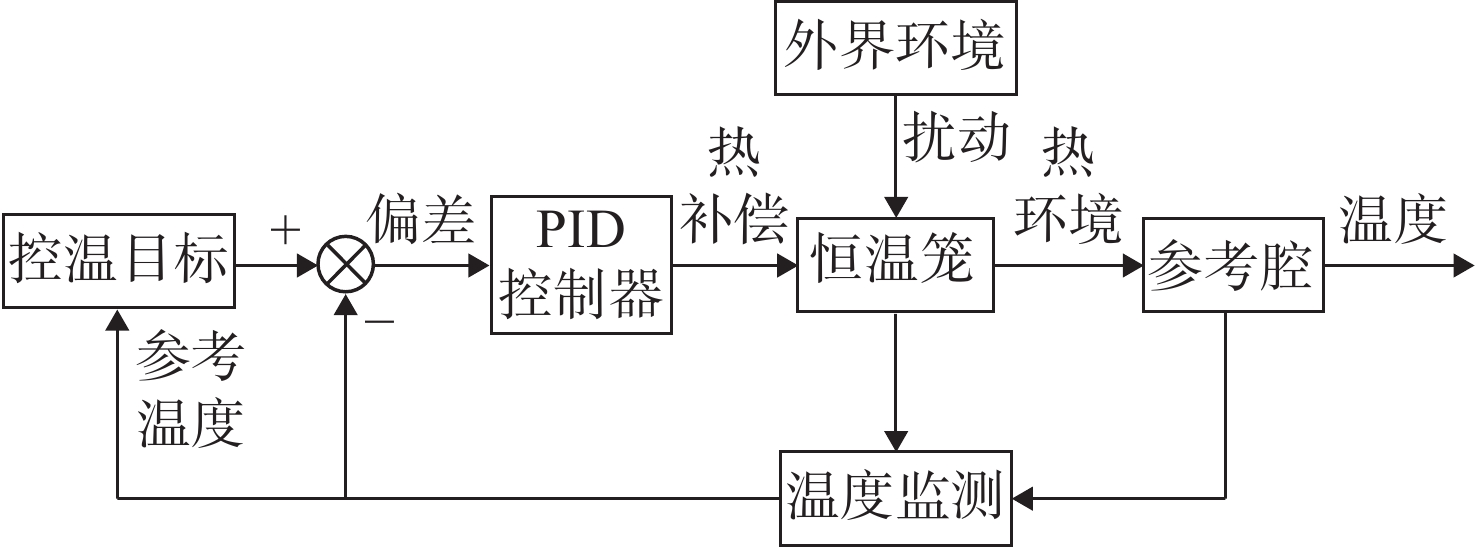
图 8 参考腔单元-恒温笼-环境系统控制模型
Figure 8. Reference cavity-actively stabilized thermal cage-environment system control model
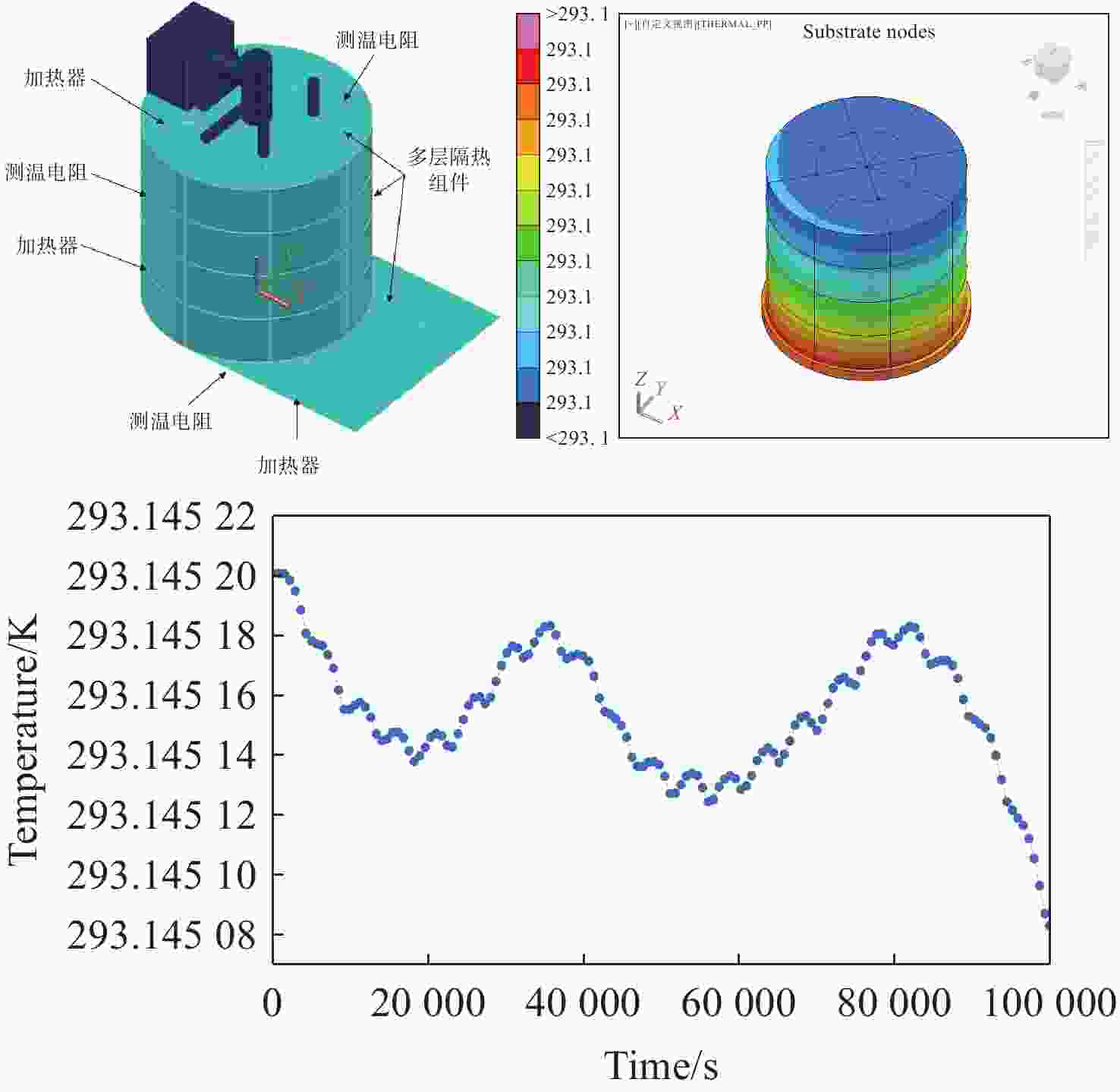
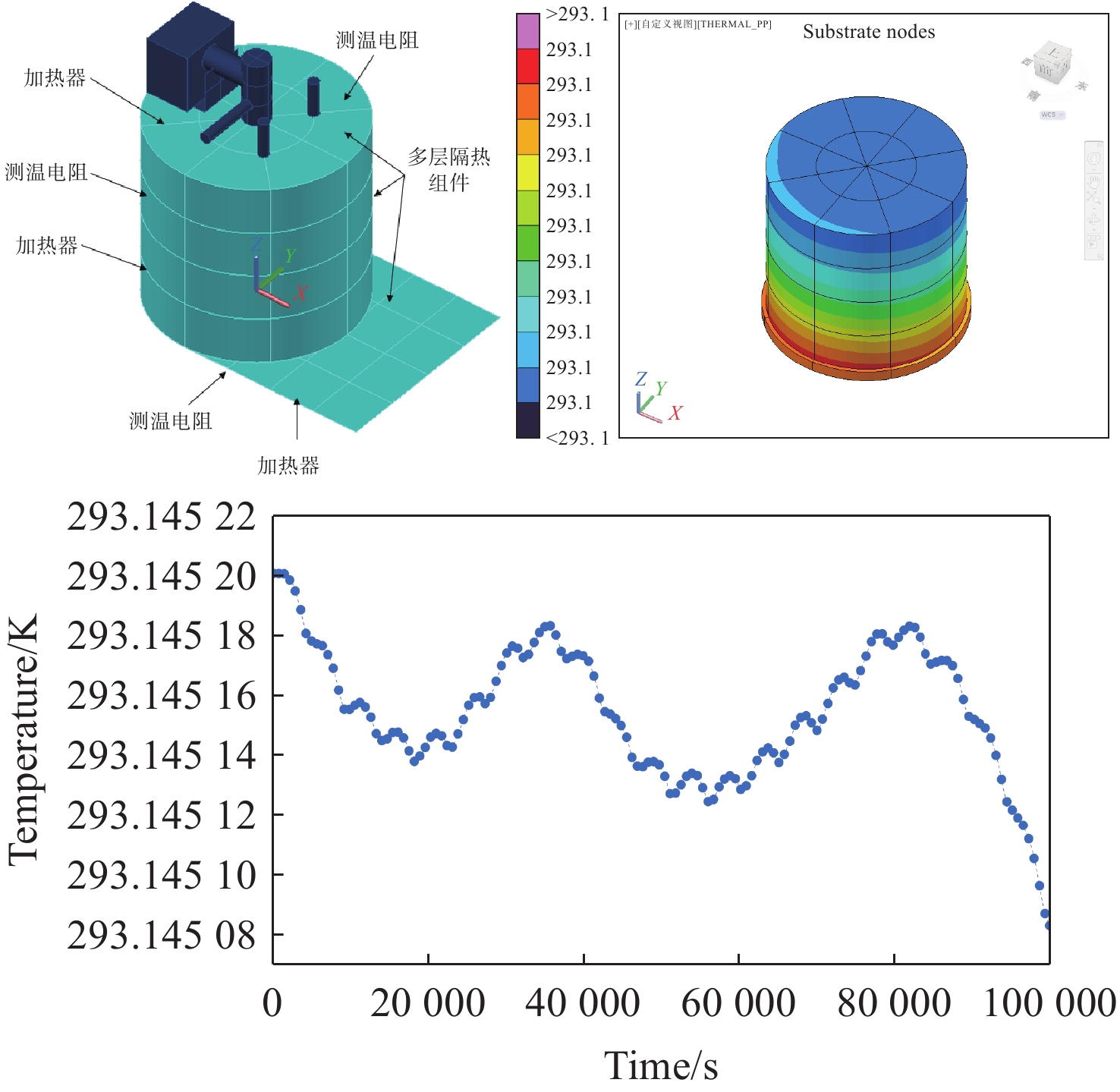
图 9 仿真模型及参考腔温度曲线
Figure 9. Simulation model and temperature cavity of the reference cavity
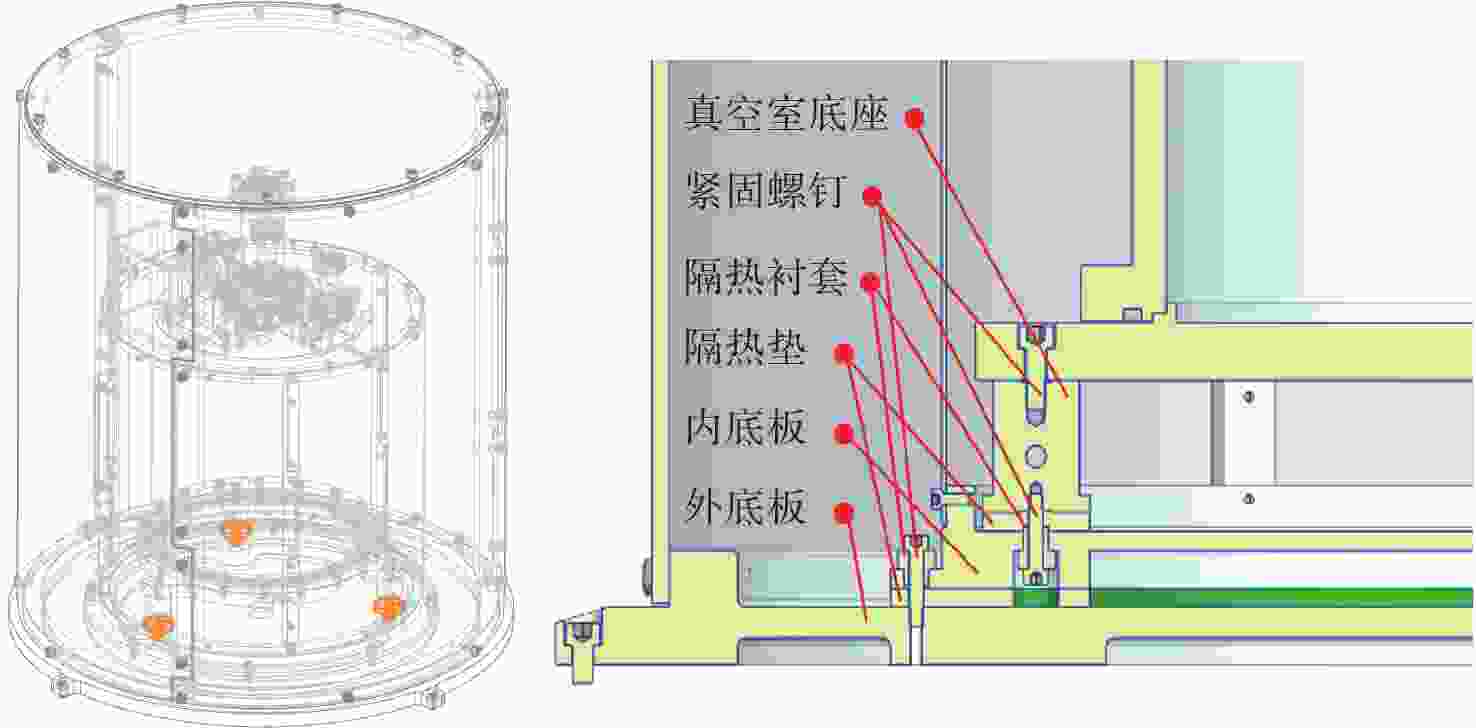
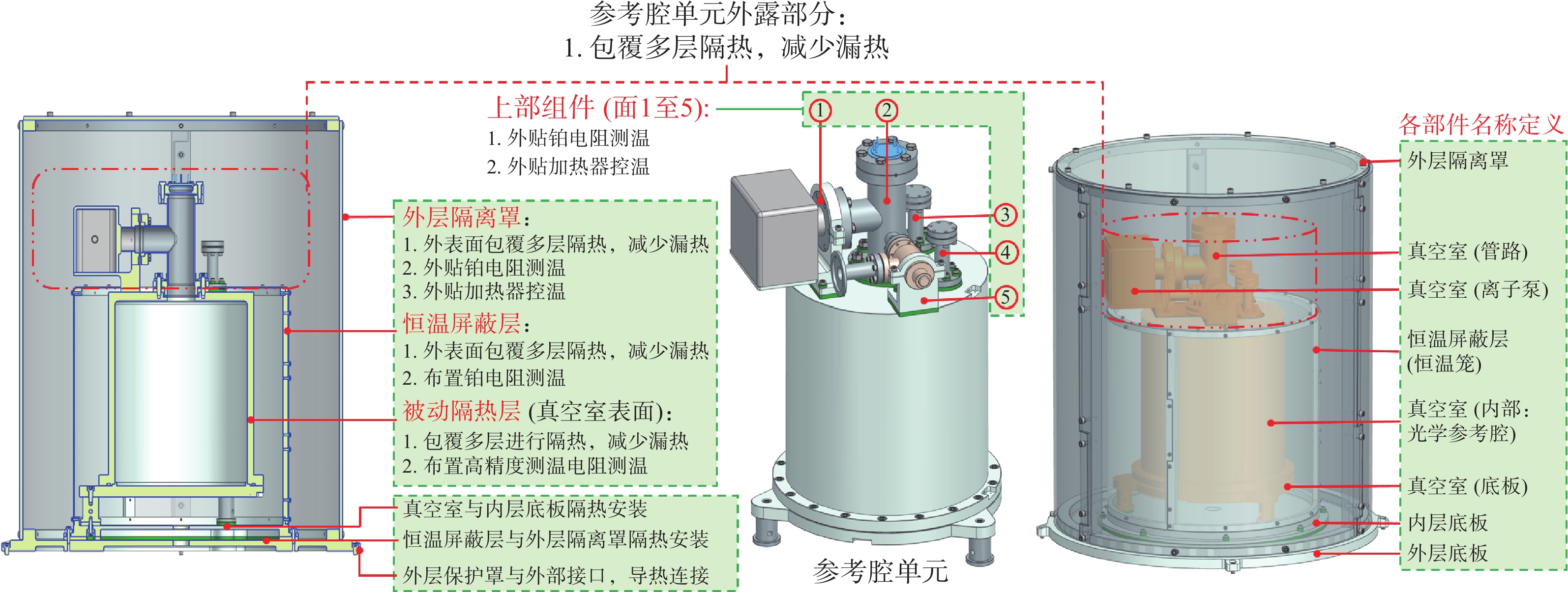
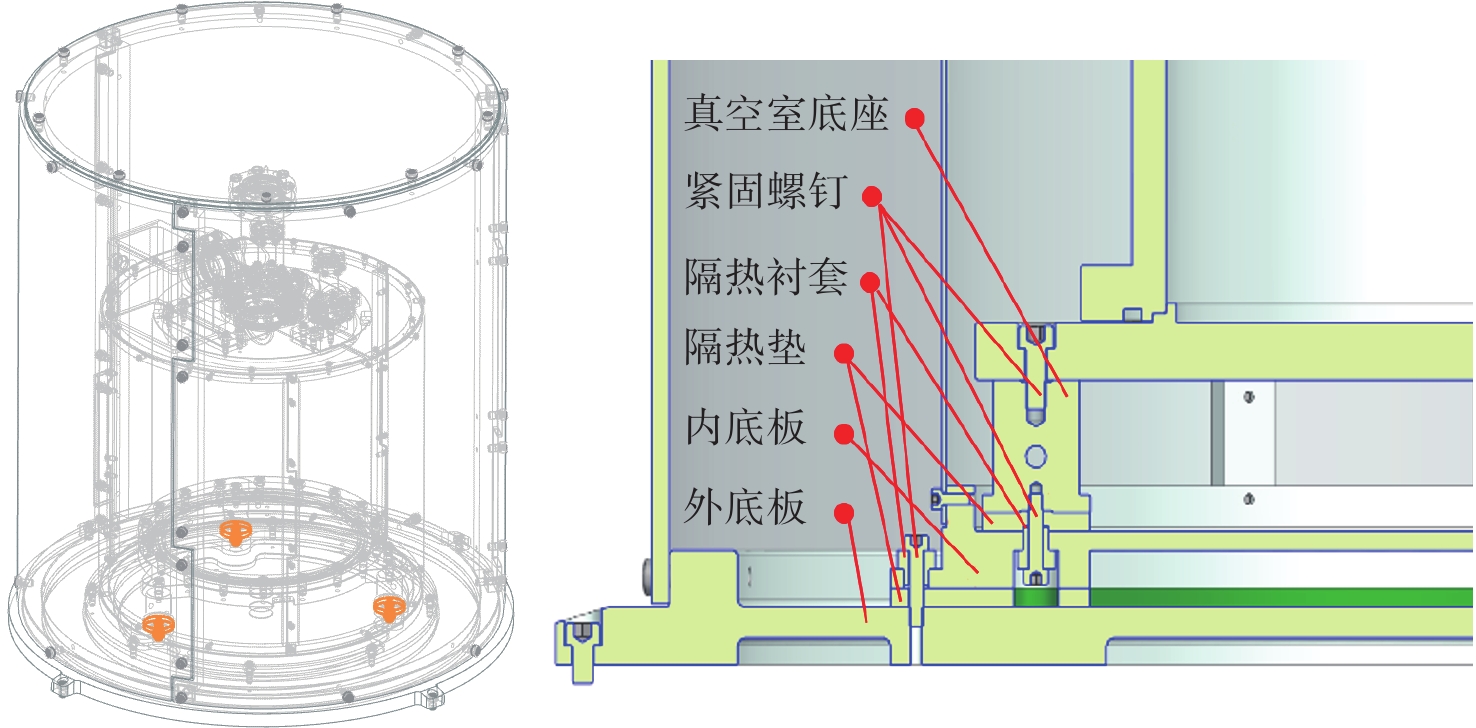
图 11 参考腔单元、恒温笼与外层隔离罩隔热设计
Figure 11. Thermal insulation design of the reference cavity, constant temperature cage, and outer isolation shield
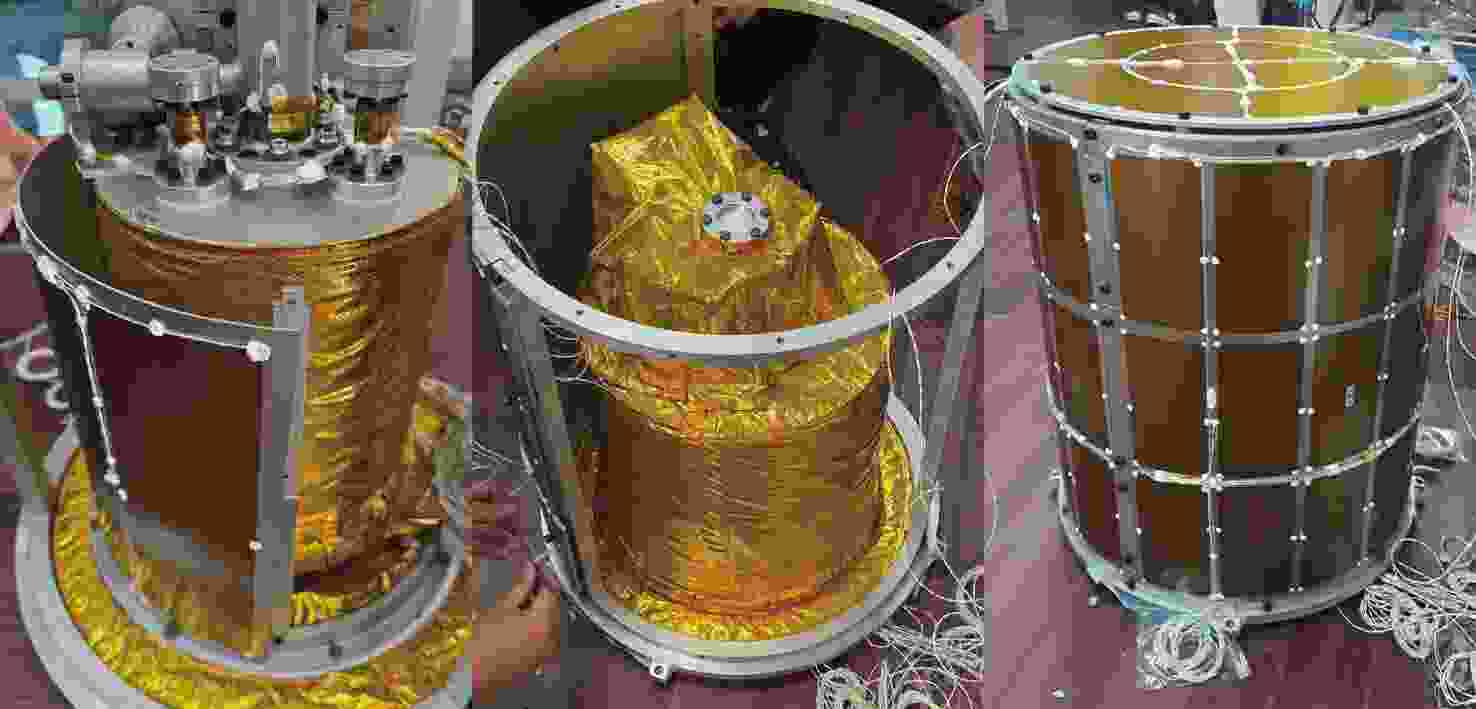
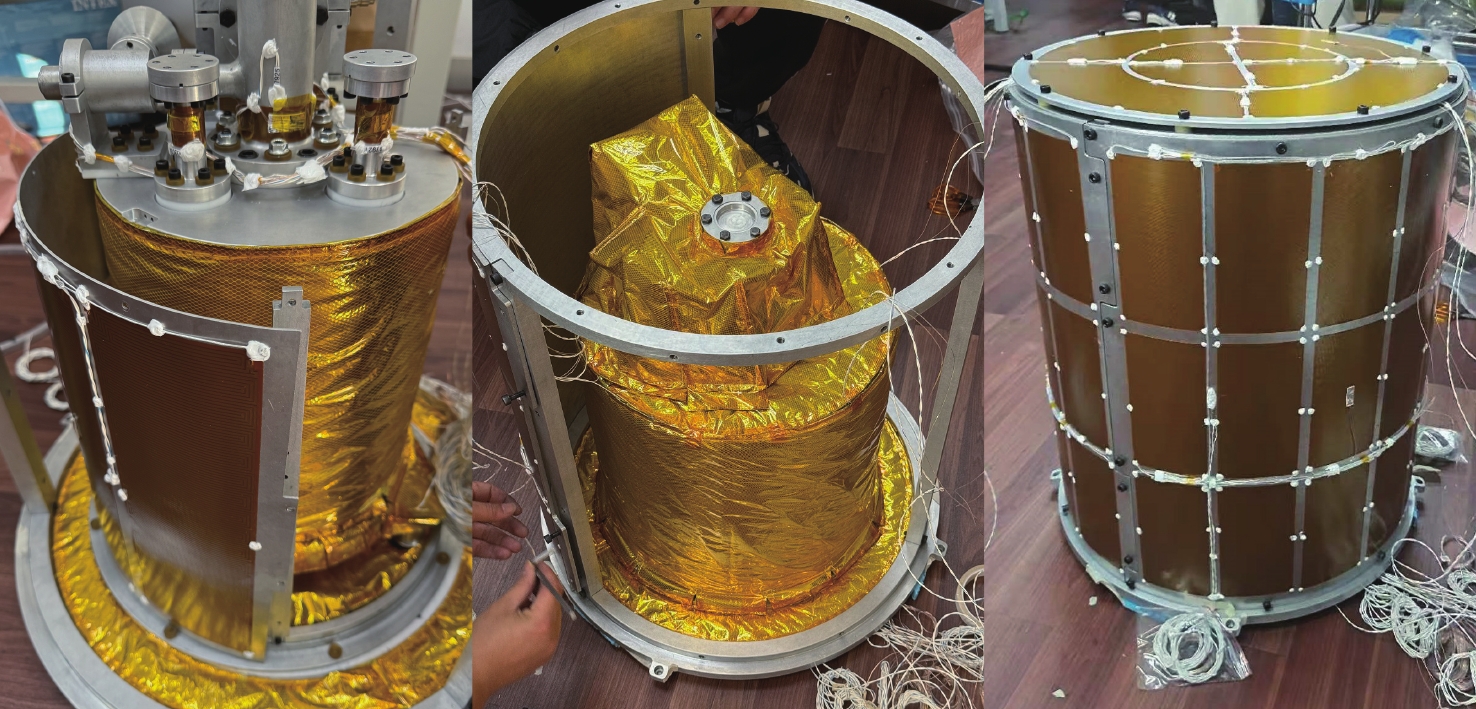
图 12 参考腔单元、恒温笼与隔离罩热实施照片
Figure 12. Photographs of the thermal control implementation of the reference cavity, constant temperature cage, and outer isolation shield
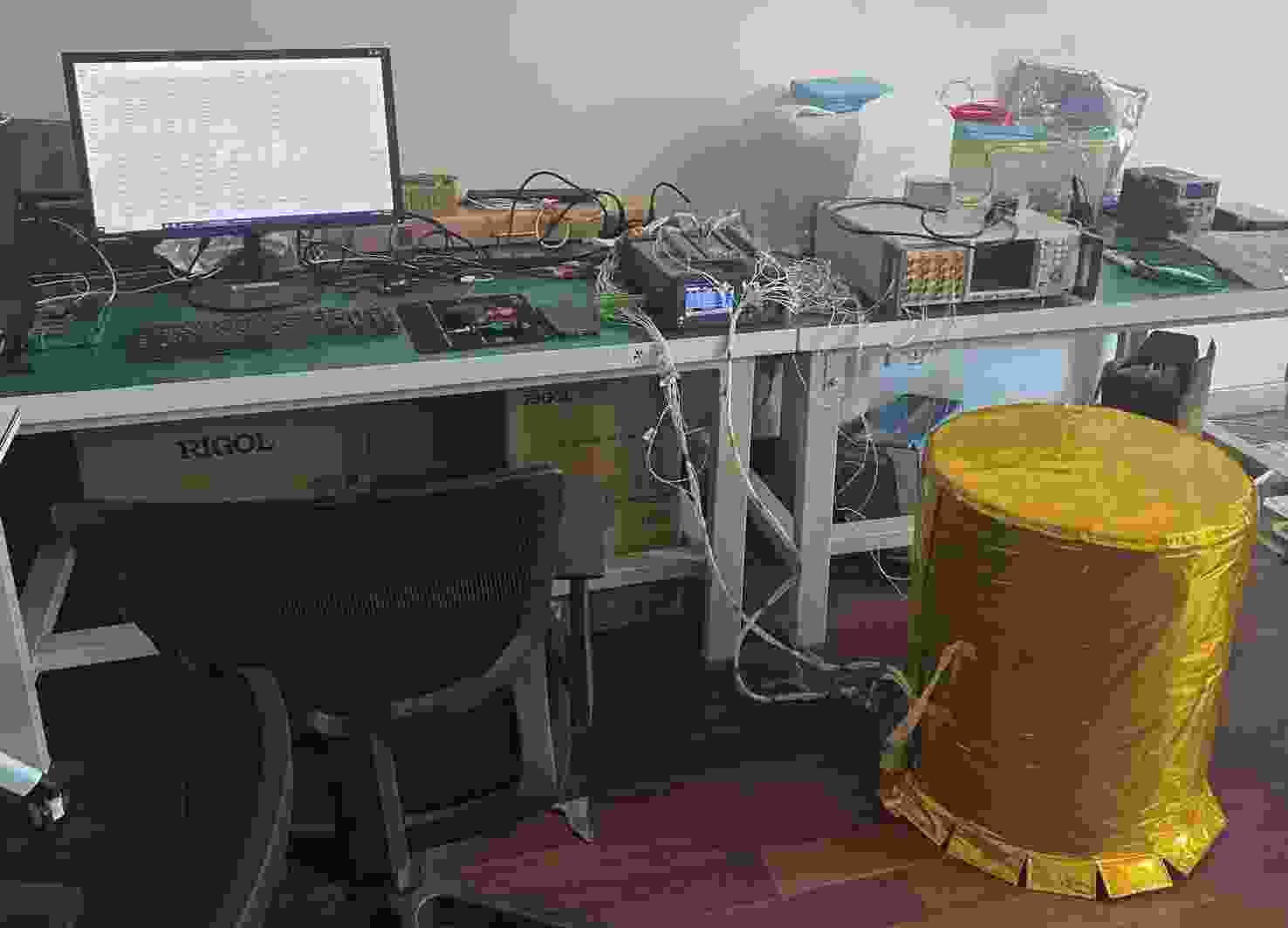
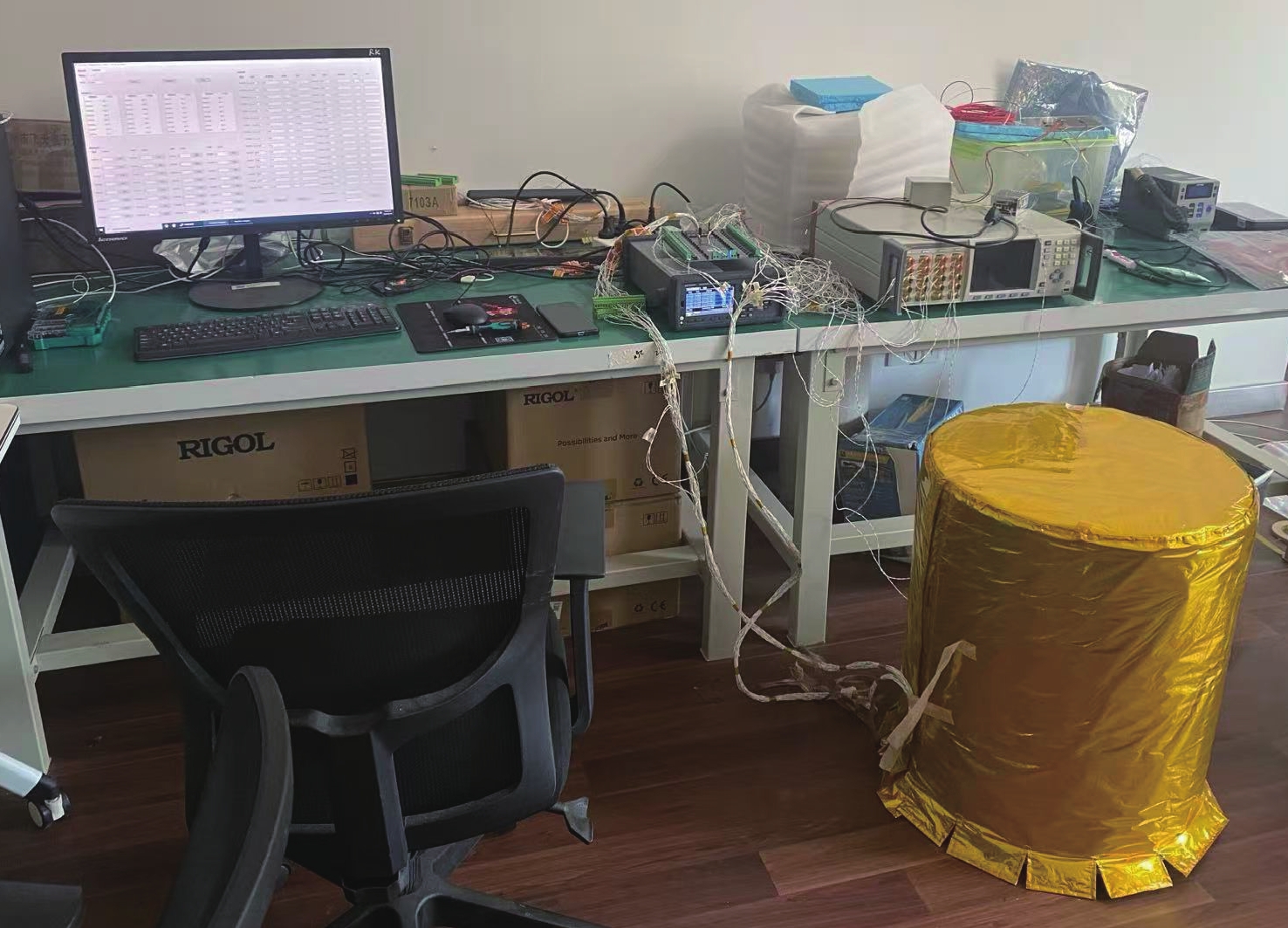
图 13 参考腔单元精密热控验证场景
Figure 13. The precision thermal control verification scenario for the reference cavity module
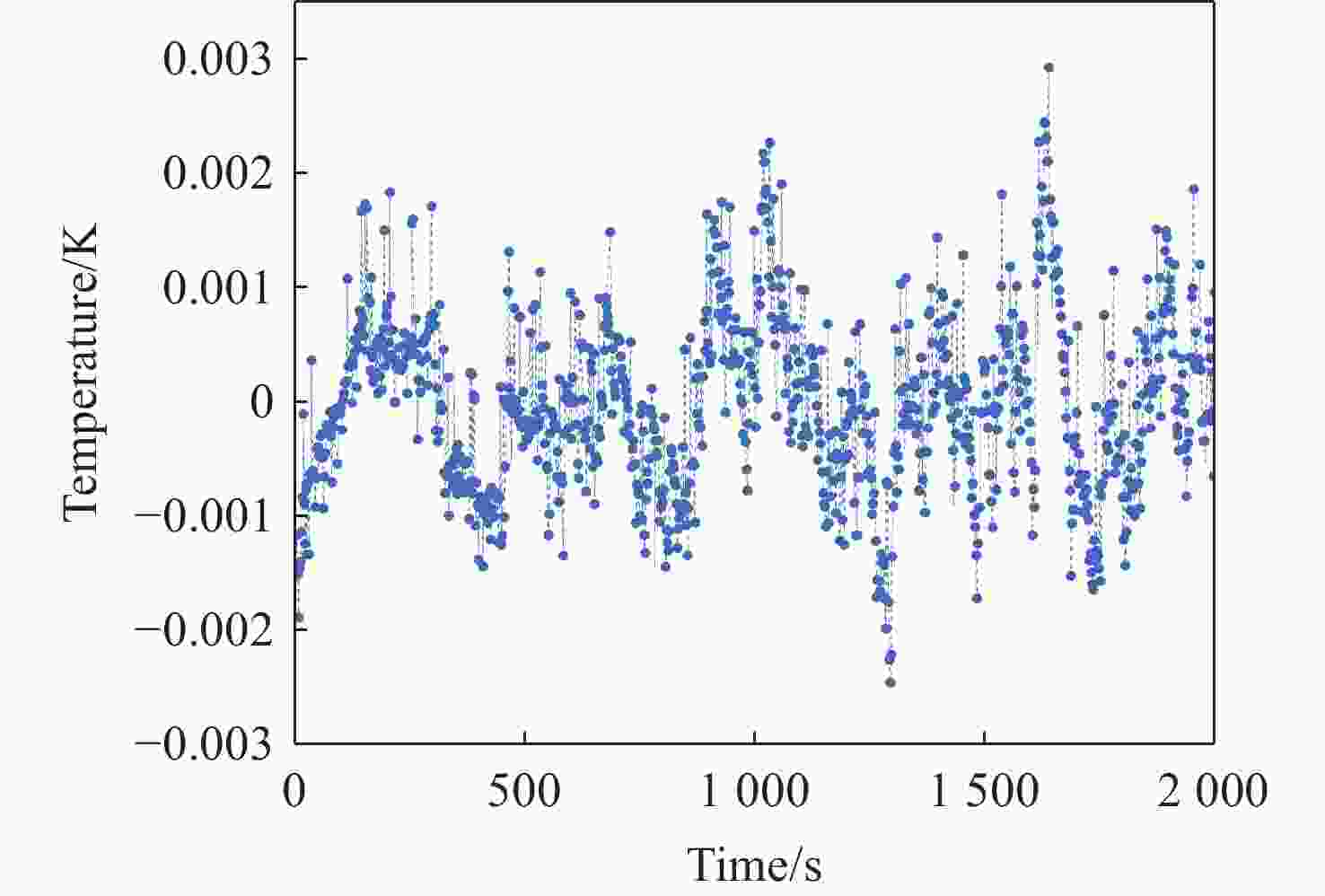
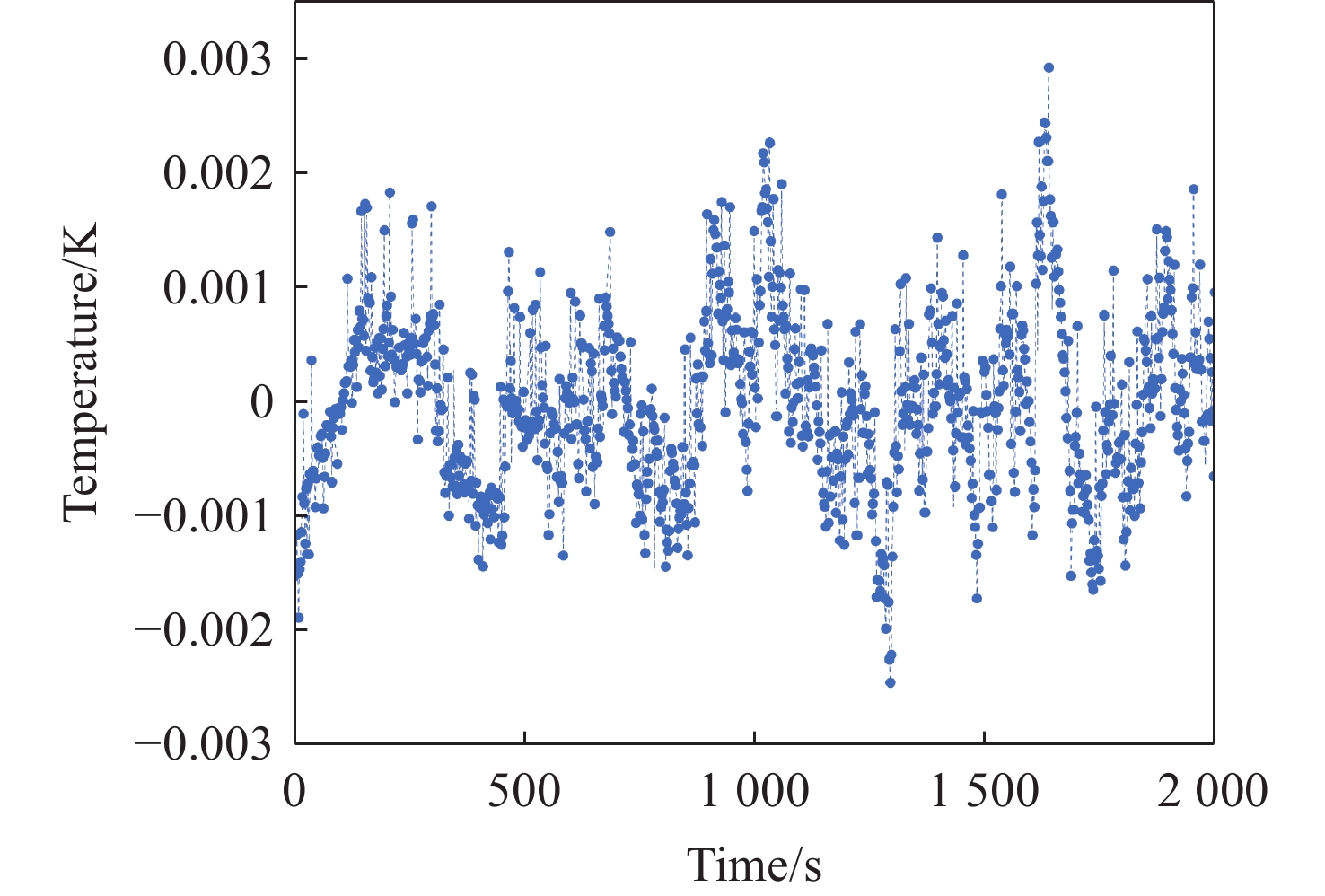
图 14 恒温笼温度波动曲线
Figure 14. Temperature fluctuation curve of the constant temperature cage
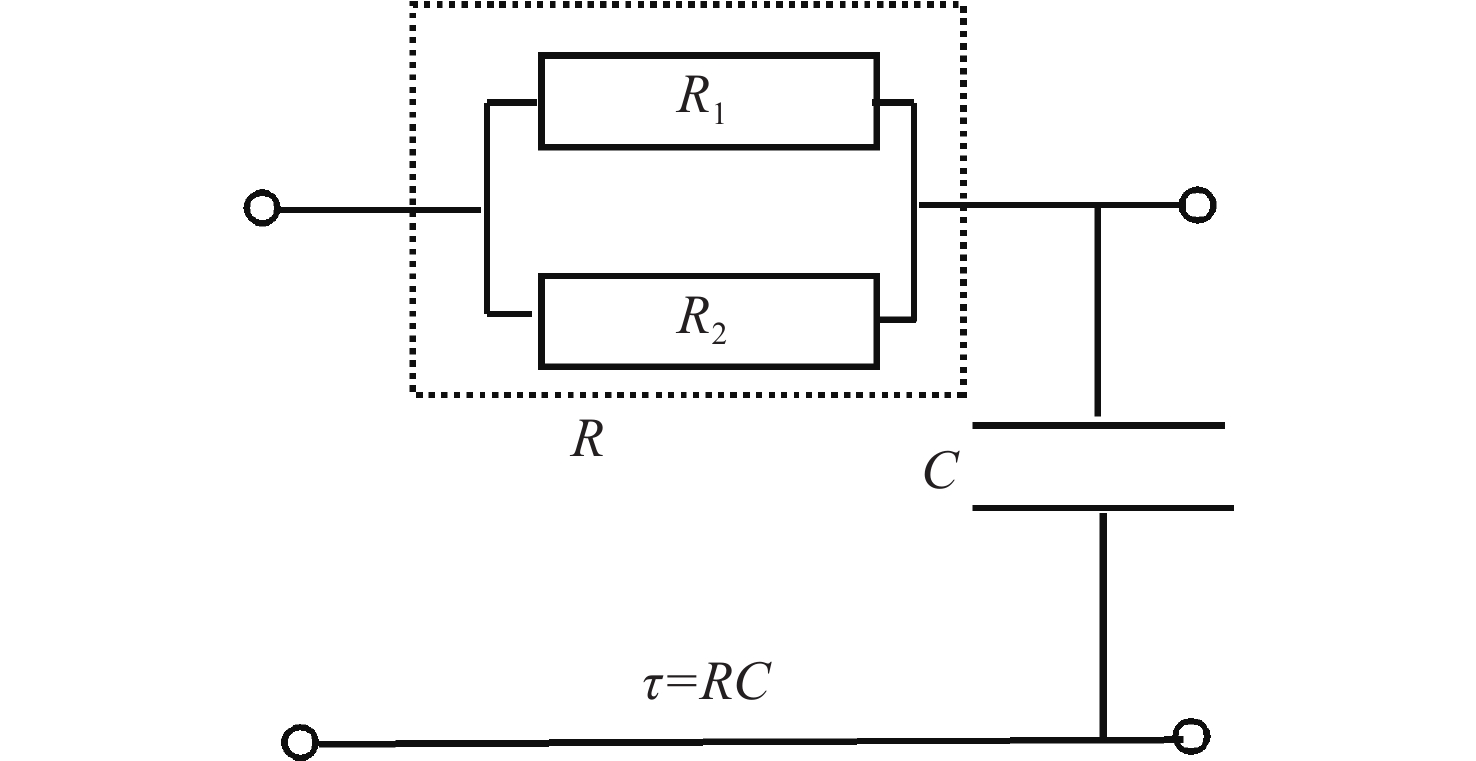
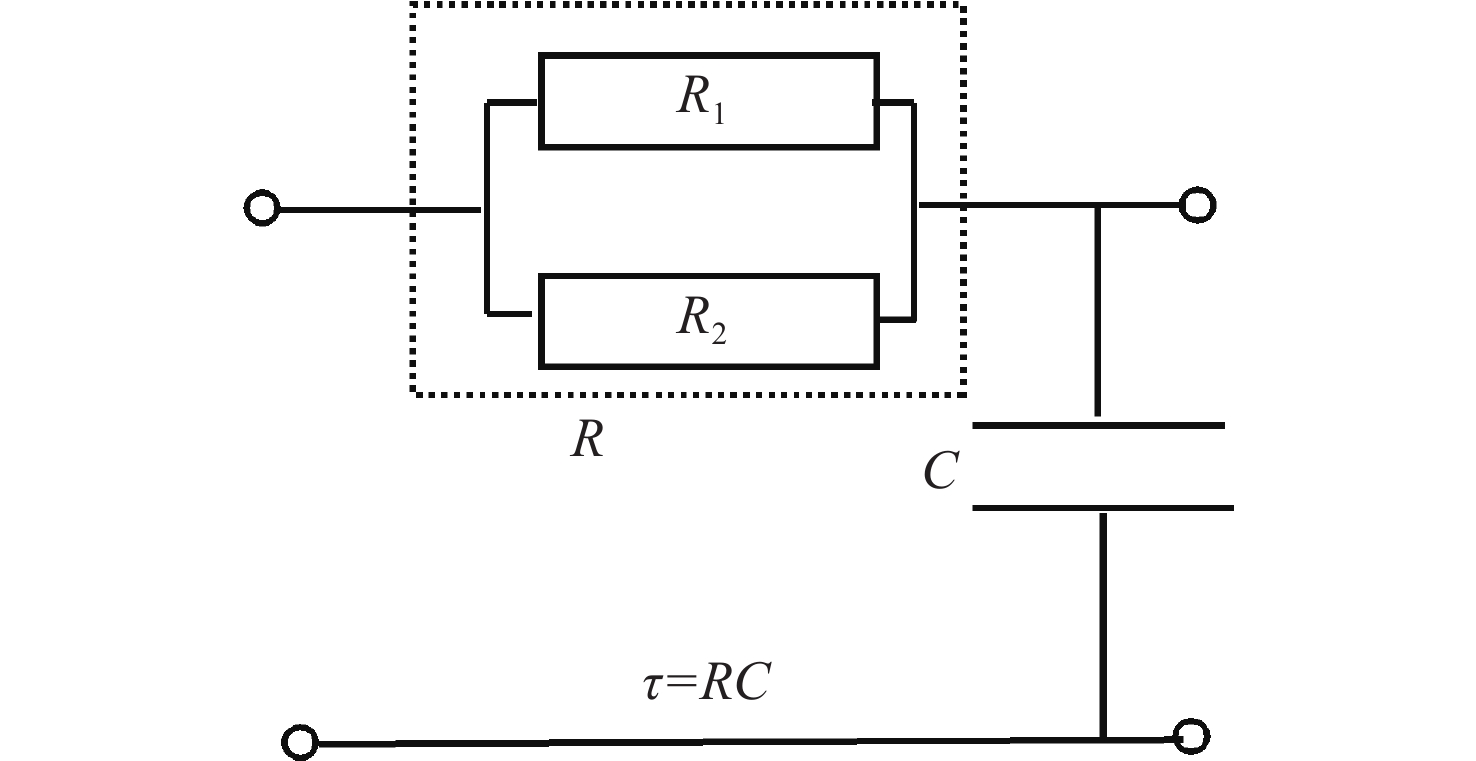
图 16 真空室到参考腔的热传递模型
Figure 16. Heat transfer model from the vacuum chamber to the reference chamber
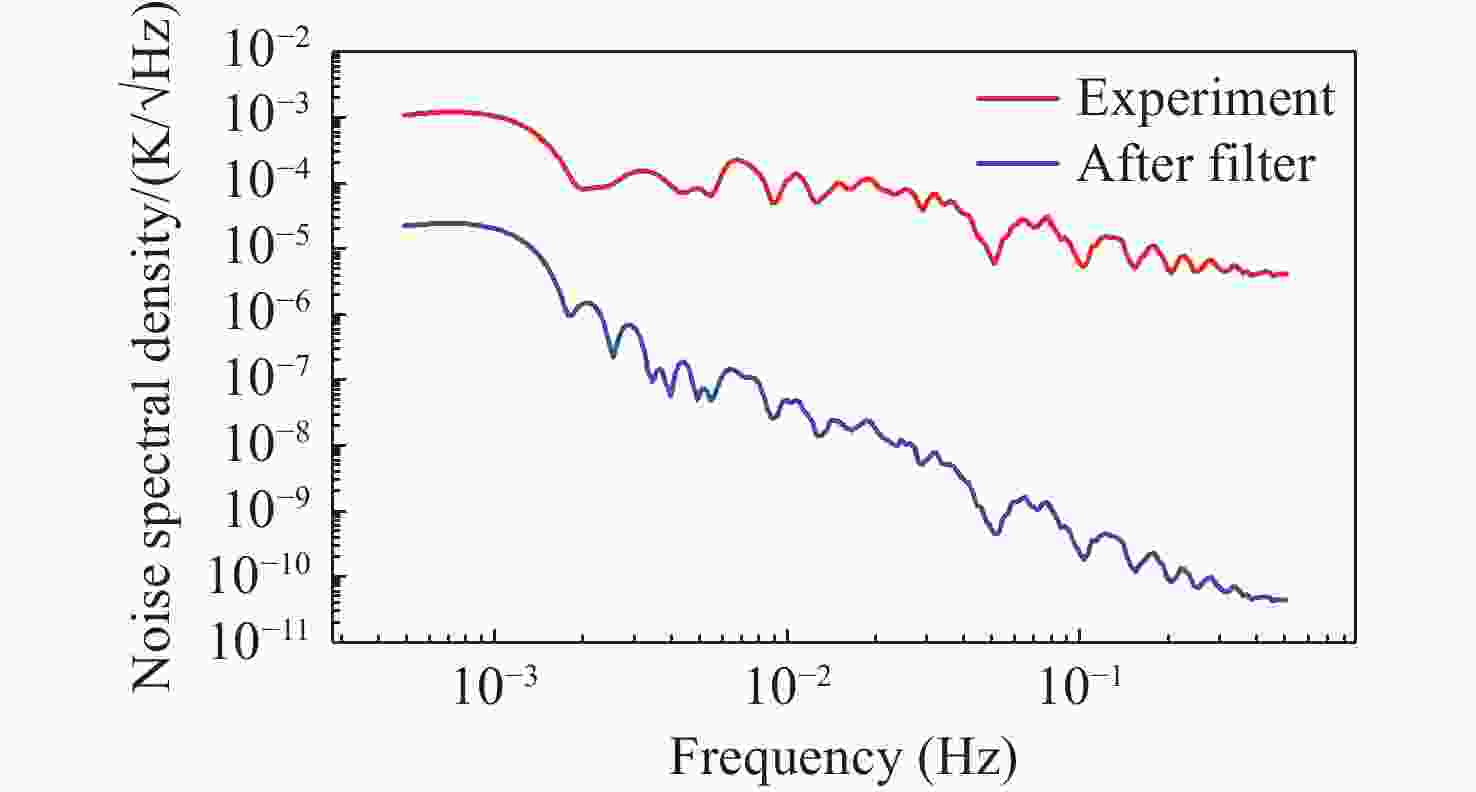
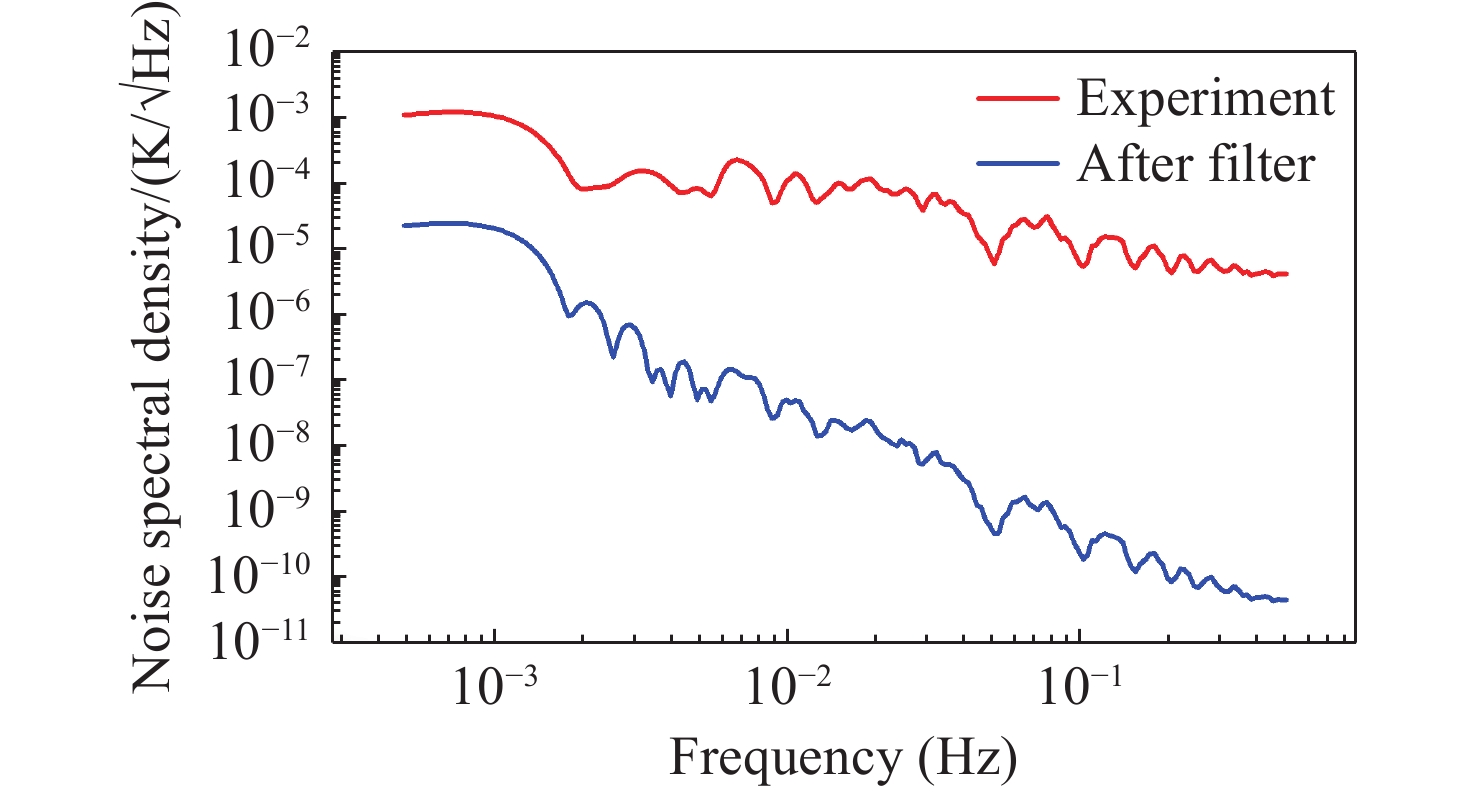
图 17 试验温度一阶滤波处理前后在频域上的等效温度波动
Figure 17. The equivalent temperature fluctuations in the frequency domain before and after the filtering of the test temperature
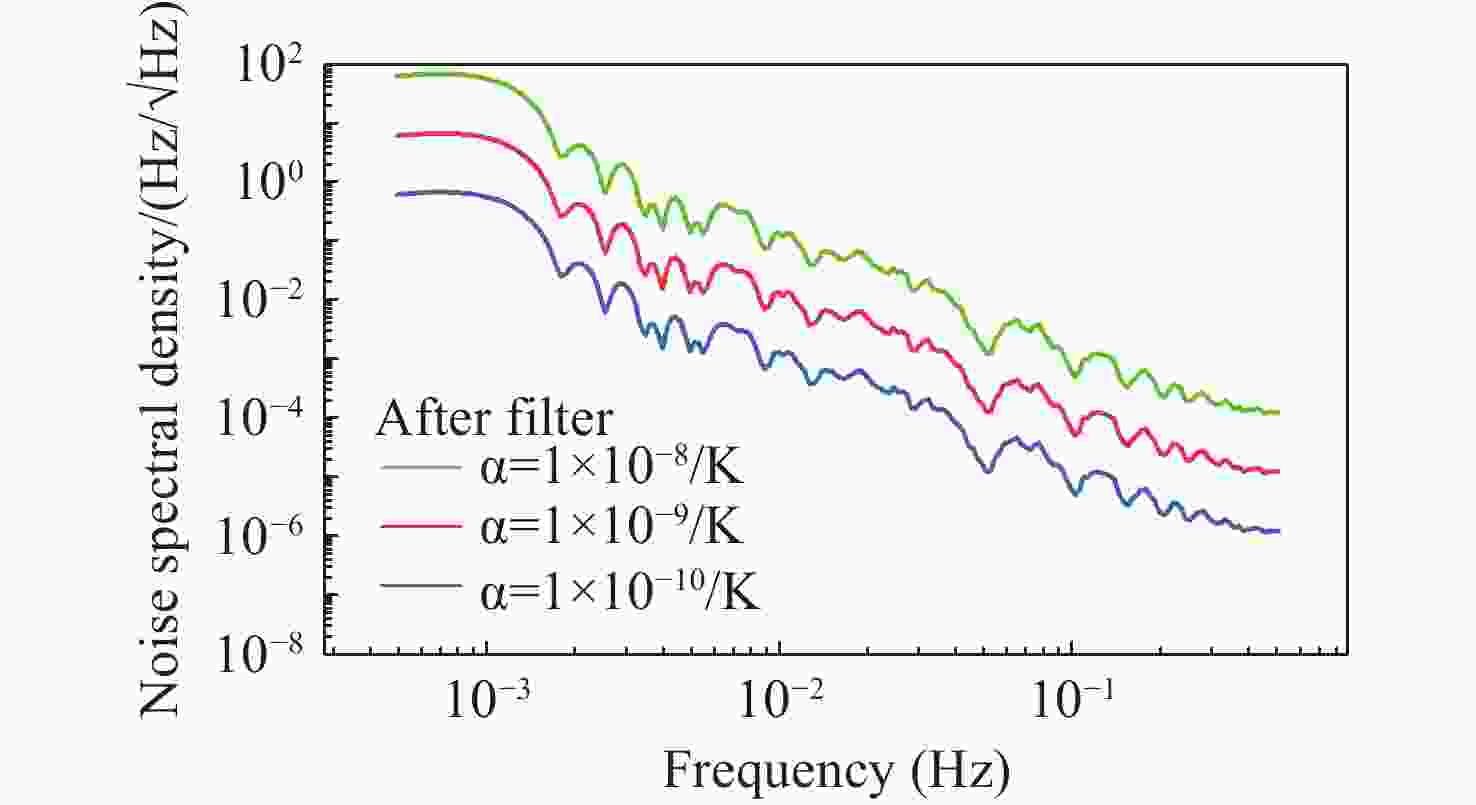
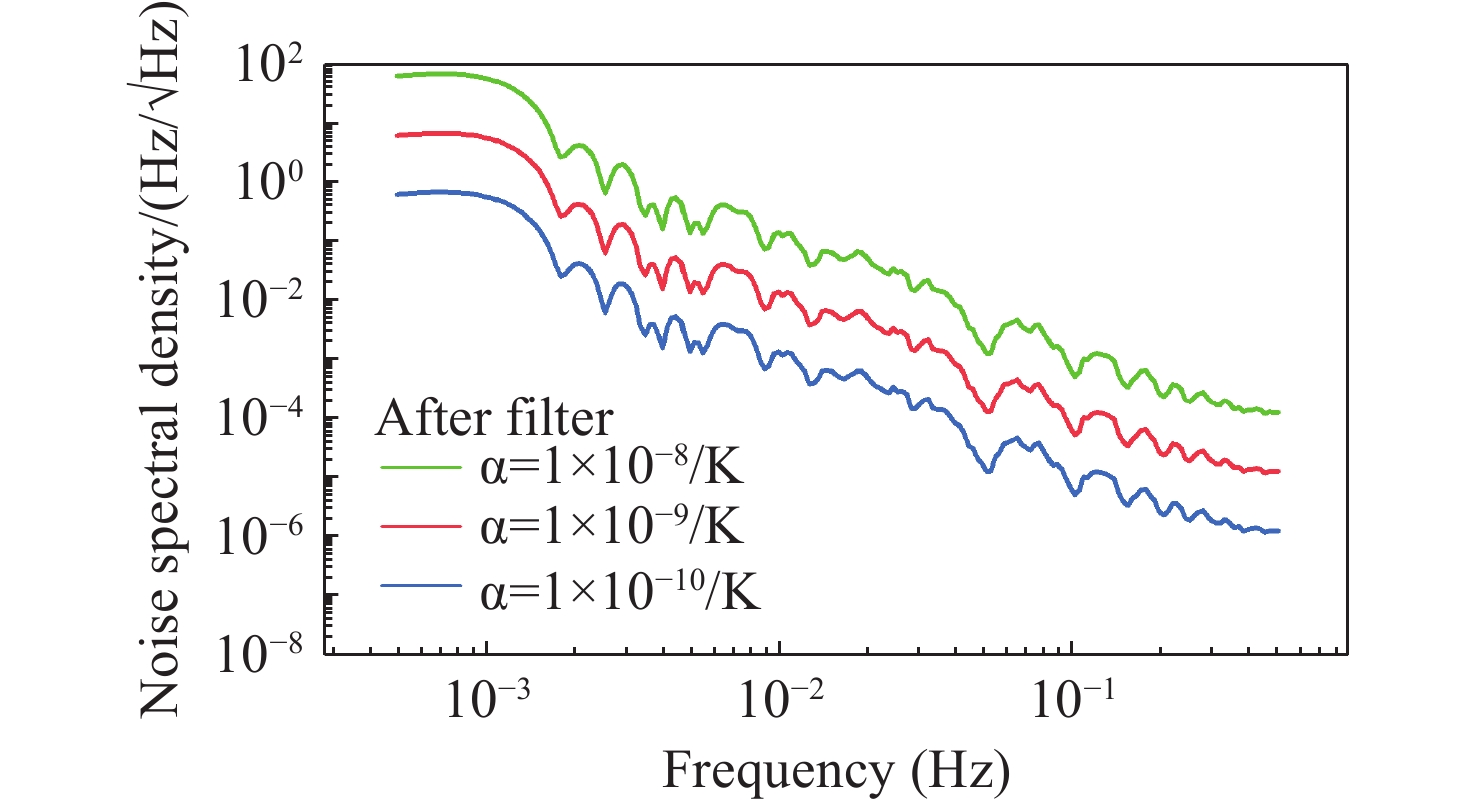
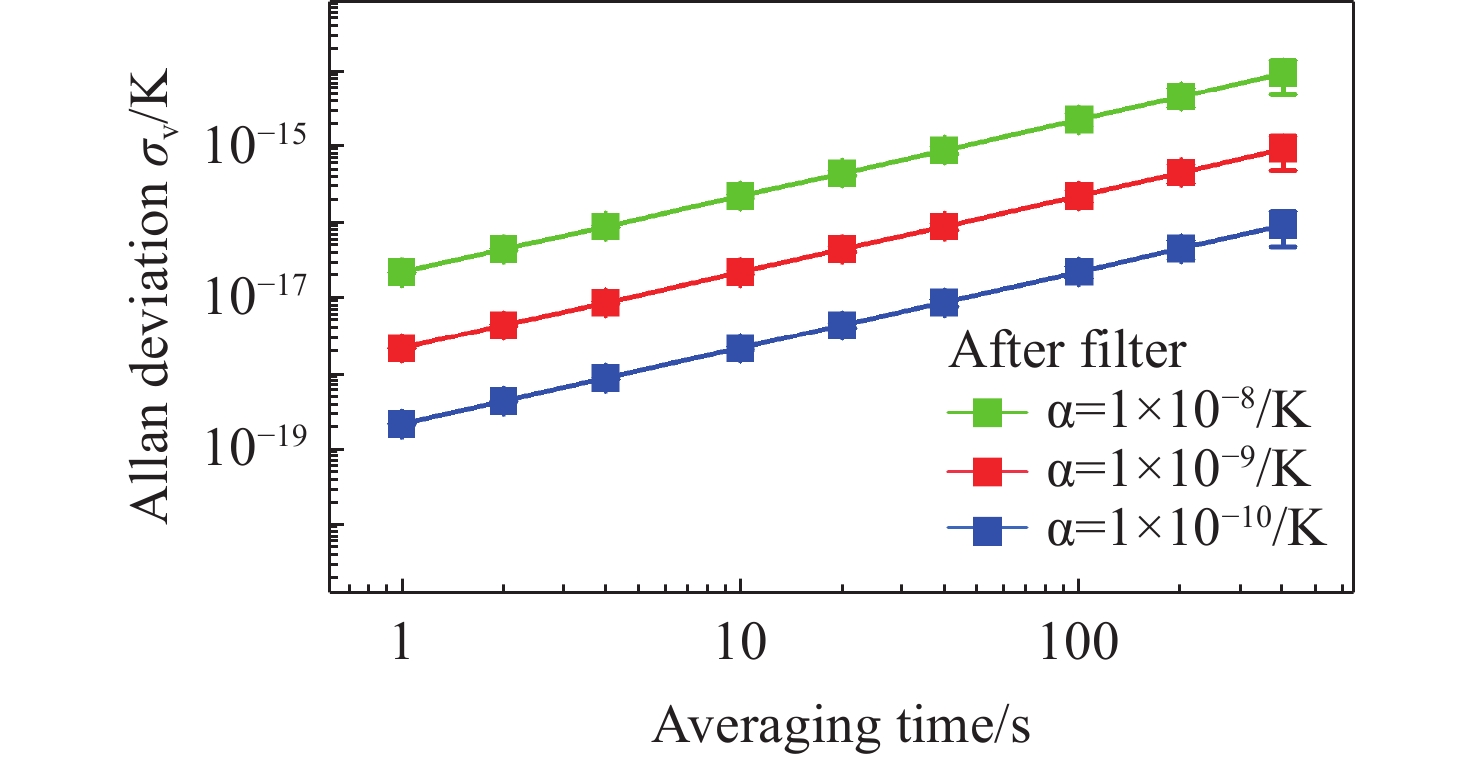
图 18 精密热控下参考腔变化引入的激光频率噪声谱曲线
Figure 18. The laser frequency noise spectrum curve introduced by the change of the reference cavity under precise thermal control
-
[1] AMARO-SEOANE P, ANDREWS J, ARCA SEDDA M, et al. Astrophysics with the laser interferometer space antenna[J]. Living Reviews in Relativity, 2023, 26(1): 2. doi: 10.1007/s41114-022-00041-y [2] BAILES M, BERGER B K, BRADY P R, et al. Gravitational-wave physics and astronomy in the 2020s and 2030s[J]. Nature Reviews Physics, 2021, 3(5): 344-366. doi: 10.1038/s42254-021-00303-8 [3] DANZMANN K, and LISA Science Team. The LISA mission: a laser-interferometric gravitational wave detector in space[C]. Proceedings of the Alpbach Summer School 1997, Fundamental Physics in Space, ESA, 1997: 247-252. [4] LUO Z R, GUO Z K, JIN G, et al. A brief analysis to Taiji: science and technology[J]. Results in Physics, 2020, 16: 102918. doi: 10.1016/j.rinp.2019.102918 [5] 吴岳良, 胡文瑞, 王建宇, 等. 空间引力波探测综述与拟解决的科学问题[J]. 空间科学学报, 2023, 43(4): 589-599. doi: 10.11728/cjss2023.04.yg08WU Y L, HU W R, WANG J Y, et al. Review and scientific objectives of spaceborne gravitational wave detection missions[J]. Chinese Journal of Space Science, 2023, 43(4): 589-599. (in Chinese). doi: 10.11728/cjss2023.04.yg08 [6] 王娟, 齐克奇, 王少鑫, 等. 面向空间引力波探测的激光干涉技术研究进展及展望[J]. 中国科学: 物理学 力学 天文学, 2024, 54(7): 109-127.WANG J, QI K Q, WANG SH X, et al. Advance and prospect in the study of laser interferometry technology for space gravitational wave detection[J]. Scientia Sinica (Physica, Mechanica & Astronomica), 2024, 54(7): 109-127. (in Chinese). [7] GONG Y G, LUO J, WANG B. Concepts and status of Chinese space gravitational wave detection projects[J]. Nature Astronomy, 2021, 5(9): 881-889. doi: 10.1038/s41550-021-01480-3 [8] 李振千, 彭建康, 茹媛, 等. 空间引力波探测中稳频激光的研制[J]. 中国基础科学, 2024, 26(6): 36-43,70. doi: 10.3969/j.issn.1009-2412.2024.06.005LI ZH Q, PENG J K, RU Y, et al. Development of frequency-stabilized lasers in space-based gravitational wave detection[J]. China Basic Science, 2024, 26(6): 36-43,70. (in Chinese). doi: 10.3969/j.issn.1009-2412.2024.06.005 [9] STACEY J, BARWOOD G, SPAMPINATO A, et al. Laser frequency stabilisation for the LISA mission using a cubic cavity[J]. Proceedings of SPIE, 2023, 12777: 127777F. doi: 10.1117/12.2691441 [10] 李明, 黄亚峰, 叶美凤, 等. 面向空间引力波探测的低噪声稳频激光器[J]. 光学学报, 2023, 43(19): 1914001. doi: 10.3788/AOS230604LI M, HUANG Y F, YE M F, et al. Low-noise frequency stabilized laser for space-based gravitational wave detection[J]. Acta Optica Sinica, 2023, 43(19): 1914001. (in Chinese). doi: 10.3788/AOS230604 [11] DREVER R W P, HALL J L, KOWALSKI F V, et al. Laser phase and frequency stabilization using an optical resonator[J]. Applied Physics B, 1983, 31(2): 97-105. [12] LI ZH Q, LU Z Y, WAN L F, et al. Ultrastable Nd: YAG 1064-nm lasers with 2.1 × 10⁻¹⁶ frequency stability based on a field-programmable gate array frequency-locked system[J]. Chinese Optics Letters, 2025, 23(1): 011402. doi: 10.3788/COL202523.011402 [13] JIAO D D, WU M F, GAO J, et al. Development of fully self-controllable high-finesse optical reference cavities[J]. Chinese Physics Letters, 2025, 42(1): 013701. doi: 10.1088/0256-307X/42/1/013701 [14] FOX R W. Temperature analysis of low-expansion Fabry-Perot cavities[J]. Optics Express, 2009, 17(17): 15023-15031. doi: 10.1364/OE.17.015023 [15] CHEN K, ZHANG X F, GUO T, et al. Key technologies analysis and design of ultra-clean & ultra-stable spacecraft for gravitational wave detection[J]. International Journal of Modern Physics A, 2021, 36(11n12): 2140021. doi: 10.1142/S0217751X21400212 [16] 冯建朝, 张晓峰, 梁鸿, 等. 太极二号卫星精密热控关键技术及试验验证[J]. 宇航学报, 2023, 44(1): 132-142. doi: 10.3873/j.issn.1000-1328.2023.01.013FENG J CH, ZHANG X F, LIANG H, et al. Key technology and experimental verification of precision thermal control of Taiji-2 satellite[J]. Journal of Astronautics, 2023, 44(1): 132-142. (in Chinese). doi: 10.3873/j.issn.1000-1328.2023.01.013 [17] FENG J CH, ZHANG X F, LIU L, et al. Research and verification of precise temperature control method for spacecraft driven by time-frequency analysis[C]. 2024 International Conference on Sensing, Measurement & Data Analytics in the era of Artificial Intelligence (ICSMD), IEEE, 2024: 1-6. [18] 王佳. 激光稳频中精密控温的研究[D]. 武汉: 中国科学院大学(中国科学院武汉物理与数学研究所), 2017.WANG J. Precision temperature control in laser frequency stabilization[D]. Wuhan: University of Chinese Academy of Sciences (Wuhan Institute of Physics and Mathematics Chinese Academy of Sciences), 2017. (in Chinese). [19] 李振千. 面向空间应用的激光自动锁频系统的研制[D]. 武汉: 中国科学院大学(中国科学院精密测量科学与技术创新研究院), 2024.LI ZH Q. Development of laser automatic frequency stabilization system for space applications[D]. Wuhan: University of Chinese Academy of Sciences (Innovation Academy for Precision Measurement Science and Technology, Chinese Academy of Sciences), 2024. (in Chinese). [20] ALLAN D W. Time and frequency (time-domain) characterization, estimation, and prediction of precision clocks and oscillators[J]. IEEE Transactions on Ultrasonics, Ferroelectrics and Frequency Control, 1987, 34(6): 647-654. doi: 10.1109/T-UFFC.1987.26997 -

 下载:
下载:

计量
- 文章访问数: 101
- HTML全文浏览量: 47
- PDF下载量: 9
- 被引次数: 0
