| Citation: | WANG Xu-yang, CHEN Wei. Laser recognition of underwater wakes based on principle component analysis and machine learning[J]. Chinese Optics. doi: 10.3724/CO.2026-0127

|
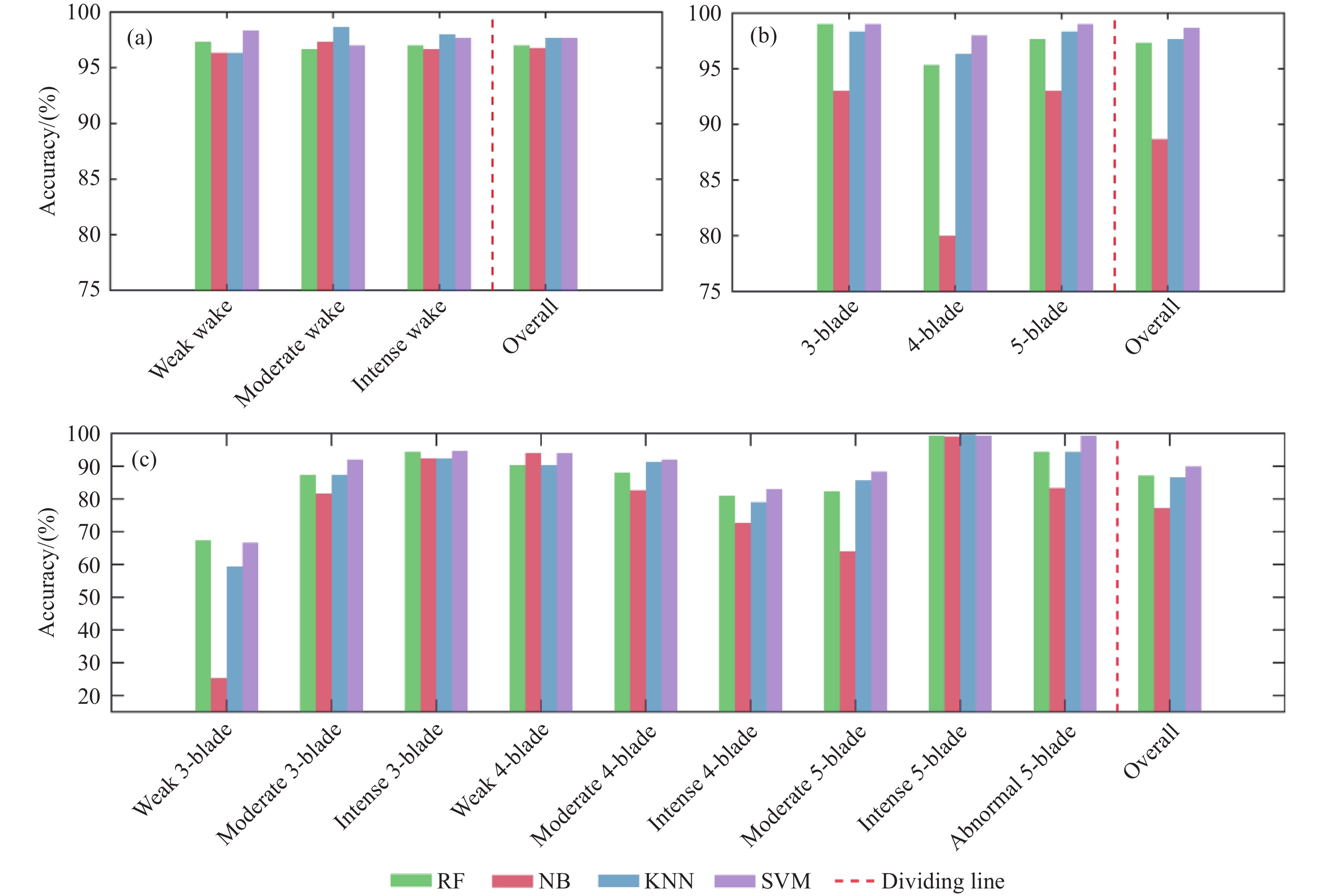
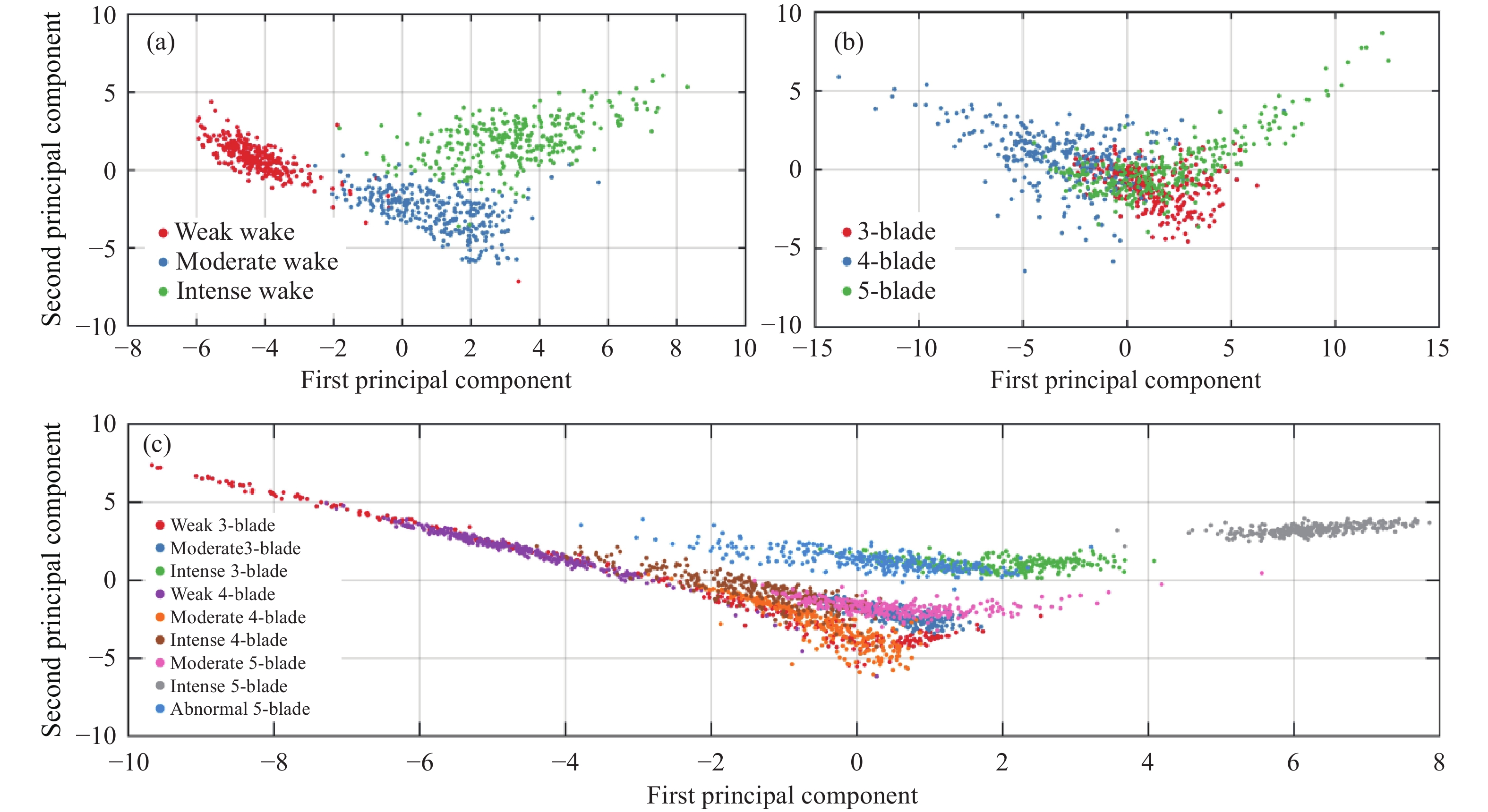
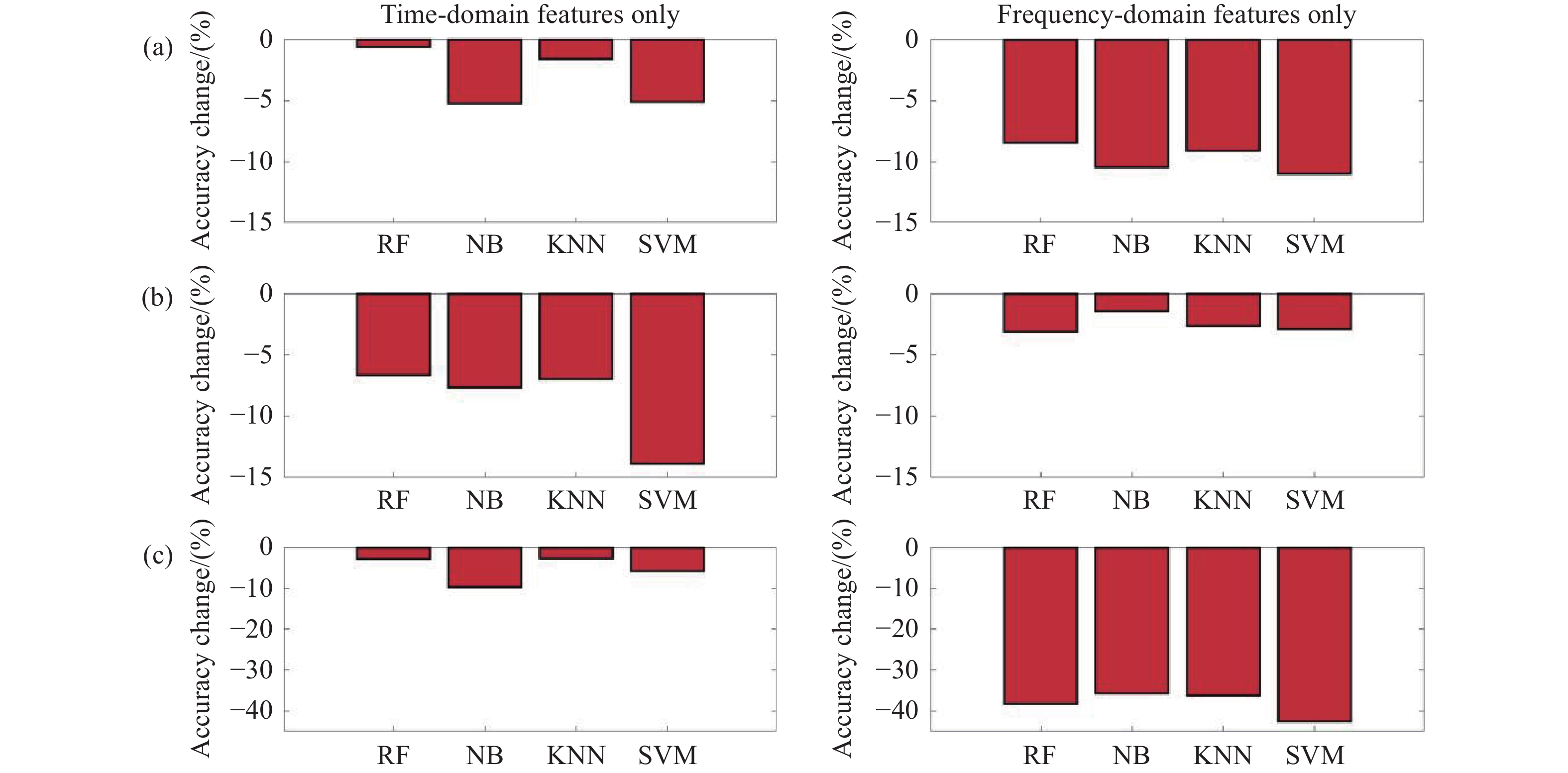
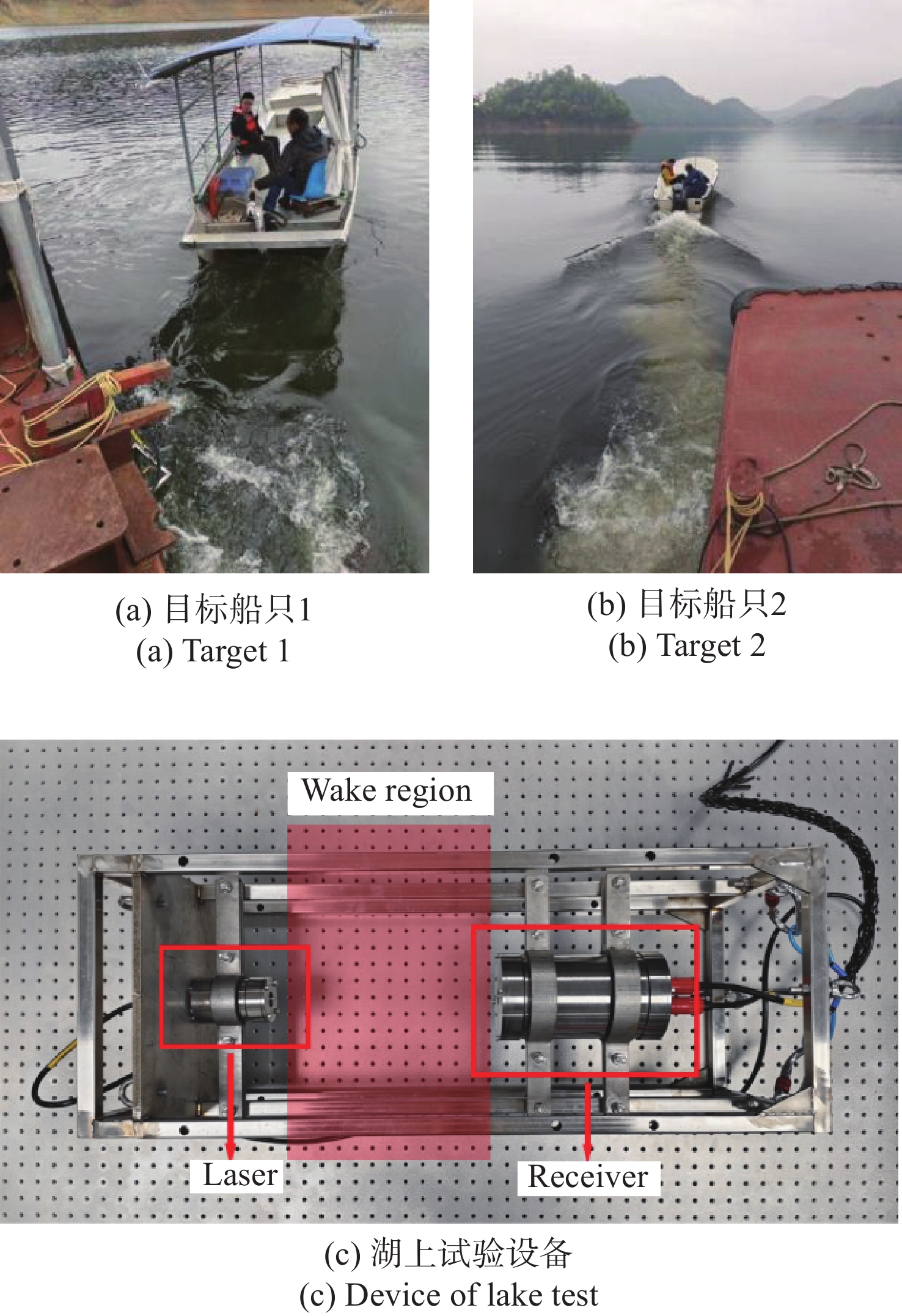
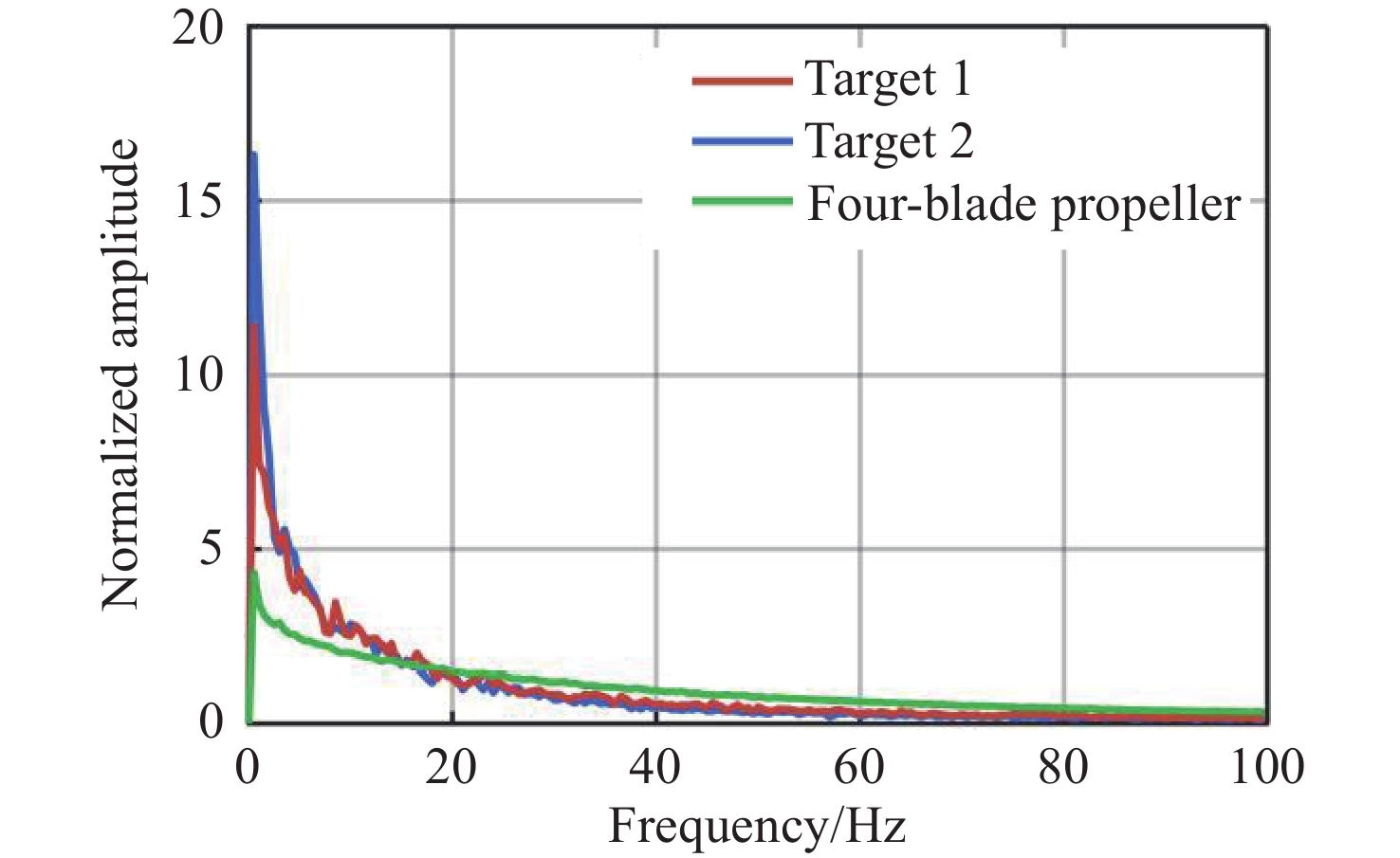
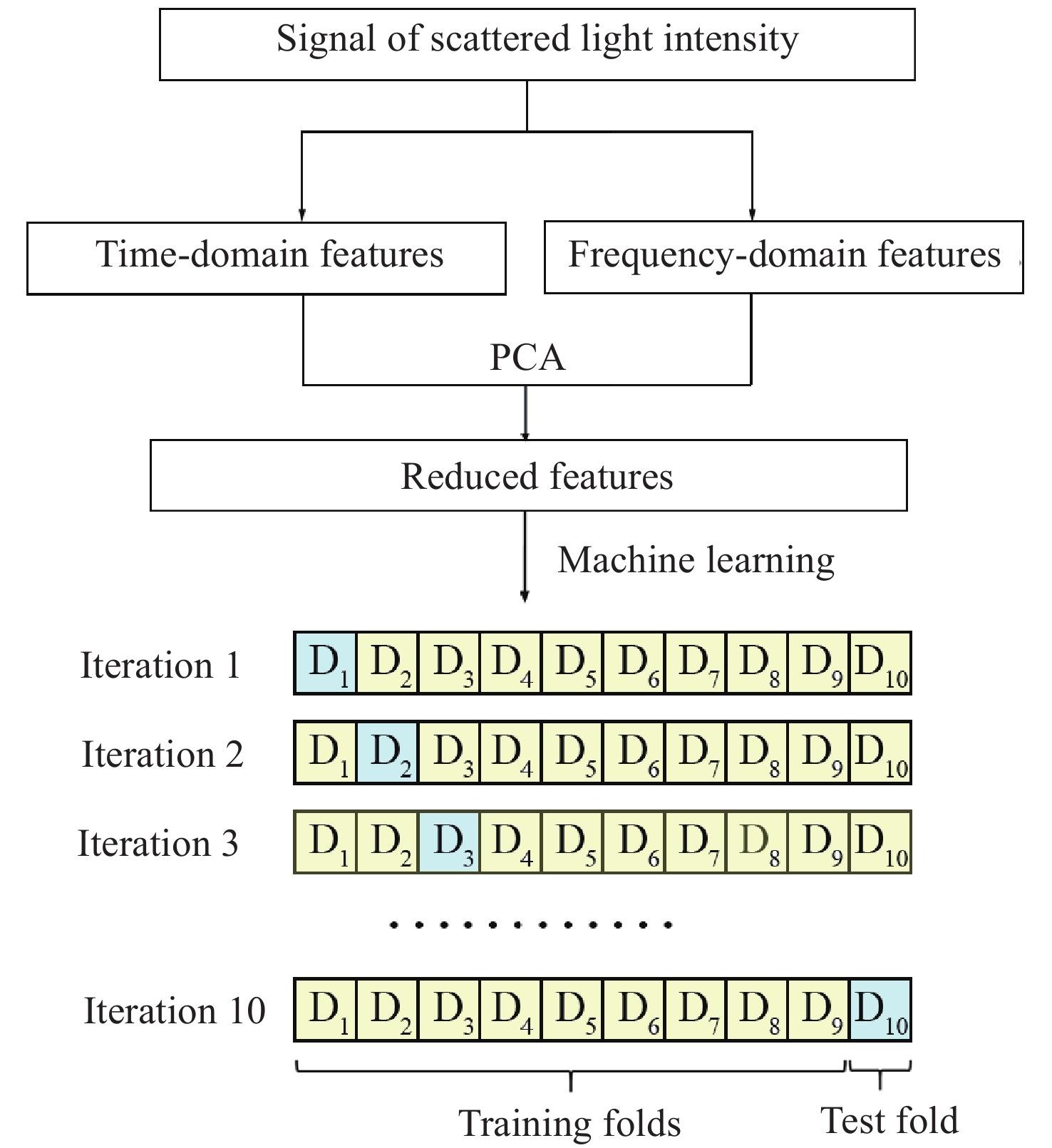
To achieve the recognition of underwater wakes, this study integrates principal component analysis (PCA) with various machine learning methods to classify different types of wakes using the characteristics of forward-propagated laser signals. In processing the forward-propagated optical signals, time-domain and frequency-domain features are first computed, followed by dimensionality reduction of the original features via PCA. The reduced features are then fed into machine learning classifiers to distinguish wakes generated by different underwater thrusters under tank conditions. Furthermore, lake test validates the practical feasibility of the proposed method. Results indicate that under tank conditions, the optimal machine learning method is support vector machine (SVM), achieving a accuracy of 89.93%. Whereas in the lake test, the optimal methods are k-nearest neighbors (KNN) and random forest (RF), with accuracies of 96.39% and 96.25% respectively. As the wake intensity varies and the number of thruster types increases, the inter-wake dissimilarity decreases, and the PCA feature boundaries become blurred. Additionally, the importance of time-domain versus frequency-domain features differs significantly across classification tasks. Both experimental and lake test results demonstrate that the proposed method can effectively discriminate among different underwater wakes.

| [1] |
张银波, 李思宁, 姜鹏, 等. PCA特征提取和弹性BP神经网络的水下气泡识别[J]. 红外与激光工程, 2021, 50(6): 209-215. doi: 10.3788/IRLA20200352
ZHANG Y B, LI S N, JIANG P, et al. Underwater bubbles recognition based on PCA feature extraction and elastic BP neural network[J]. Infrared and Laser Engineering, 2021, 50(6): 209-215. (in Chinese). doi: 10.3788/IRLA20200352
|
| [2] |
田恒斗, 金良安, 王涌, 等. 考虑单气泡运动特性的舰船尾流气泡分布研究[J]. 兵工学报, 2011, 32(9): 1126-1130.
TIAN H D, JIN L A, WANG Y, et al. Study on wake bubble distribution based on single bubble motion characteristics[J]. Acta Armamentarii, 2011, 32(9): 1126-1130. (in Chinese).
|
| [3] |
宗思光, 张鑫, 曹静, 等. 舰船尾流激光探测跟踪方法与试验[J]. 红外与激光工程, 2023, 52(3): 202205. doi: 10.3788/IRLA20220507
ZONG S G, ZHANG X, CAO J, et al. Method and experiment of laser detection and tracking of ship wake[J]. Infrared and Laser Engineering, 2023, 52(3): 202205. (in Chinese). doi: 10.3788/IRLA20220507
|
| [4] |
梁善勇, 王江安, 宗思光, 等. 基于多重散射强度和偏振特征的舰船尾流气泡激光探测方法[J]. 物理学报, 2013, 62(6): 060704.
LIANG SH Y, WANG J A, ZONG S G, et al. Laser detection method of ship wake bubbles based on multiple scattering intensity and polarization characteristics[J]. Acta Physica Sinica, 2013, 62(6): 060704. (in Chinese).
|
| [5] |
宗思光, 段子科, 张鑫, 等. 基于同步累积法的舰船尾流微弱信号检测方法研究[J]. 中国光学(中英文), 2024, 17(6): 1272-1280. doi: 10.37188/CO.2024-0014
ZONG S G, DUAN Z K, ZHANG X, et al. Detection method of weak ship wake signals based on the synchronous accumulation method[J]. Chinese Optics, 2024, 17(6): 1272-1280. (in Chinese). doi: 10.37188/CO.2024-0014
|
| [6] |
刘罡, 李永胜, 刘礼文, 等. 基于时频分析和迁移学习的舰船尾流检测方法[J]. 水下无人系统学报, 2022, 30(4): 465-473. doi: 10.11993/j.issn.2096-3920.202108013
LIU G, LI Y SH, LIU L W, et al. Method of ship wake detection based on time-frequency analysis and transfer learning[J]. Journal of Unmanned Undersea Systems, 2022, 30(4): 465-473. (in Chinese). doi: 10.11993/j.issn.2096-3920.202108013
|
| [7] |
吴鹏飞, 胡田田, 王姣, 等. 拉盖尔-高斯涡旋光束经混合海洋介质相位屏传输的闪烁因子[J]. 激光与光电子学进展, 2024, 61(15): 1501002. doi: 10.3788/LOP231750
WU P F, HU T T, WANG J, et al. Scintillation index of Laguerre-Gaussian vortex beam propagation through an ocean mixed-medium phase screen[J]. Laser & Optoelectronics Progress, 2024, 61(15): 1501002. (in Chinese). doi: 10.3788/LOP231750
|
| [8] |
卢腾飞, 刘永欣, 吴志军. 涡旋光束在不同盐度的水下湍流中的传输特性的实验研究(英文)[J]. 中国光学, 2022, 15(1): 111-118.
LU T F, LIU Y X, WU ZH J. Experimental investigation on propagation characteristics of vortex beams in underwater turbulence with different salinity[J]. Chinese Optics, 2022, 15(1): 111-118.
|
| [9] |
KHAMEES H T, ALGBURI S, KOTB H E. Computation of the scintillation index and BER of super Lorentz Gaussian laser beam in a slant propagation at atmospheric turbulence[J]. Ain Shams Engineering Journal, 2025, 16(3): 103295. doi: 10.1016/j.asej.2025.103295
|
| [10] |
项玉龙, 陈伟. 气泡散射影响下的水下光传输特性研究[J]. 红外与激光工程, 2024, 53(12): 202403. doi: 10.3788/IRLA20240321
XIANG Y L, CHEN W. Research on underwater light transmission characteristics under influence of bubbles scattering[J]. Infrared and Laser Engineering, 2024, 53(12): 202403. (in Chinese). doi: 10.3788/IRLA20240321
|
| [11] |
邱琳琳, 朱卫纲, 李永刚, 等. 基于深度学习的SAR图像目标检测综述[J]. 兵工自动化, 2026, 45(3): 72-76. doi: 10.7690/bgzdh.2026.03.013
QIU L L, ZHU W G, LI Y G, et al. Survey of SAR image target detection based on deep learning[J]. Ordnance Industry Automation, 2026, 45(3): 72-76. (in Chinese). doi: 10.7690/bgzdh.2026.03.013
|
| [12] |
杨长生, 苟文博, 梁红. 基于一维卷积神经网络的舰船尾流检测[J]. 水下无人系统学报, 2023, 31(6): 839-846. doi: 10.11993/j.issn.2096-3920.2022-0052
YANG CH SH, GOU W B, LIANG H. Ship wake detection based on one-dimensional convolutional neural network[J]. Journal of Unmanned Undersea Systems, 2023, 31(6): 839-846. (in Chinese). doi: 10.11993/j.issn.2096-3920.2022-0052
|
| [13] |
王振, 樊超阳, 杨苏辉, 等. 独立成分分析方法在水下激光雷达中的应用[J]. 光学学报, 2024, 44(18): 1801002. doi: 10.3788/AOS231965
WANG ZH, FAN CH Y, YANG S H, et al. Application of independent component analysis method in underwater lidar[J]. Acta Optica Sinica, 2024, 44(18): 1801002. (in Chinese). doi: 10.3788/AOS231965
|
| [14] |
WANG X Y, CHEN W. Classification of underwater propeller wakes based on machine learning[J]. Journal of Physics: Conference Series, 2026, 3178: 012035. doi: 10.1088/1742-6596/3178/1/012035
|
| [15] |
唐勐, 张宇. 激光探测尾流微气泡的偏振特性研究[J]. 红外与激光工程, 2020, 49(1): 010500. doi: 10.3788/IRLA202049.0105006
TANG M, ZHANG Y. Research on polarization characteristics of micro-bubbles laser detection in wake[J]. Infrared and Laser Engineering, 2020, 49(1): 010500. (in Chinese). doi: 10.3788/IRLA202049.0105006
|
| [16] |
宗思光, 张鑫, 杨劭鹏, 等. 舰船尾流气泡目标激光后向散射特性研究[J]. 中国光学(中英文), 2023, 16(6): 1333-1342. doi: 10.37188/CO.2023-0043
ZONG S G, ZHANG X, YANG SH P, et al. Laser backscattering characteristics of ship wake bubble target[J]. Chinese Optics, 2023, 16(6): 1333-1342. (in Chinese). doi: 10.37188/CO.2023-0043
|
| [17] |
焦贵金, 张建生, 闫林波, 等. 尾流气泡幕对激光的传输特性研究[J]. 水下无人系统学报, 2024, 32(5): 833-838. doi: 10.11993/j.issn.2096-3920.2023-0093
JIAO G J, ZHANG J SH, YAN L B, et al. Laser transmission characteristics of wake bubble curtain[J]. Journal of Unmanned Undersea Systems, 2024, 32(5): 833-838. (in Chinese). doi: 10.11993/j.issn.2096-3920.2023-0093
|
| [18] |
JAMALI M V, KHORRAMSHAHI P, TASHAKORI A, et al. Statistical distribution of intensity fluctuations for underwater wireless optical channels in the presence of air bubbles[C]. 2016 Iran Workshop on Communication and Information Theory (IWCIT), IEEE, 2016: 1-6.
|
Figures(10) / Tables(3)




 DownLoad: