| Citation: | ZHAO Hong-wei, YIN Wei, WANG Gang. Error correction method for binocular stereo vision in temperature-humidity coupling field based on fixed target array[J]. Chinese Optics. doi: 10.3724/CO.2026-0117

|
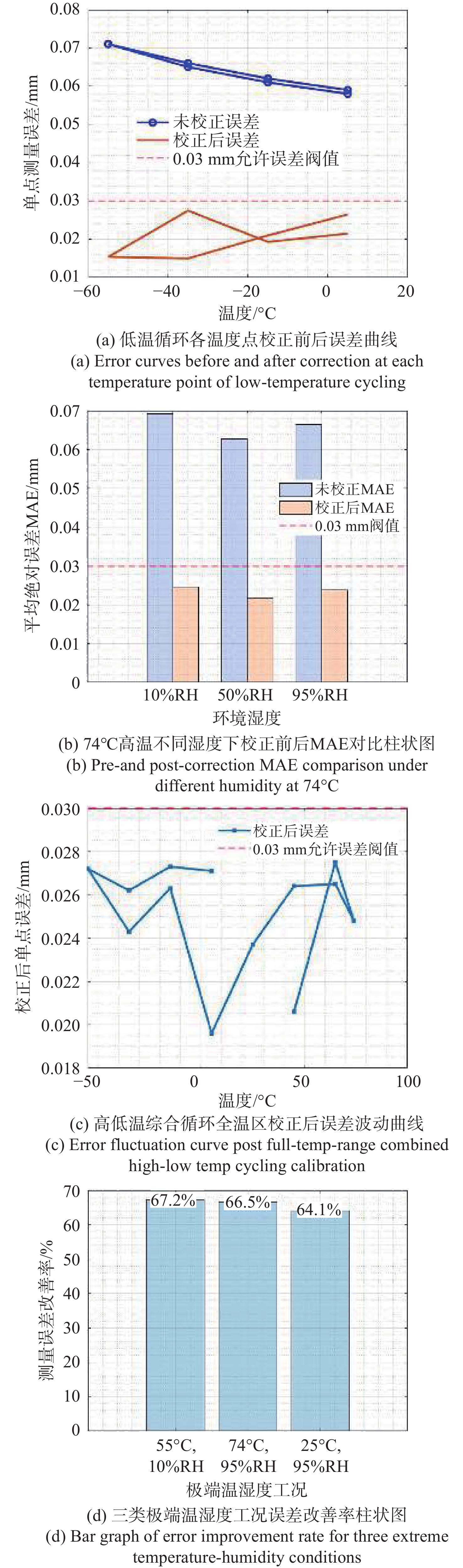
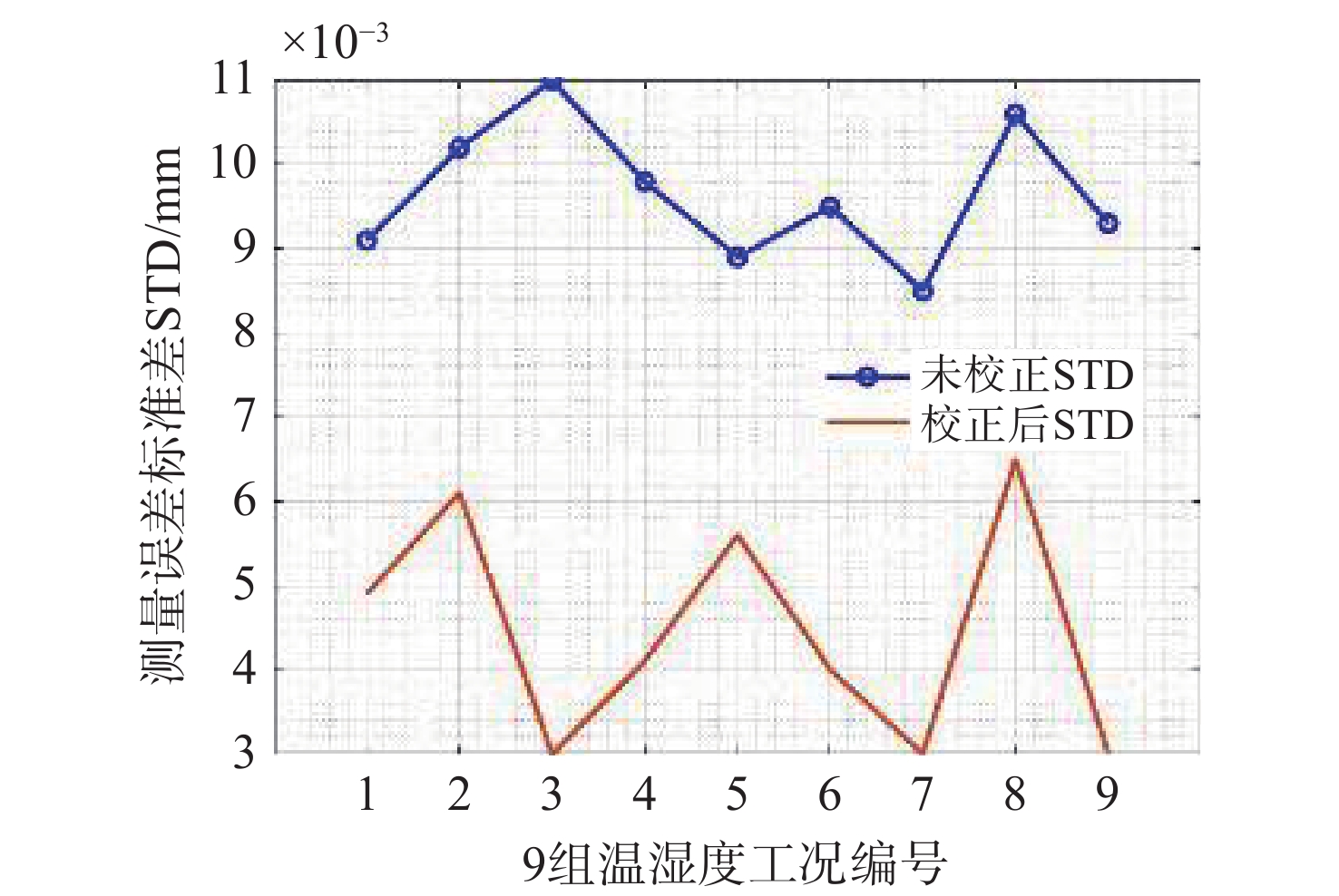
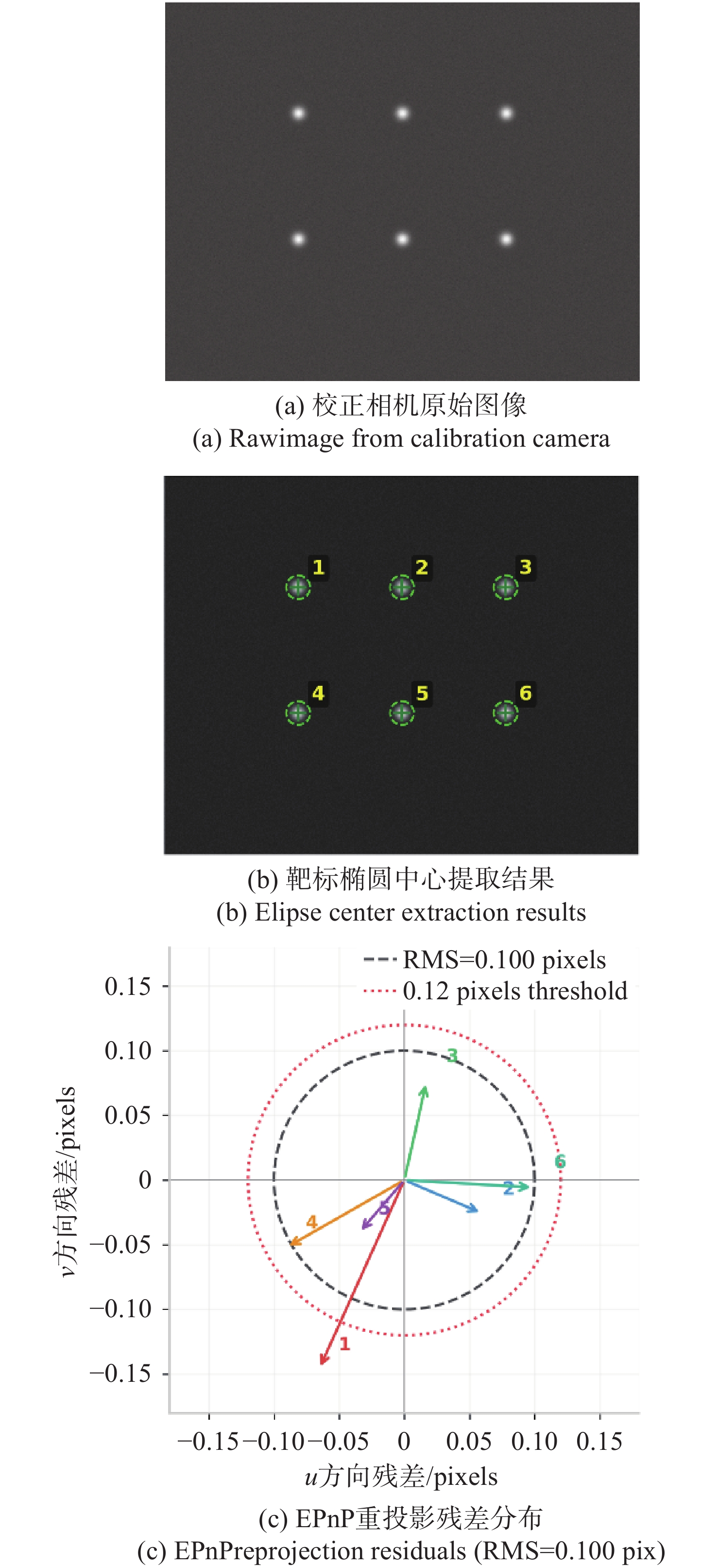
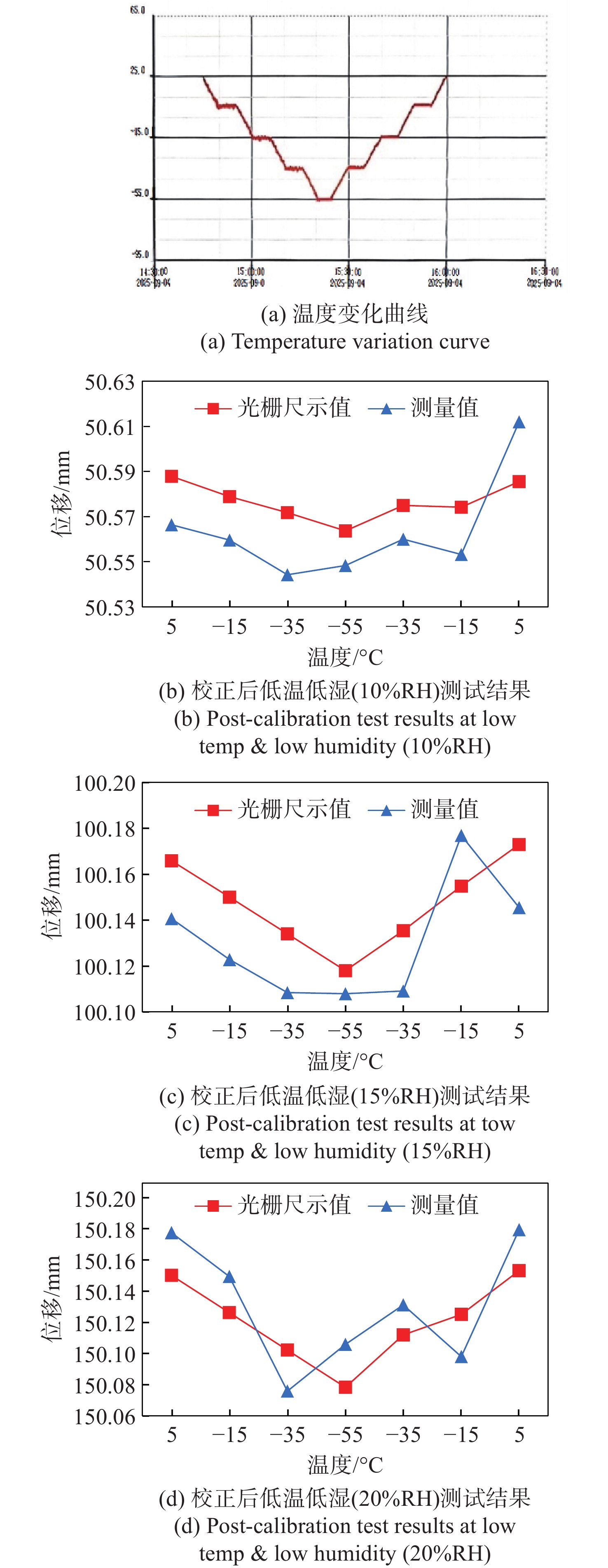
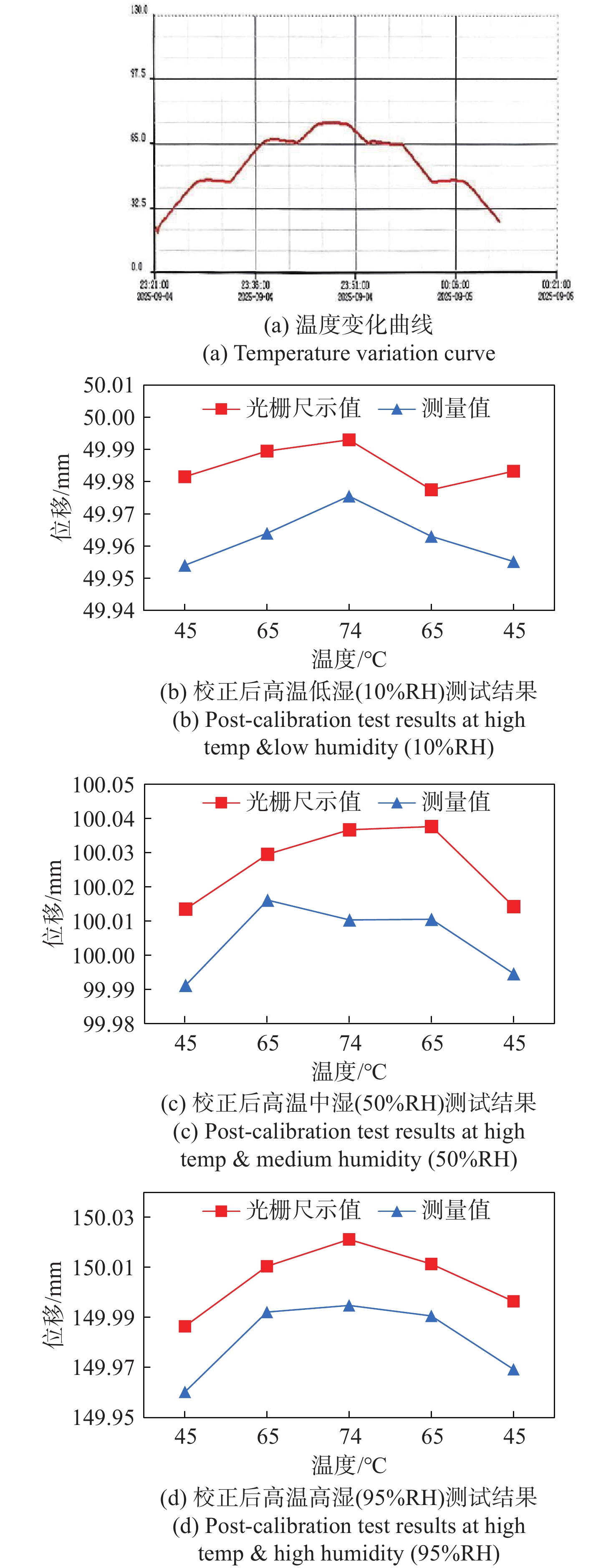
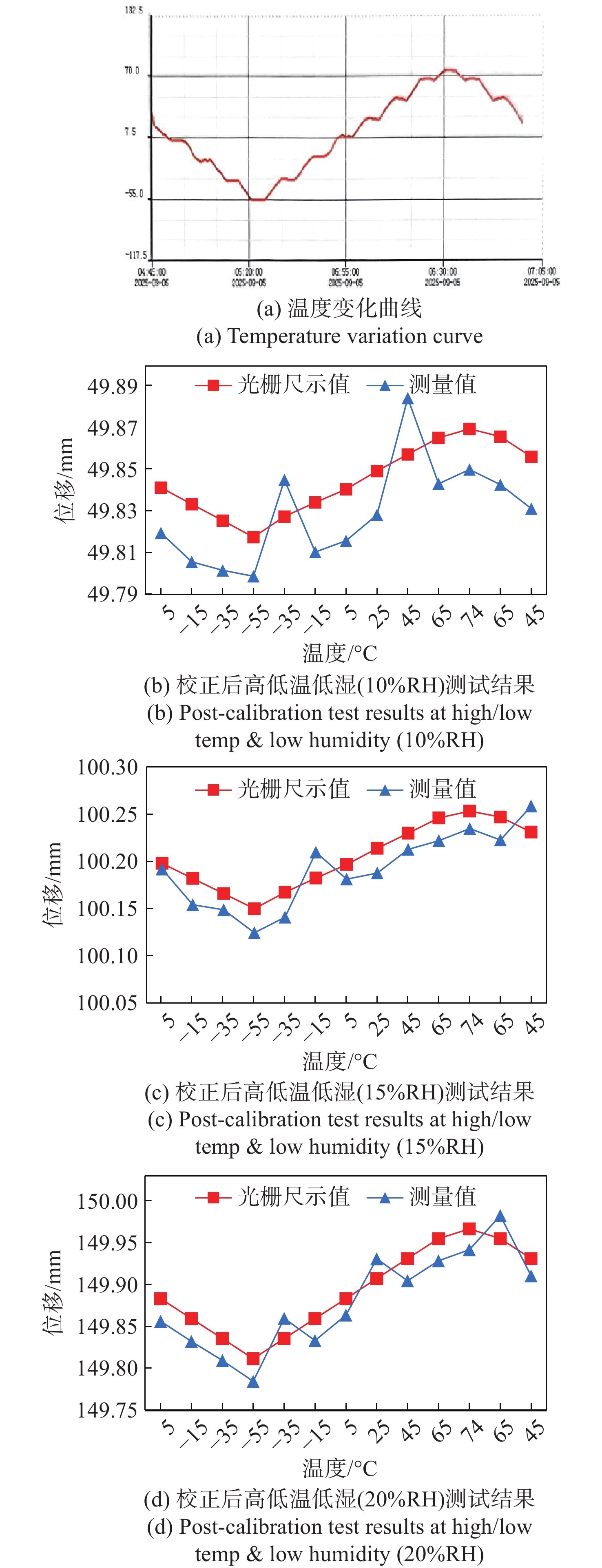
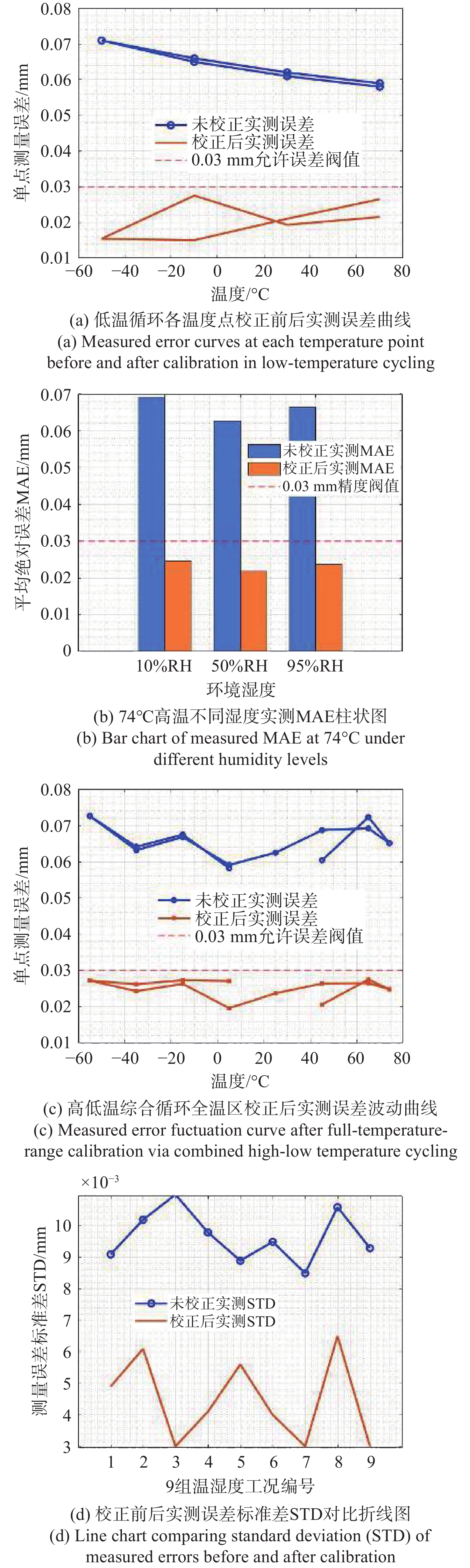
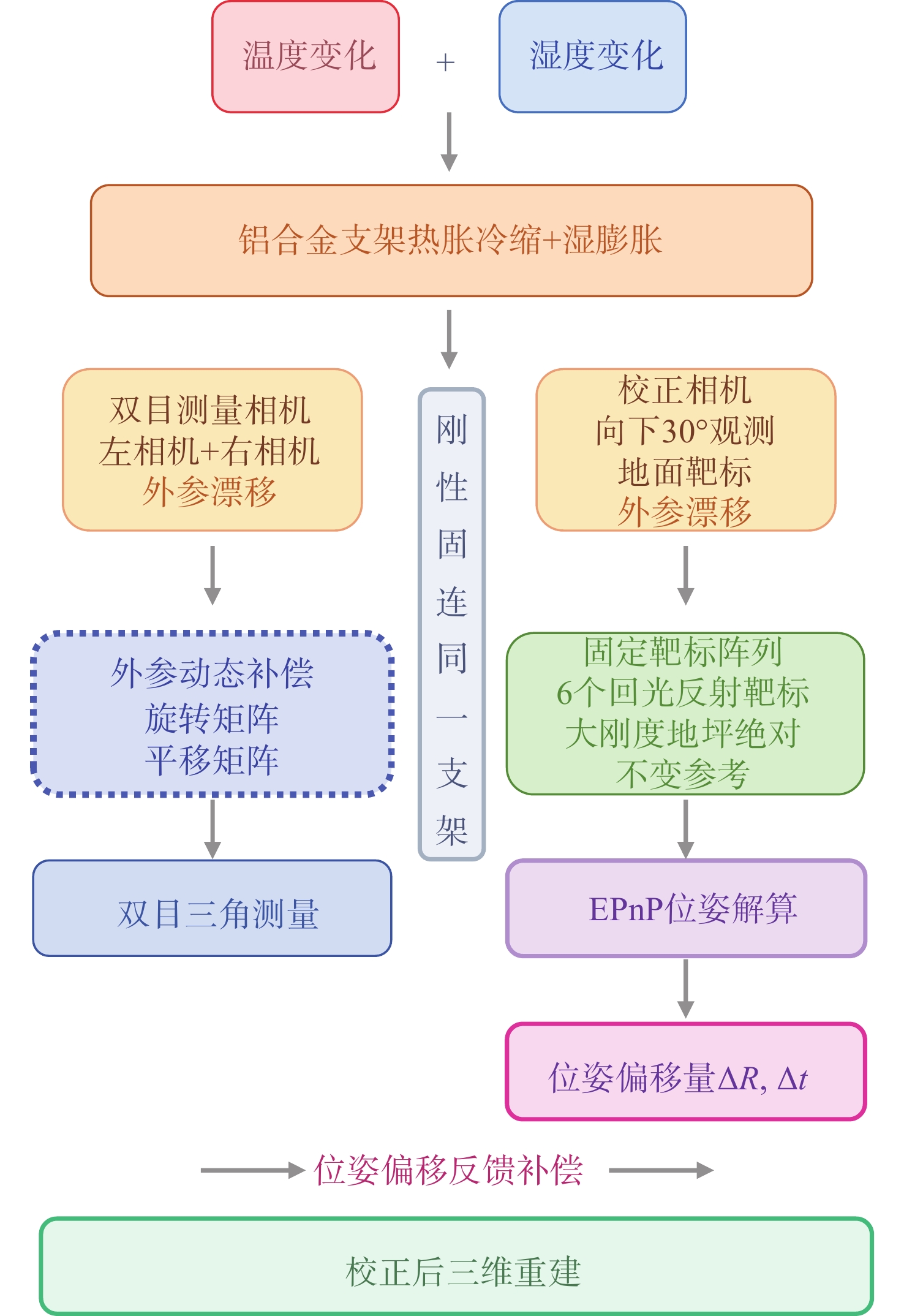
To address the issue of extrinsic parameter drift in binocular cameras induced by thermo-hygroscopic deformation of metallic camera supports within wide-range temperature–humidity coupled environments during aircraft structural climatic strength testing, as well as the inability of existing self-calibration methods to adapt to coupled high/low-temperature and high/low-humidity conditions, this paper proposes a real-time error correction method for binocular vision based on a fixed target array mounted on a high-stiffness foundation. A mathematical model of pose deviation is constructed incorporating thermal expansion, moisture expansion, and cross-coupling terms, and an extrinsic parameter error propagation equation under temperature–humidity disturbances is derived. An auxiliary correction camera is introduced to observe the fixed targets, and the EPnP algorithm is employed to solve for the support pose deviation, enabling dynamic compensation of the binocular system extrinsic parameters. Validation is conducted through simulations and nine sets of environmental chamber experiments, with a grating scale (accuracy: 0.5 μm) serving as the reference benchmark; the experiments cover low-temperature, high-temperature, and full-range comprehensive thermal cycling conditions. The simulation and experimental results demonstrate that the uncorrected system exhibits an average measurement error of 0.065 mm, exceeding the permissible error of 0.03 mm under all operating conditions. After applying the proposed correction method, the mean absolute error (MAE) across all conditions ranges from

| [1] |
ZHANG Z. A flexible new technique for camera calibration[J]. IEEE Transactions on Pattern Analysis and Machine Intelligence, 2000, 22(11): 1330-1334. doi: 10.1109/34.888718
|
| [2] |
HARTLEY R, ZISSERMAN A. Multiple View Geometry in Computer Vision[M]. 2nd ed. Cambridge: Cambridge University Press, 2003.
|
| [3] |
ZHAO H W, MA W H, JI P R, et al. Modeling the measurement accuracy for binocular stereo vision system[J]. Optics Express, 2025, 33(9): 19051-19066. doi: 10.1364/OE.547550
|
| [4] |
MIL-STD-810H Method 501.7 — High temperature[S]. US Department of Defense, 2019. (查阅网上资料, 未找到本条文献作者和出版信息, 请确认).
|
| [5] |
ADAMCZYK M, LIBERADZKI P, SITNIK R. Temperature compensation method for digital cameras in 2D and 3D measurement applications[J]. Sensors, 2018, 18(11): 3685. doi: 10.3390/s18113685
|
| [6] |
PAN B, SHI W T, LUBINEAU G. Effect of camera temperature variations on stereo-digital image correlation measurements[J]. Applied Optics, 2015, 54(34): 10089-10095. doi: 10.1364/AO.54.010089
|
| [7] |
CHIU M Y, CHEN G CH, HSU T H, et al. A multimode vision sensor with temporal contrast pixel and column-parallel local binary pattern extraction for dynamic depth sensing using stereo vision[J]. IEEE Journal of Solid-State Circuits, 2023, 58(10): 2767-2777. doi: 10.1109/JSSC.2023.3292051
|
| [8] |
吴大方, 王怀涛, 朱芳卉. 1200 °C高温环境下部件受热前表面应变的光学测量[J]. 应用数学和力学, 2018, 39(6): 631-644.
WU D F, WANG H T, ZHU F H. Optical measurement of heated-front-surface strains for components in high temperature environments up to 1200 °C[J]. Applied Mathematics and Mechanics, 2018, 39(6): 631-644. (in Chinese).
|
| [9] |
申旭. 卫星天线高低温热变形测量技术综述[J]. 航天器环境工程, 2022, 39(3): 306-315. doi: 10.12126/see.2022.03.014
SHEN X. Review of technologies for measuring thermal deformation of satellite antenna at high and low temperatures[J]. Spacecraft Environment Engineering, 2022, 39(3): 306-315. (in Chinese). doi: 10.12126/see.2022.03.014
|
| [10] |
ELAMIN A, EL-RABBANY A. Event/visual/IMU integration for UAV-based indoor navigation[J]. Proceedings, 2024, 110(1): 2.
|
| [11] |
GUO D, LI N N, FANG CH SH, et al. Fast and highly accurate registration of textile double-sided images: an innovative solution for the calibration of binocular measuring systems[J]. Measurement, 2025, 245: 116539. doi: 10.1016/j.measurement.2024.116539
|
| [12] |
ZHAO Y, LI W M. Self-calibration of a binocular vision system based on a one-dimensional target[J]. Journal of Modern Optics, 2014, 61(18): 1529-1537. doi: 10.1080/09500340.2014.944233
|
| [13] |
ZHANG ZH Y. Flexible camera calibration by viewing a plane from unknown orientations[C]. Proceedings of the Seventh IEEE International Conference on Computer Vision, IEEE, 1999: 666-673.
|
| [14] |
HOU CH CH, KANG Y F, QIAO T ZH. Multi-camera hierarchical calibration and three-dimensional reconstruction method for bulk material transportation system[J]. Sensors, 2025, 25(7): 2111. doi: 10.3390/s25072111
|
| [15] |
SCHARSTEIN D, SZELISKI R. A taxonomy and evaluation of dense two-frame stereo correspondence algorithms[J]. International Journal of Computer Vision, 2002, 47(1-3): 7-42. doi: 10.1023/A:1014573219977
|
| [16] |
YANG W K, WANG Z J, XU J, et al. Ultracompact computational spectroscopy with a detour-phased planar lens[J]. Light: Advanced Manufacturing, 2024, 5(4): 523-531. doi: 10.37188/lam.2024.044
|
| [17] |
ZHANG Y R, YANG E B, YOON H H, et al. Reconstructive spectrometers: hardware miniaturization and computational reconstruction[J]. eLight, 2025, 5(1): 23. doi: 10.1186/s43593-025-00101-0
|
| [18] |
TRUCCO E, VERRI A. Introductory Techniques for 3-D Computer Vision[M]. Upper Saddle River: Prentice Hall PTR, 1998.
|
| [19] |
CALLISTER W D, RETHWISCH D G. Materials Science and Engineering: An Introduction[M]. 9th ed. Hoboken: Wiley, 2014.
|
| [20] |
YU L P, LUBINEAU G. Modeling of systematic errors in stereo-digital image correlation due to camera self-heating[J]. Scientific Reports, 2019, 9(1): 6567. doi: 10.1038/s41598-019-43019-7
|
| [21] |
LEPETIT V, MORENO-NOGUER F, FUA P. EPnP: an accurate O(n) solution to the PnP problem[J]. International Journal of Computer Vision, 2009, 81(2): 155-166. doi: 10.1007/s11263-008-0152-6
|
| [22] |
GAO X SH, HOU X R, TANG J L, et al. Complete solution classification for the perspective-three-point problem[J]. IEEE Transactions on Pattern Analysis and Machine Intelligence, 2003, 25(8): 930-943. doi: 10.1109/TPAMI.2003.1217599
|
| [23] |
汪佳宝, 张世荣, 周清雅. 基于视觉EPnP加权迭代算法的三维位移实时测量[J]. 仪器仪表学报, 2020, 41(2): 166-175. doi: 10.19650/j.cnki.cjsi.J1905952
WANG J B, ZHANG SH R, ZHOU Q Y. Vision based real-time 3D displacement measurement using weighted iterative EPnP algorithm[J]. Chinese Journal of Scientific Instrument, 2020, 41(2): 166-175. (in Chinese). doi: 10.19650/j.cnki.cjsi.J1905952
|
Figures(9) / Tables(4)




 DownLoad: