| Citation: | CAI Zhi-ming, YANG Zhong-guang, ZHENG Duo-jin, HAN Rui-long, FENG Jian-chao, TANG Ning-biao, LIU Ye, FAN Yi-di, WANG Peng-cheng, SHI Xing-jian, CHEN Kun. Design and implementation of a full-chain dynamic simulation system for space-based gravitational wave detection[J]. Chinese Optics. doi: 10.37188/CO.2026-0084

|
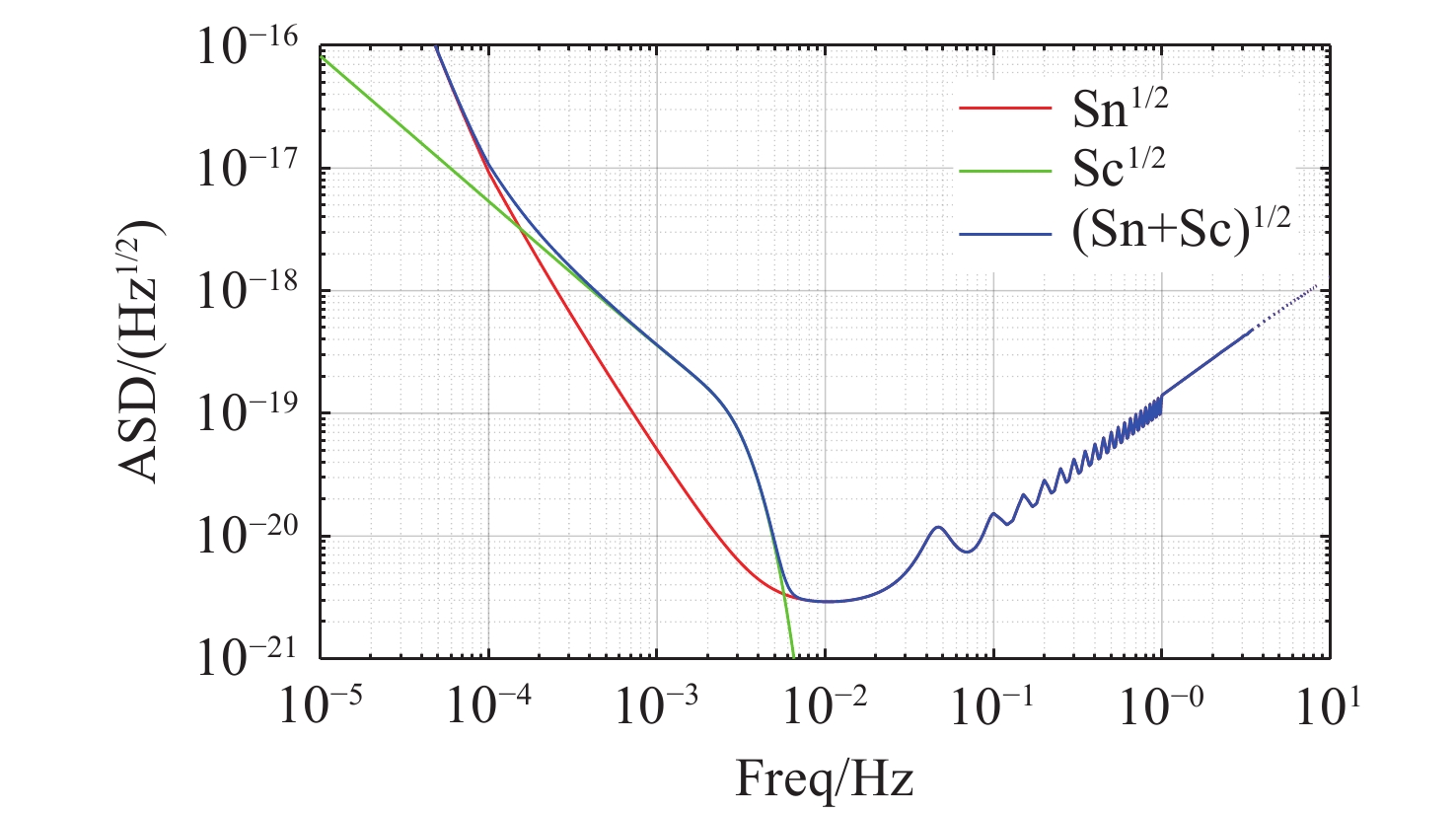
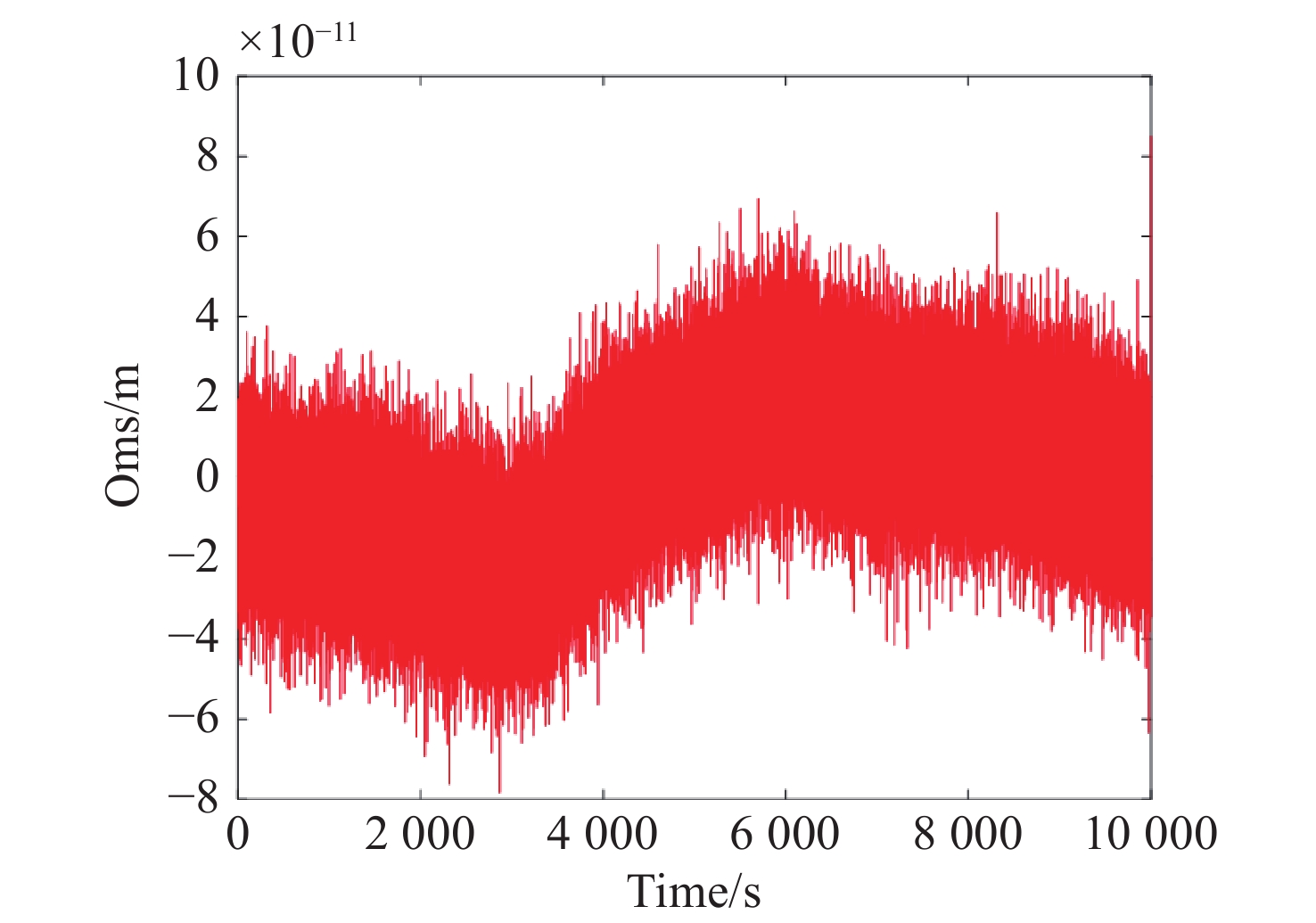
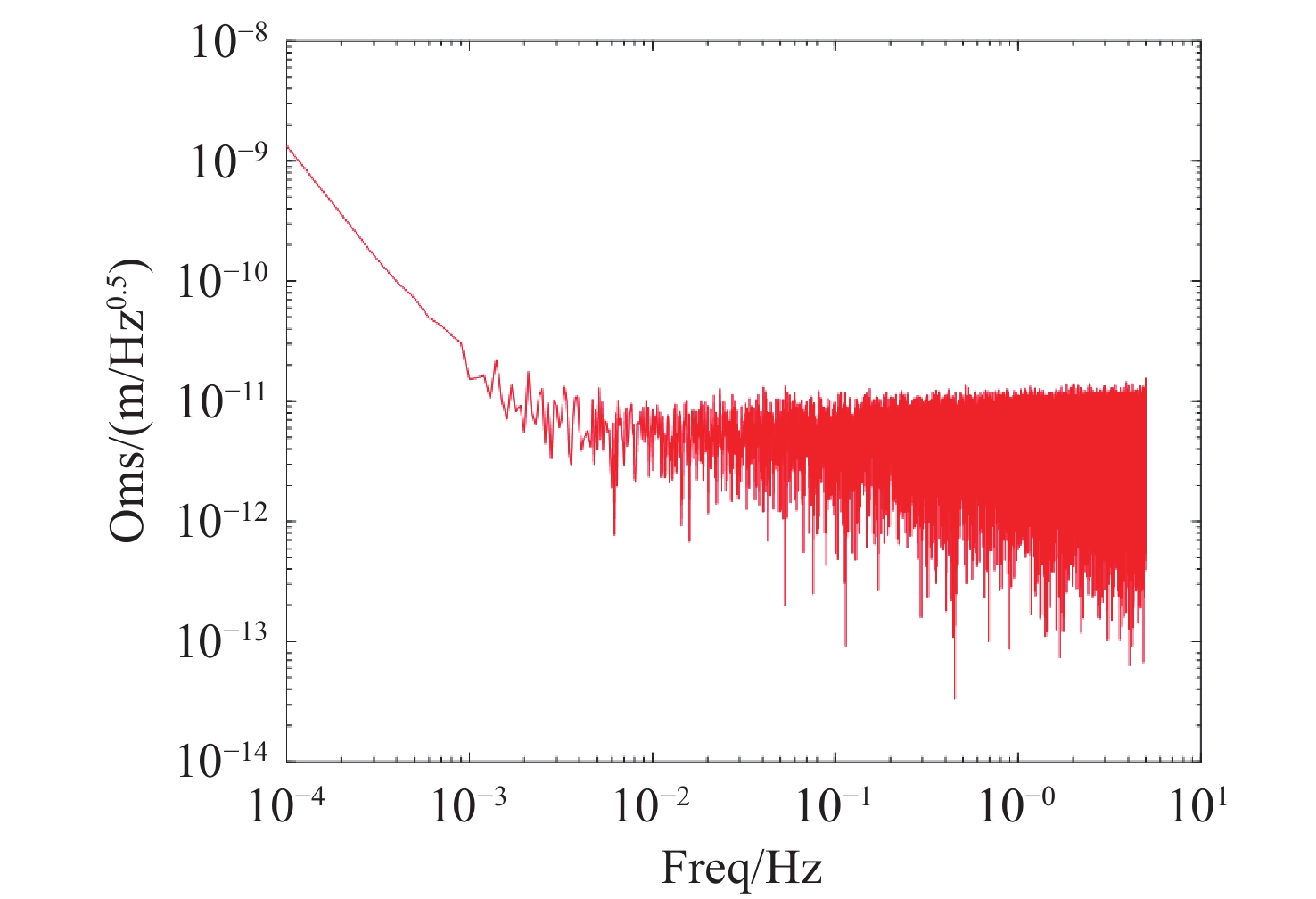
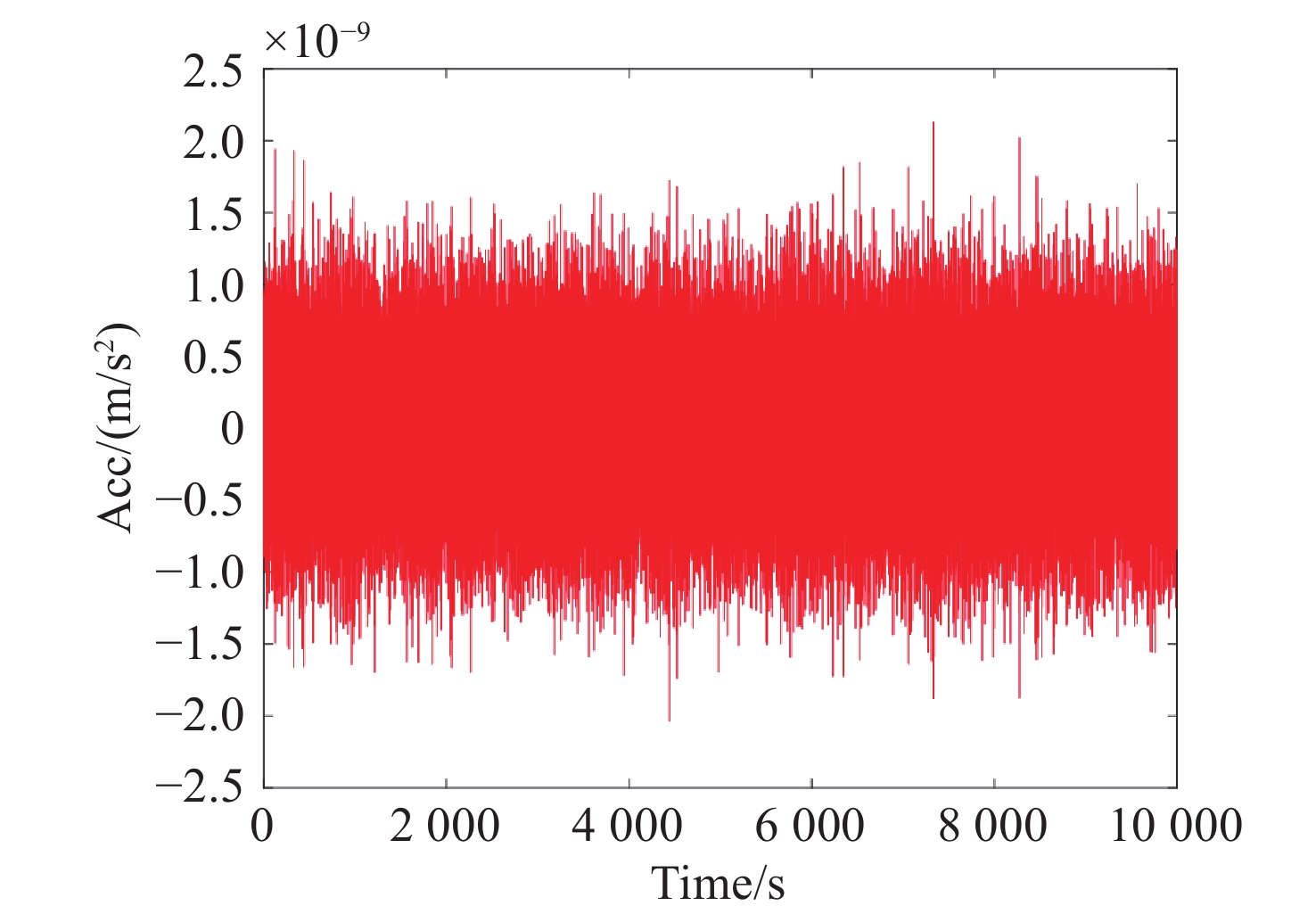
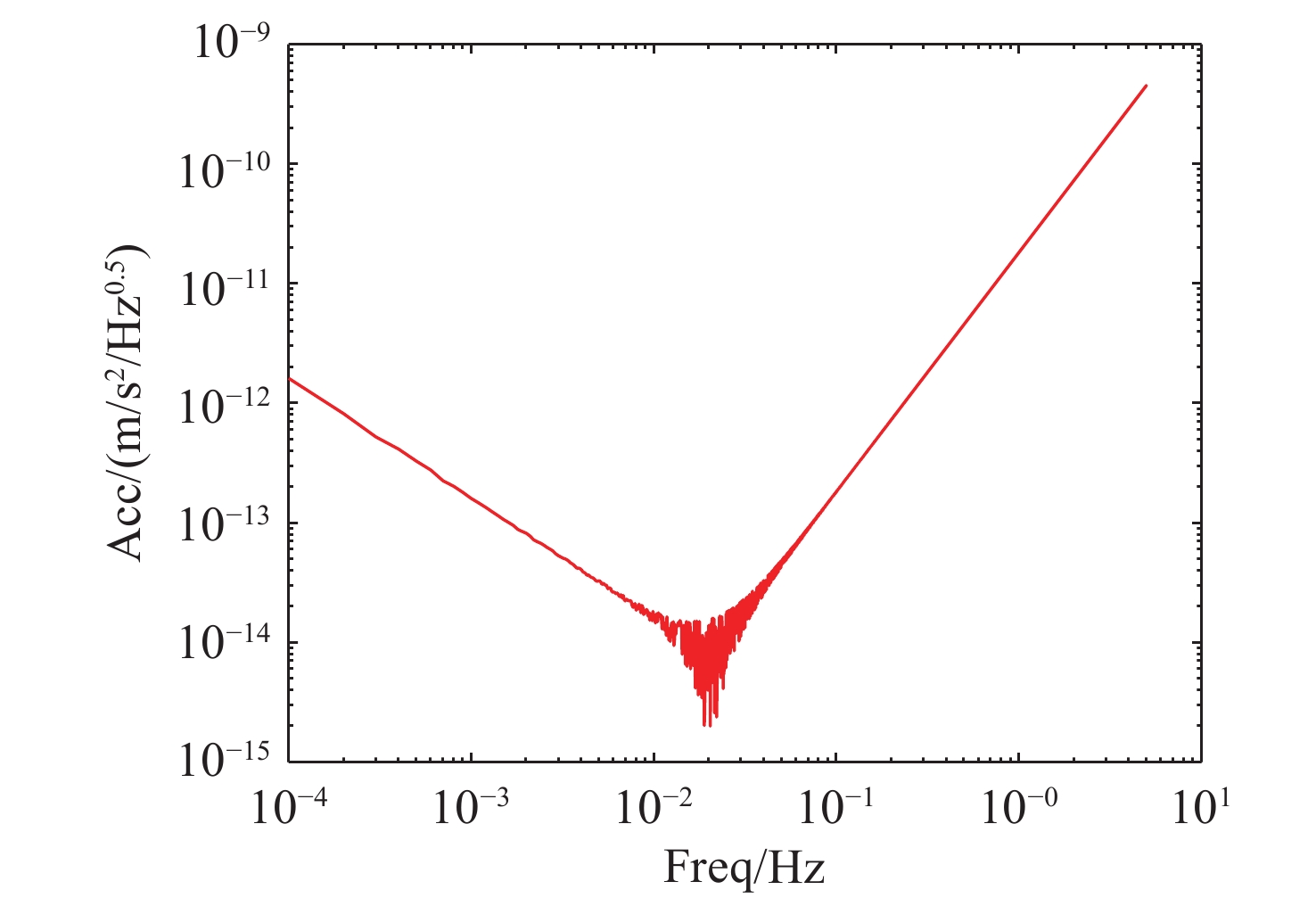
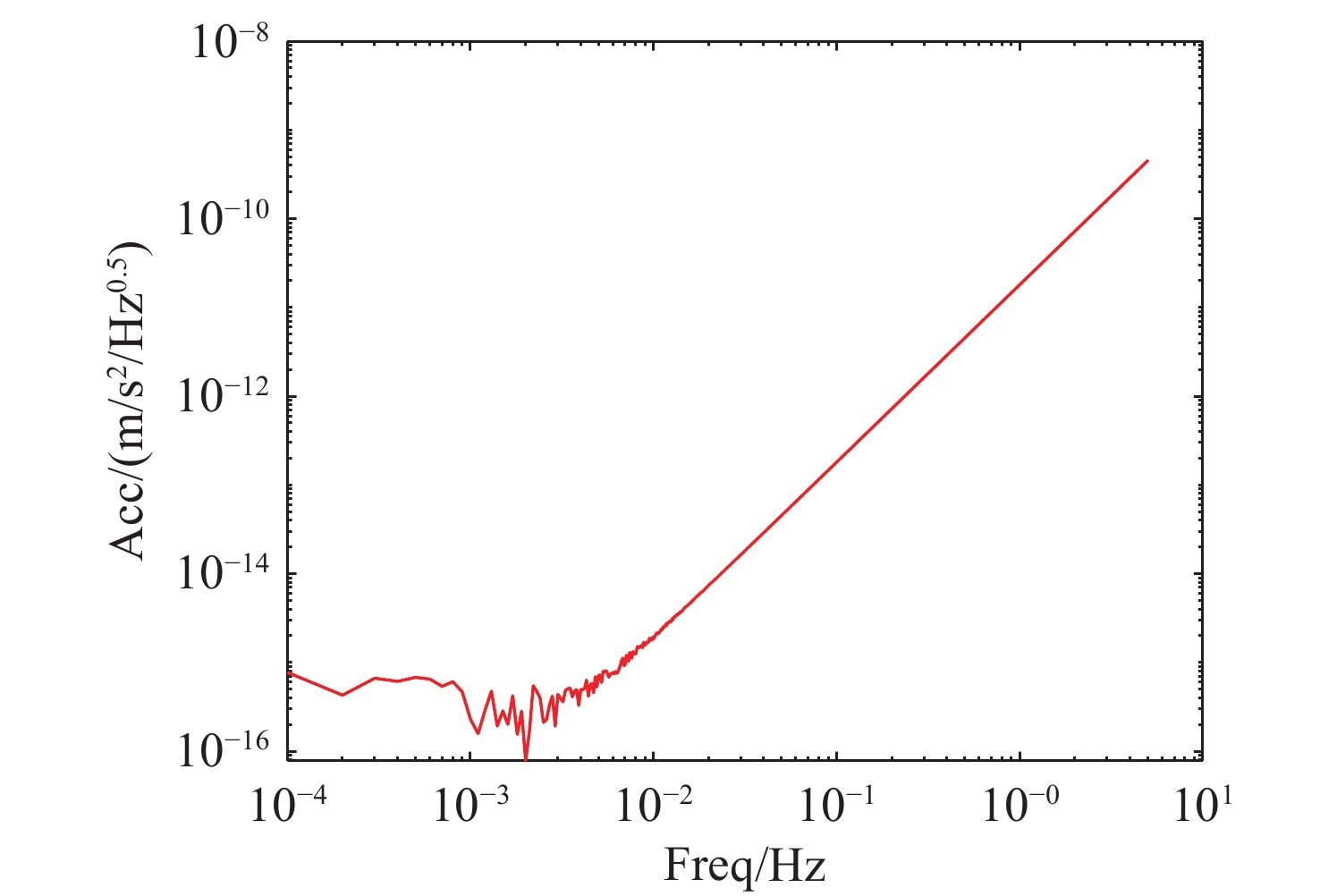
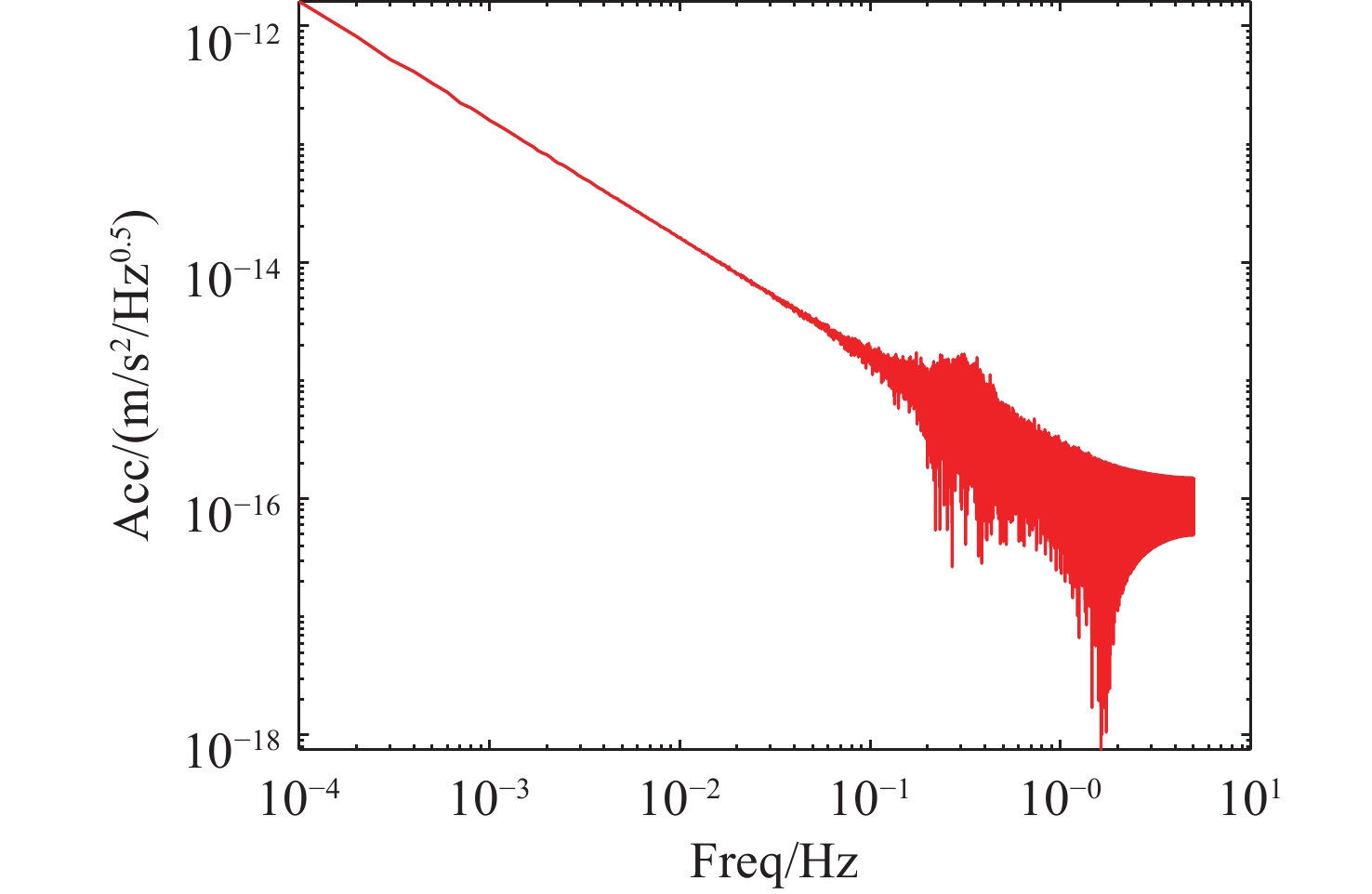
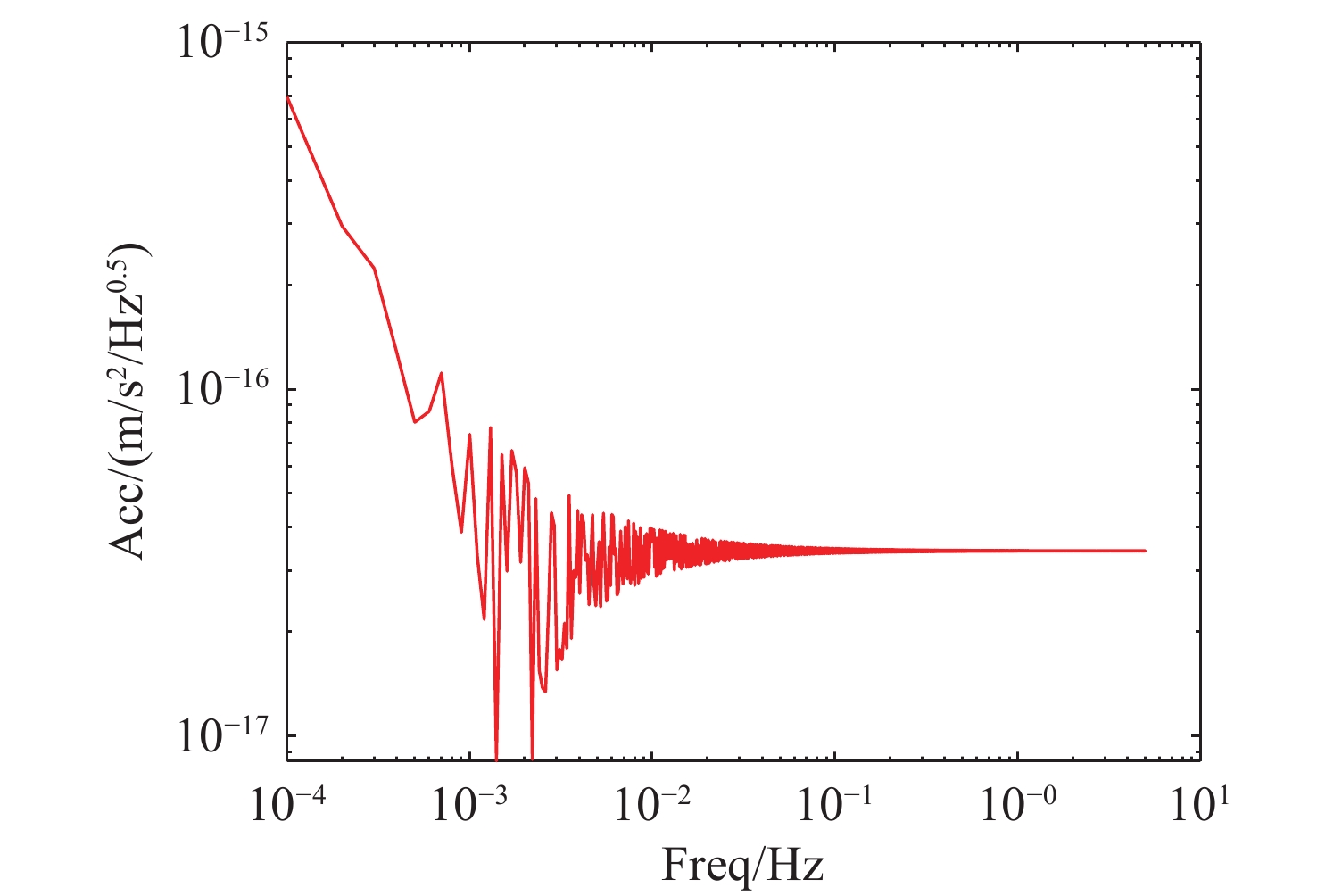
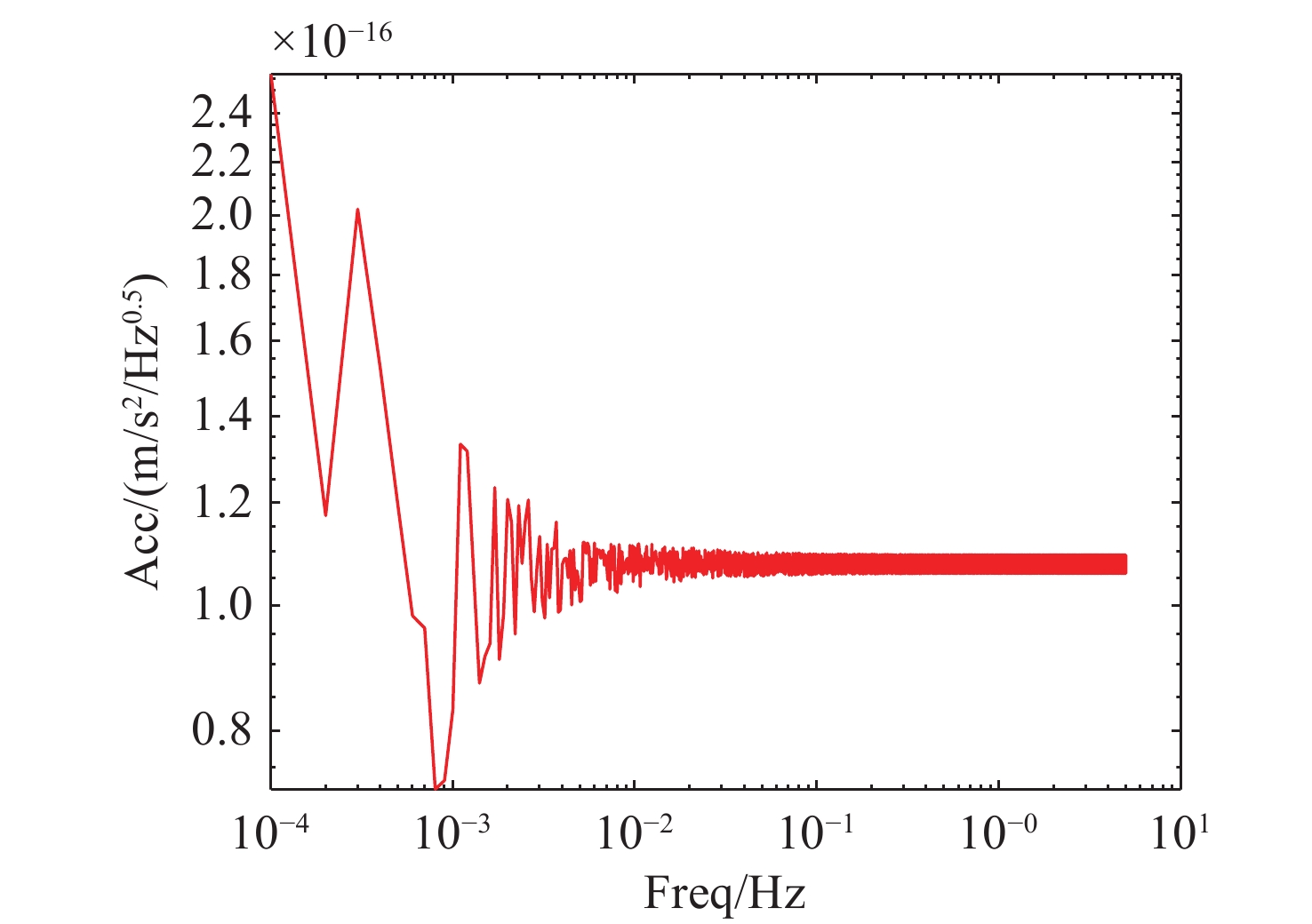
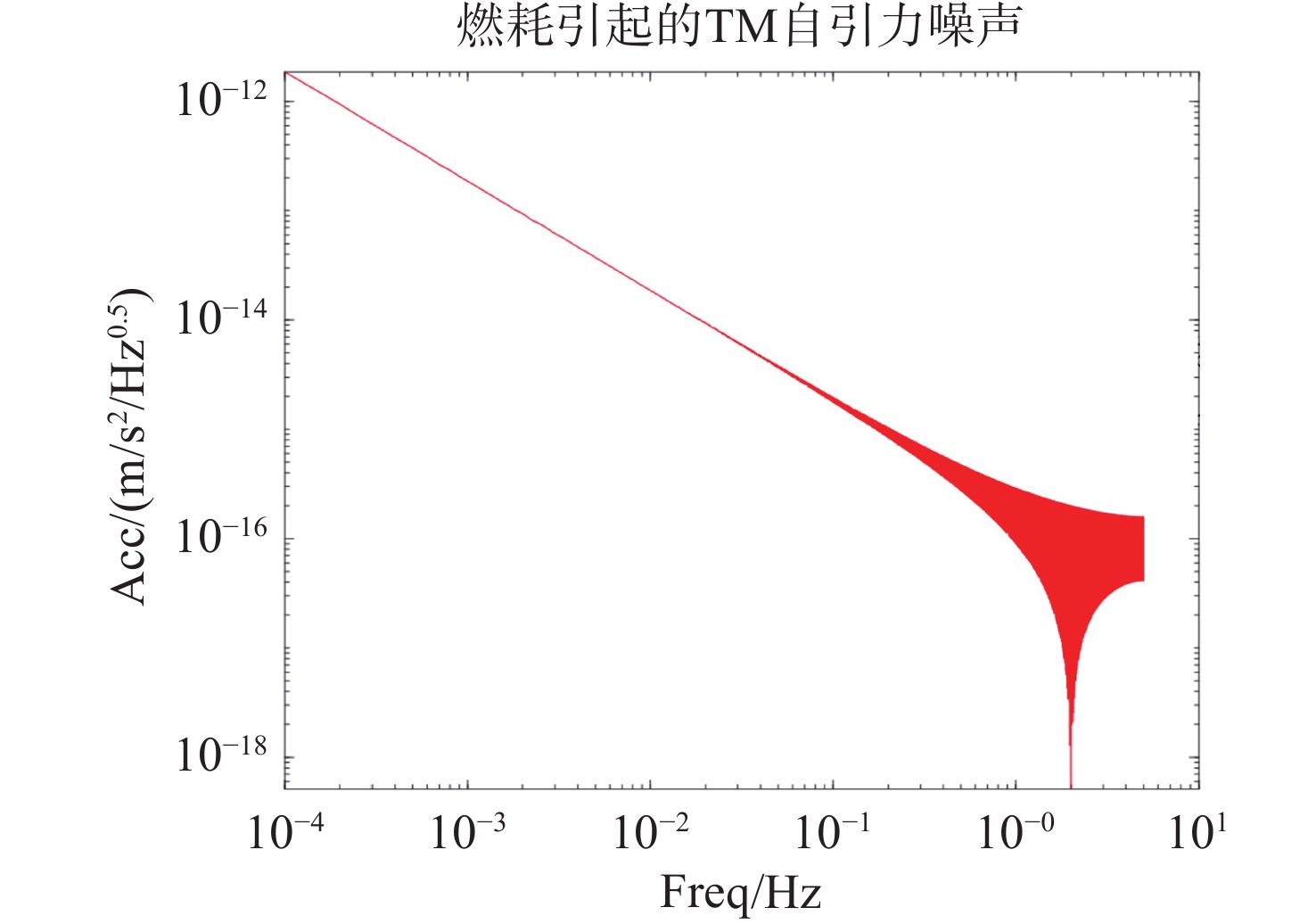
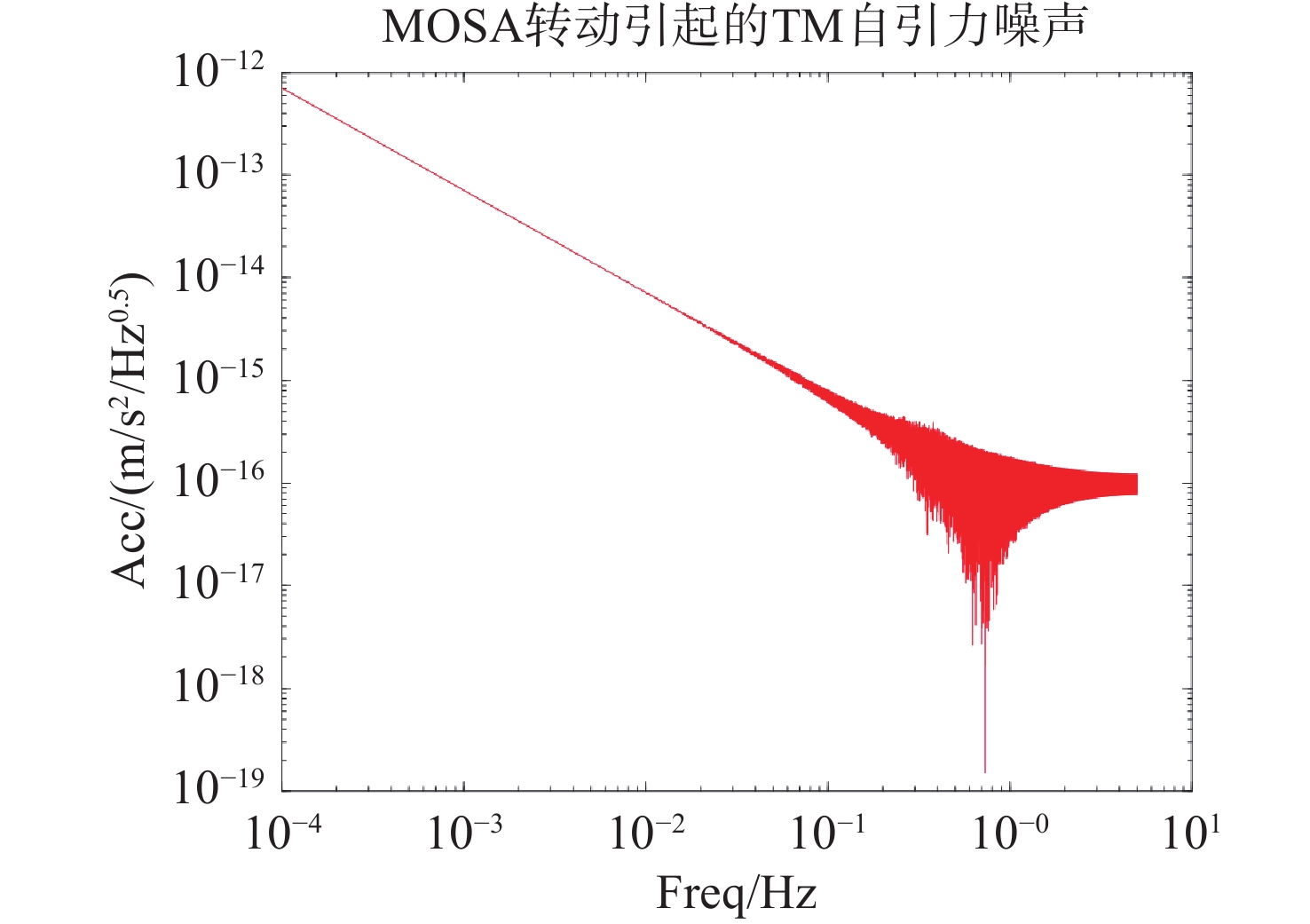
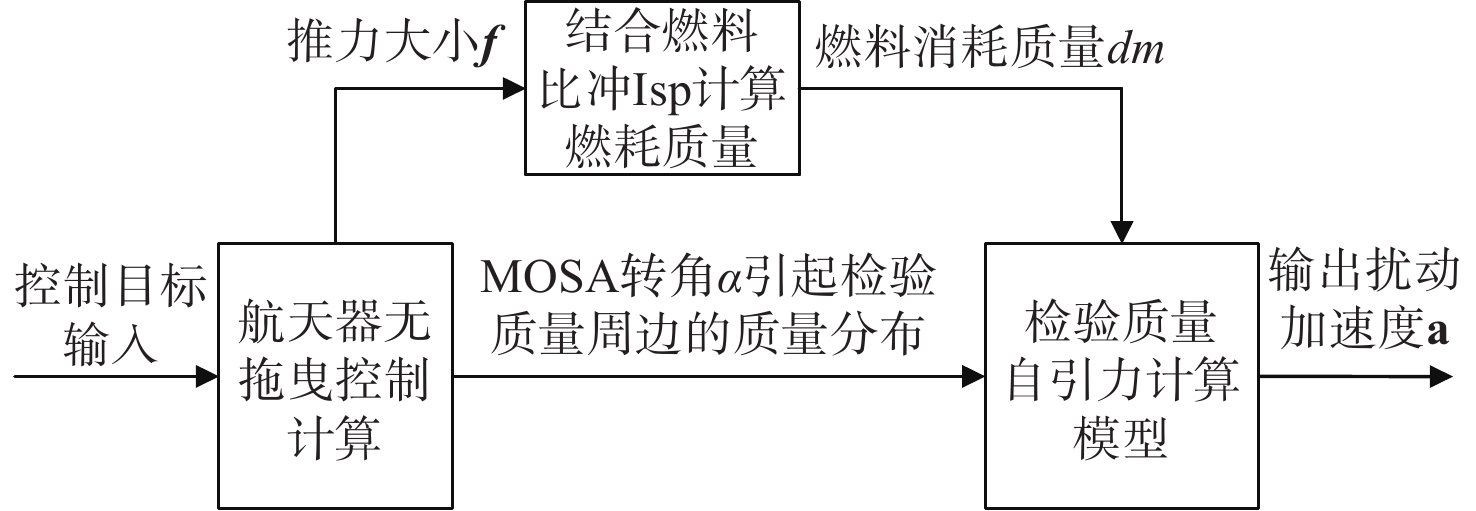
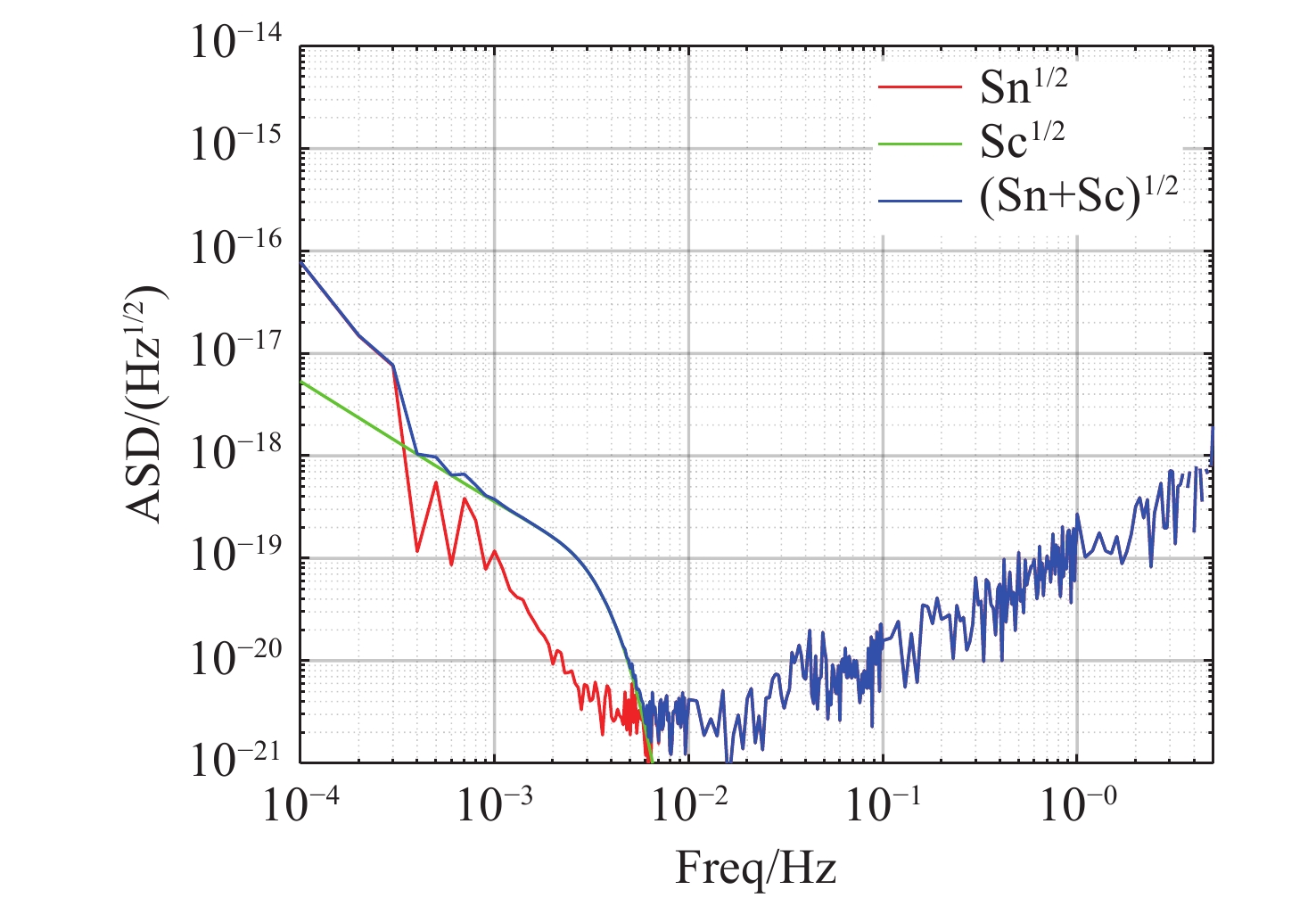
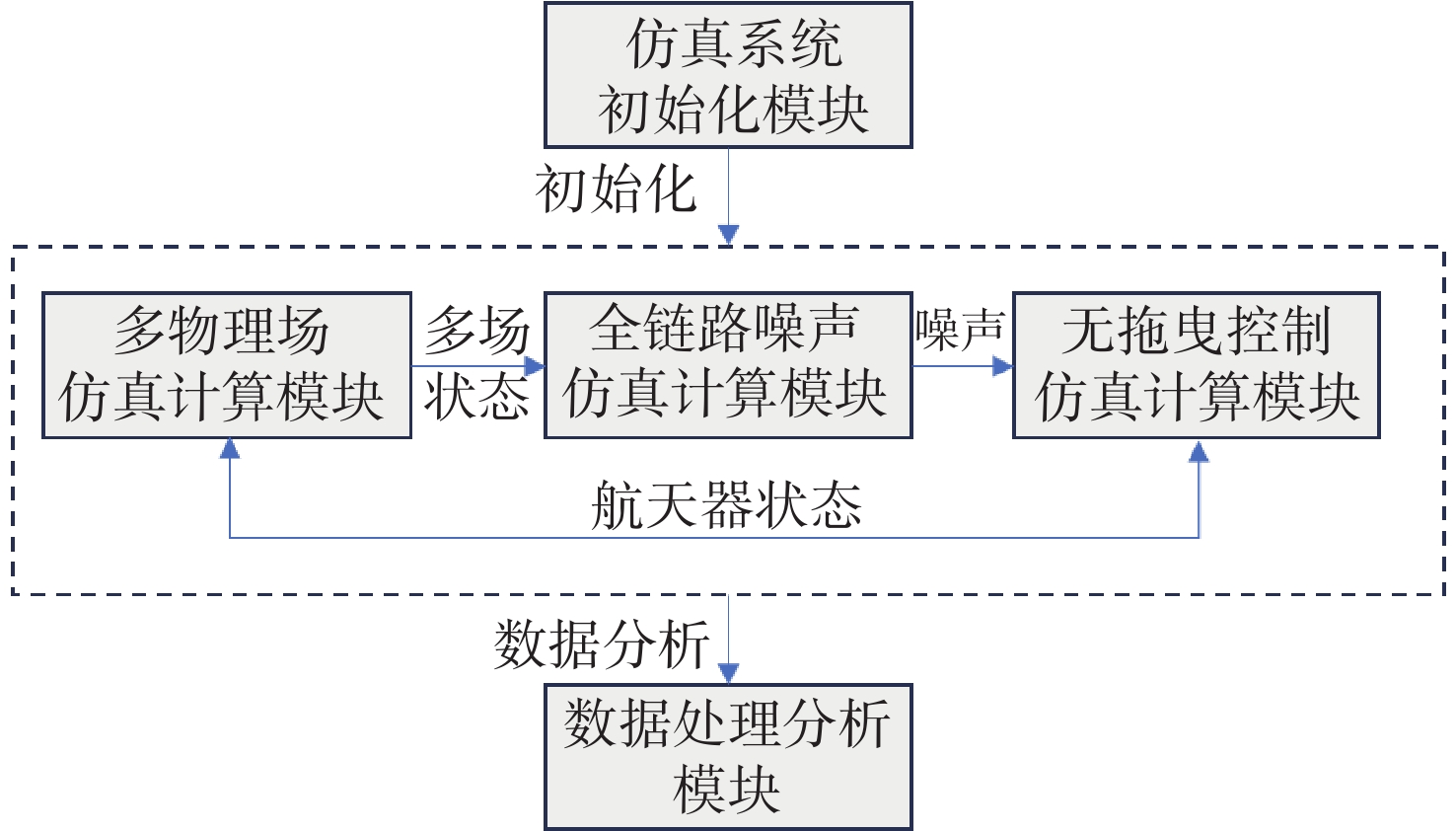
To address the issue that traditional static noise superposition methods in space-based gravitational wave detection neglect the dynamic coupling between multi-physics fields and the control system, making it difficult to meet the requirements of high-fidelity mission simulations, it is proposed and designed that a full-chain dynamic simulation system for space-based gravitational wave detection, establishing closed-loop feedback capability between the multi-physics fields and the control system. The system adopts a dynamic closed-loop architecture, comprising a spacecraft multi-physics field simulation module, a full-chain noise simulation module, a drag-free control simulation module, and a data processing and analysis module. In this architecture, the physical field states are computed based on the spacecraft states after control, and noises are generated through full-chain noise models mapped from the physical field states. The system achieves physical source tracing and dynamic simulation of full-chain noises. Simulation experiments reveal that self-gravity acceleration disturbances induced by the motion of the Movable Optical Sub-Assembly (MOSA) and fuel consumption can reach 10−13 m·s−2· Hz−1/2 level in the observation frequency band(0.1 mHz-1 Hz), necessitating compensation or subtraction through high-precision in-orbit measurement and calibration methods. The constructed system is capable of capturing dynamic coupling effects neglected by static models, thereby providing a high-fidelity simulation platform for mission design, noise source tracing and sensitivity evaluation in space-based gravitational wave detection.

| [1] |
罗子人, 白姗, 边星, 等. 空间激光干涉引力波探测[J]. 力学进展, 2013, 43(4): 415-447.
LUO Z R, BAI SH, BIAN X, et al. Gravitational wave detection by space laser interferometry[J]. Advances in Mechanics, 2013, 43(4): 415-447. (in Chinese).
|
| [2] |
ABBOTT B P, ABBOTT R, ABBOTT T D, et al. Observation of gravitational waves from a binary black hole merger[J]. Physical Review Letters, 2016, 116(6): 061102. doi: 10.1103/PhysRevLett.116.061102
|
| [3] |
WANNER G. Space-based gravitational wave detection and how LISA Pathfinder successfully paved the way[J]. Nature Physics, 2019, 15(3): 200-202. doi: 10.1038/s41567-019-0462-3
|
| [4] |
DANZMANN K, RÜDIGER A. LISA technology—concept, status, prospects[J]. Classical and Quantum Gravity, 2003, 20(10): S1-S9. doi: 10.1088/0264-9381/20/10/301
|
| [5] |
PRINCE T A, TINTO M, LARSON S L, et al. LISA optimal sensitivity[J]. Physical Review D, 2002, 66(12): 122002. doi: 10.1103/PhysRevD.66.122002
|
| [6] |
LUO Z R, GUO Z K, JIN G, et al. A brief analysis to Taiji: science and technology[J]. Results in Physics, 2020, 16: 102918. doi: 10.1016/j.rinp.2019.102918
|
| [7] |
LUO Z R, WANG Y, WU Y L, et al. The Taiji program: a concise overview[J]. Progress of Theoretical and Experimental Physics, 2021, 2021(5): 05A108. doi: 10.1093/ptep/ptaa083
|
| [8] |
LYU M H, ZHU L, QU SH B, et al. A finite element method for high-precision calculation of spacecraft self-gravity effects in gravitational wave detection[J]. Acta Astronautica, 2025, 235: 215-222. doi: 10.1016/j.actaastro.2025.05.028
|
| [9] |
BOND C, BROWN D, FREISE A, et al. Interferometer techniques for gravitational-wave detection[J]. Living Reviews in Relativity, 2016, 19(1): 3. doi: 10.1007/s41114-016-0002-8
|
| [10] |
王娟, 齐克奇, 王少鑫, 等. 面向空间引力波探测的激光干涉技术研究进展及展望[J]. 中国科学: 物理学 力学 天文学, 2024, 54(7): 270405.
WANG J, QI K Q, WANG SH X, et al. Advance and prospect in the study of laser interferometry technology for space gravitational wave detection[J]. Scientia Sinica Physica, Mechanica & Astronomica, 2024, 54(7): 270405. (in Chinese).
|
| [11] |
柯俊. 空间惯性传感器中检验质量噪声的理论建模与仿真研究[D]. 武汉: 中国地质大学, 2024.
KE J. Theoretical modeling and simulation for the test mass noise of space inertial sensors[D]. Wuhan: China University of Geosciences, 2024. (in Chinese).
|
| [12] |
LIU H SH, WANG J, TAO W, et al. Recent development of the laser interferometer for Taiji space gravitational wave detection[J]. Research, 2026, 9: 1252. doi: 10.34133/research.1252
|
| [13] |
方子若, 朱振才, 蔡志鸣, 等. 空间引力波探测航天器光学测距噪声链路指标优化[J]. 中国光学(中英文), 2025, 18(3): 568-582. doi: 10.37188/CO.2024-0185
FANG Z R, ZHU ZH C, CAI ZH M, et al. Optimization of optical metrology noise link metrics for space-based gravitational wave detection spacecraft[J]. Chinese Optics, 2025, 18(3): 568-582. (in Chinese). doi: 10.37188/CO.2024-0185
|
| [14] |
刘河山, 王娟, 高瑞弘, 等. 太极二号干涉仪系统噪声与指标分解[J]. 空间科学学报, 2025, 45(4): 1047-1057. doi: 10.11728/cjss2025.04.2025-yg02
LIU H SH, WANG J, GAO R H, et al. Noise and index decomposition of Taiji-2 interferometer system[J]. Chinese Journal of Space Science, 2025, 45(4): 1047-1057. (in Chinese). doi: 10.11728/cjss2025.04.2025-yg02
|
| [15] |
SONG J, FAN W T, FANG S J, et al. Optimized design of a gravitational wave telescope system based on pupil aberration[J]. Applied Optics, 2024, 63(7): 1815-1821. doi: 10.1364/AO.515579
|
| [16] |
SHEN J, WANG SH X, QI K Q, et al. The suppression effect of an imaging system on the geometric tilt-to-length coupling in a test mass interferometer[J]. Photonics, 2024, 11(7): 638. doi: 10.3390/photonics11070638
|
| [17] |
崔新旭, 方超, 王智. 引力波望远镜的装调误差对TTL耦合噪声的影响[J]. 光学学报, 2023, 43(19): 1912001. doi: 10.3788/AOS230675
CUI X X, FANG CH, WANG ZH. Influence of installation and adjustment error of gravitational wave telescope on TTL noise[J]. Acta Optica Sinica, 2023, 43(19): 1912001. (in Chinese). doi: 10.3788/AOS230675
|
| [18] |
KULKARNI S. Technology development for ground verification of dimensional stability of the LISA telescope[D]. Gainesville: University of Florida, 2022.
|
| [19] |
SUMNER T J, MUELLER G, CONKLIN J W, et al. Charge induced acceleration noise in the LISA gravitational reference sensor[J]. Classical and Quantum Gravity, 2020, 37(4): 045010. doi: 10.1088/1361-6382/ab5f6e
|
| [20] |
柴国志, 黄亮, 乔亮, 等. 星上剩磁对惯性传感器的影响[J]. 中国光学, 2019, 12(3): 515-525. doi: 10.3788/CO.20191203.0515
CHAI G ZH, HUANG L, QIAO L, et al. Effect of the on-board residual magnetism on inertial sensors[J]. Chinese Optics, 2019, 12(3): 515-525. (in Chinese). doi: 10.3788/CO.20191203.0515
|
| [21] |
SALA L. Residual test mass acceleration in LISA Pathfinder: in-depth statistical analysis and physical sources[D]. Trento: University of Trento, 2023.
|
| [22] |
ZHANG H Y, XU P, YE Z Q, et al. A systematic approach for inertial sensor calibration of gravity recovery satellites and its application to Taiji-1 mission[J]. Remote Sensing, 2023, 15(15): 3817. doi: 10.3390/rs15153817
|
| [23] |
BARKE S, WANG Y, ESTEBAN DELGADO J J, et al. Towards a gravitational wave observatory designer: sensitivity limits of spaceborne detectors[J]. Classical and Quantum Gravity, 2015, 32(9): 095004. doi: 10.1088/0264-9381/32/9/095004
|
| [24] |
ROBSON T, CORNISH N J, LIU CH. The construction and use of LISA sensitivity curves[J]. Classical and Quantum Gravity, 2019, 36(10): 105011. doi: 10.1088/1361-6382/ab1101
|
| [25] |
HANNEN V M, SMIT M, HOYNG P, et al. End-to-end simulations for the LISA Technology Package[J]. Classical and Quantum Gravity, 2003, 20(10): S261-S271. doi: 10.1088/0264-9381/20/10/329
|
| [26] |
DU M H, WANG P CH, LUO Z R, et al. Towards realistic detection pipelines of Taiji: new challenges in data analysis and high-fidelity simulations of space-based gravitational wave antenna[J]. Science China Physics, Mechanics & Astronomy, 2026, 69(4): 249501.
|
| [27] |
汤宁标, 杨中光, 余贤圣, 等. 空间引力波探测器自引力分析与建模方法[J]. 系统工程与电子技术, 2024, 46(12): 4083-4090. doi: 10.12305/j.issn.1001-506X.2024.12.17
TANG N B, YANG ZH G, YU X SH, et al. Self-gravity analysis and modeling method of space gravitational wave detector[J]. Systems Engineering and Electronics, 2024, 46(12): 4083-4090. (in Chinese). doi: 10.12305/j.issn.1001-506X.2024.12.17
|
| [28] |
高志勇, 王上, 王智. 基于FEM的引力参考传感器自引力计算与补偿[J]. 中国空间科学技术(中英文), 2024, 44(2): 89-97. doi: 10.16708/j.cnki.1000-758X.2024.0025
GAO ZH Y, WANG SH, WANG ZH. Calculation and compensation of self-gravity for gravitational reference sensor based on finite element method[J]. Chinese Space Science and Technology, 2024, 44(2): 89-97. (in Chinese). doi: 10.16708/j.cnki.1000-758X.2024.0025
|
| [29] |
FAN Z CH, JIANG ZH Y, WEI SH L. Nijboer–Zernike approach for far-field propagation simulations in space-based gravitational wave detector[J]. Optics & Laser Technology, 2026, 193: 114266. doi: 10.1016/j.optlastec.2025.114266
|
| [30] |
冯建朝, 张晓峰, 梁鸿, 等. 太极二号卫星精密热控关键技术及试验验证[J]. 宇航学报, 2023, 44(1): 132-142. doi: 10.3873/j.issn.1000-1328.2023.01.013
FENG J CH, ZHANG X F, LIANG H, et al. Key technology and experimental verification of precision thermal control of Taiji-2 satellite[J]. Journal of Astronautics, 2023, 44(1): 132-142. (in Chinese). doi: 10.3873/j.issn.1000-1328.2023.01.013
|
| [31] |
TANG N B, FANG Z R, YANG ZH G, et al. Neural network-based self-gravity modeling via mechanism decomposition in space gravitational wave detection[J]. Aerospace Science and Technology, 2026, 169: 111508. doi: 10.1016/j.ast.2025.111508
|
| [32] |
LIU Y, SHI X J, YANG W ZH, et al. A precise magnetic modeling method for scientific satellites based on a self-attention mechanism and Kolmogorov-Arnold Networks[J]. Astronomical Techniques and Instruments, 2025, 2(1): 1-9. doi: 10.61977/ati2024049
|
| [33] |
方子若, 侍行剑, 陈琨, 等. 引力波探测航天器噪声分解及电磁力噪声仿真[J]. 深空探测学报(中英文), 2023, 10(3): 334-342. doi: 10.15982/j.issn.2096-9287.2023.20230013
FANG Z R, SHI X J, CHEN K, et al. Gravitational wave detection spacecraft noise decomposition and electromagnetic force noise simulation[J]. Journal of Deep Space Exploration, 2023, 10(3): 334-342. (in Chinese). doi: 10.15982/j.issn.2096-9287.2023.20230013
|
| [34] |
王少鑫, 郭纬川, 赵平安, 等. 空间引力波探测惯性传感器及其关键技术[J]. 中国科学: 物理学 力学 天文学, 2024, 54(7): 270404.
WANG SH X, GUO W CH, ZHAO P A, et al. Inertial sensor for space gravitational wave detection and its key technologies[J]. Scientia Sinica Physica, Mechanica & Astronomica, 2024, 54(7): 270404. (in Chinese).
|
| [35] |
范一迪, 王鹏程, 卢苇, 等. 双检验质量无拖曳卫星鲁棒控制[J]. 深空探测学报(中英文), 2023, 10(3): 310-321. doi: 10.15982/j.issn.2096-9287.2023.20230037
FAN Y D, WANG P CH, LU W, et al. Robust controller design for drag-free satellites with two test masses[J]. Journal of Deep Space Exploration, 2023, 10(3): 310-321. (in Chinese). doi: 10.15982/j.issn.2096-9287.2023.20230037
|
| [36] |
苟兴宇, 王丽娇, 许现民, 等. 位移无拖曳控制的动力学协调条件研究[J]. 宇航学报, 2024, 45(4): 540-549. doi: 10.3873/j.issn.1000-1328.2024.04.006
GOU X Y, WANG L J, XU X M, et al. Study on dynamic coordination condition of displacement drag-free control[J]. Journal of Astronautics, 2024, 45(4): 540-549. (in Chinese). doi: 10.3873/j.issn.1000-1328.2024.04.006
|
| [37] |
YUE CH L, JIAO B H, DANG ZH H, et al. A review on DFACS (II): modeling and analysis of disturbances and noises[J]. Chinese Journal of Aeronautics, 2024, 37(5): 120-147. doi: 10.1016/j.cja.2024.02.013
|
| [38] |
WANG J H, GUO X, MA ZH J, et al. A low fuel-consumption drag-free tracking approach for space-based gravitational wave detection satellite[J]. IEEE Transactions on Aerospace and Electronic Systems, 2024, 60(2): 1545-1555. doi: 10.1109/TAES.2023.3336827
|
| [39] |
VIDANO S, NOVARA C, COLANGELO L, et al. The LISA DFACS: a nonlinear model for the spacecraft dynamics[J]. Aerospace Science and Technology, 2020, 107: 106313. doi: 10.1016/j.ast.2020.106313
|
Figures(18) / Tables(1)




 DownLoad: