



Laser processing of flexible and stretchable RGO in-plane micro-supercapacitors with strong performance robustness
doi: 10.3724/CO.EN-2026-0011
-
摘要:
柔性可拉伸平面微型超级电容器(FS-MSCs)在大变形下的性能不稳定和性能退化限制了其应用。选择合适的柔性电极材料并将其与可拉伸基底集成是解决该问题的关键,但简化器件制备流程并优化性能仍面临挑战。在此,我们报告了一种可编程的单一波长激光加工策略,该策略可同时对氧化石墨烯(GO)叉指电极薄膜进行图案化和还原处理,并对弹性基底规整性纹理化。通过预拉伸基底并将其与柔性电极适配,我们的器件展现出了优异的性能鲁棒性。该器件能够承受超过300°的弯曲角度和约为原始长度120%的拉伸程度。此外,通过优化基底表面形貌至有序网格,器件的电化学性能和稳定性得到了进一步显著提升。在不同拉伸条件下,其最大电容达到1.34 mF/cm2,波动仅为1.5%。即使电流密度从0.01 mA/cm2逐渐增加到0.05 mA/cm2,在不同拉伸强度下,器件的比电容波动仍保持在<7.4%。我们的工作为简化器件构建、并提高平面FS-MSCs在恶劣变形环境下的性能稳定性提供了一种有效解决方案,在可穿戴和便携式储能的未来应用中具有巨大潜力。
Abstract:The performance instability and degradation of flexible and stretchable in-plane micro-supercapacitors (FS-MSCs) under large deformation have limited their applications. Selecting suitable flexible electrode materials and integrating them with stretchable substrates is crucial to solve the problem, while it remains a challenge to simplify the device preparation and optimize performance. Here, we report a programmable single-wavelength laser processing strategy that simultaneously reduces/patterns reduced graphene oxide (RGO) interdigital electrodes and textures an elastomeric substrate. By pre-stretching the substrate and fitting it to the flexible RGO electrodes, our device demonstrates excellent performance robustness. A bending angle of over 300° and a tensile strain of about 120% of its original length can be withstood. Furthermore, by optimizing the substrate surface morphology with ordered gridding, the electrochemical properties and stability of the device have been significantly improved, which achieves a maximum capacitance of 1.34 mF/cm2 with a fluctuation of only 1.5% under different tensile conditions. Even as the current density increases from 0.01 to 0.05 mA/cm2 gradually, the specific capacitance fluctuation of the devices remains <7.4% under varying tensile strengths. Our work offers an effective solution for enhancing performance stability of in-plane FS-MSCs in harsh deformation environments, holding great potential for their future applications in wearable and portable energy storage.
-
Key words:
- laser processing /
- micro-supercapacitors /
- RGO /
- robustness /
- flexibility and stretchability
-
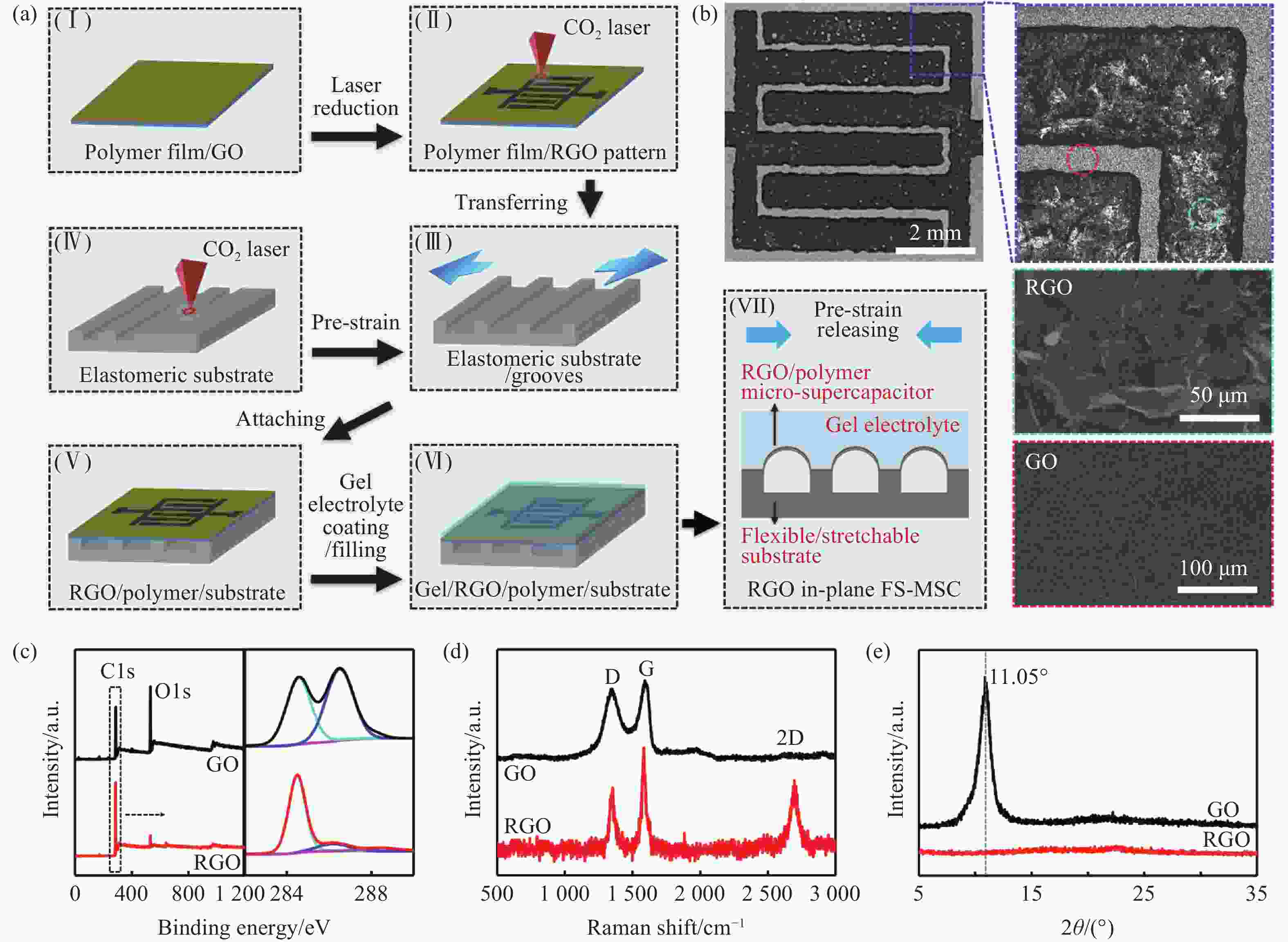
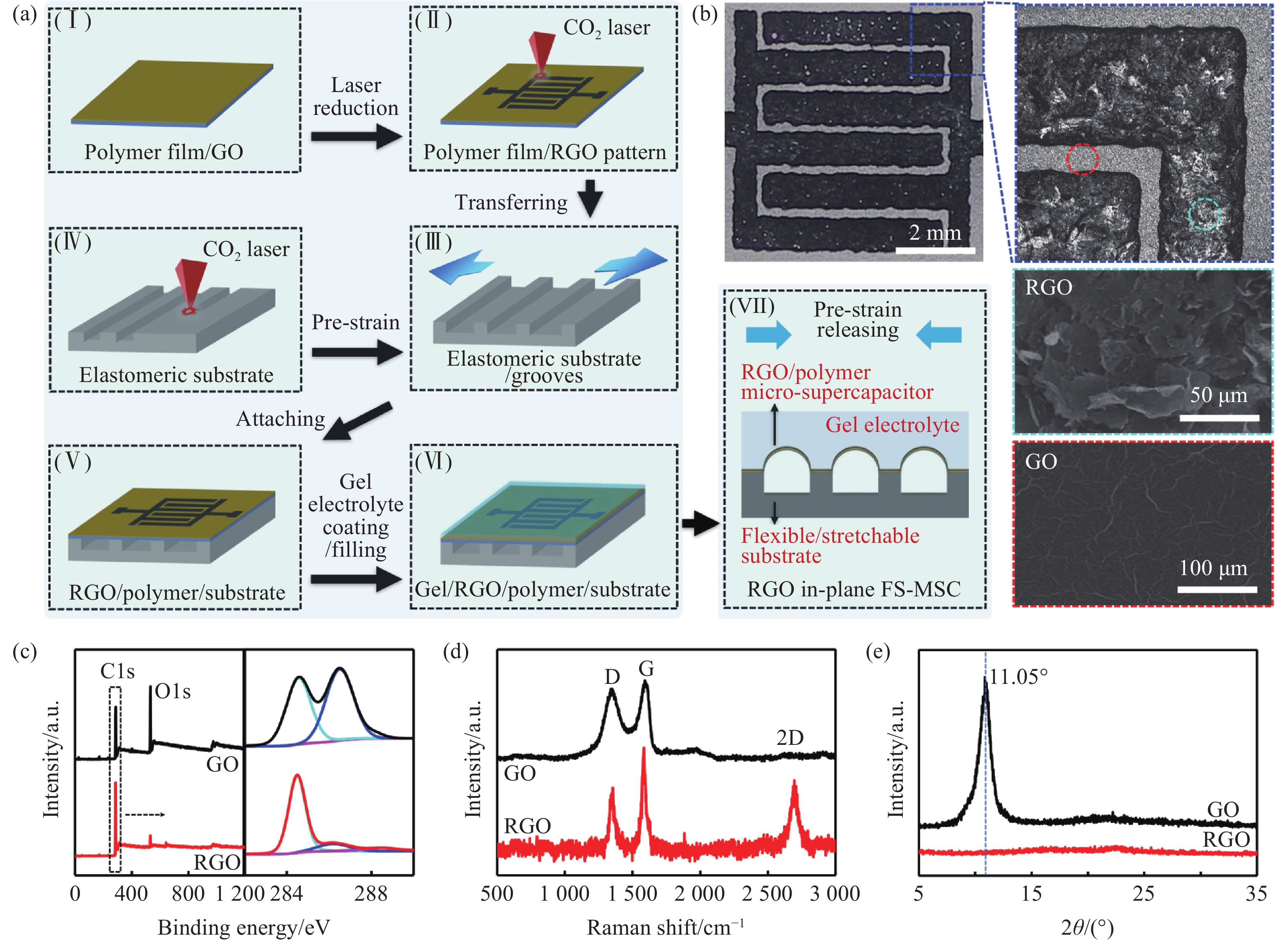
Figure 1. (a) Schematic diagram of RGO in-plane FS-MSCs processing with laser direct writing technique. (b) OM and SEM images of local electrodes positions. (c)-(e) XPS, Raman and XRD spectra characterization of GO films where it is photo-reduced or not.
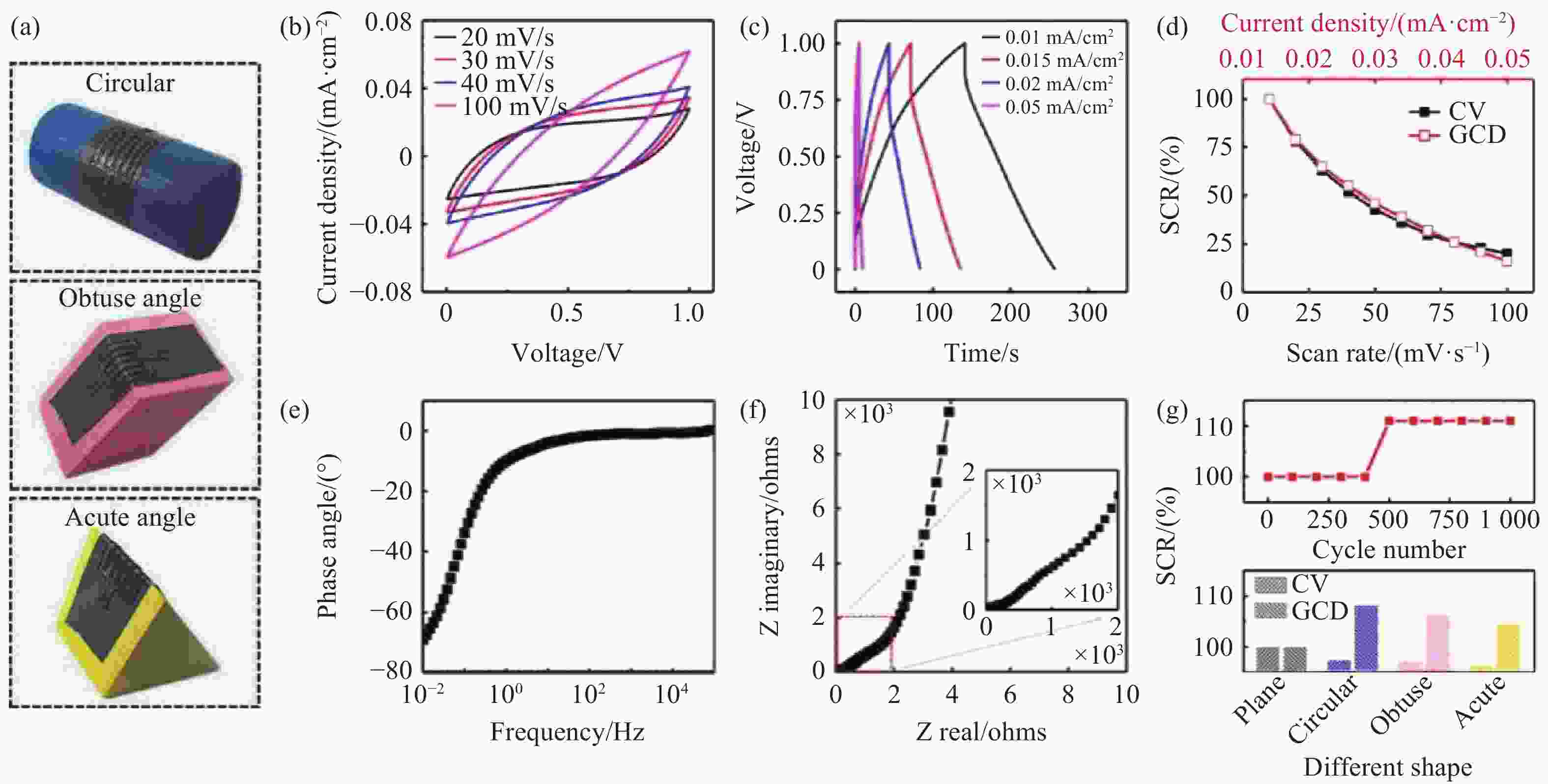
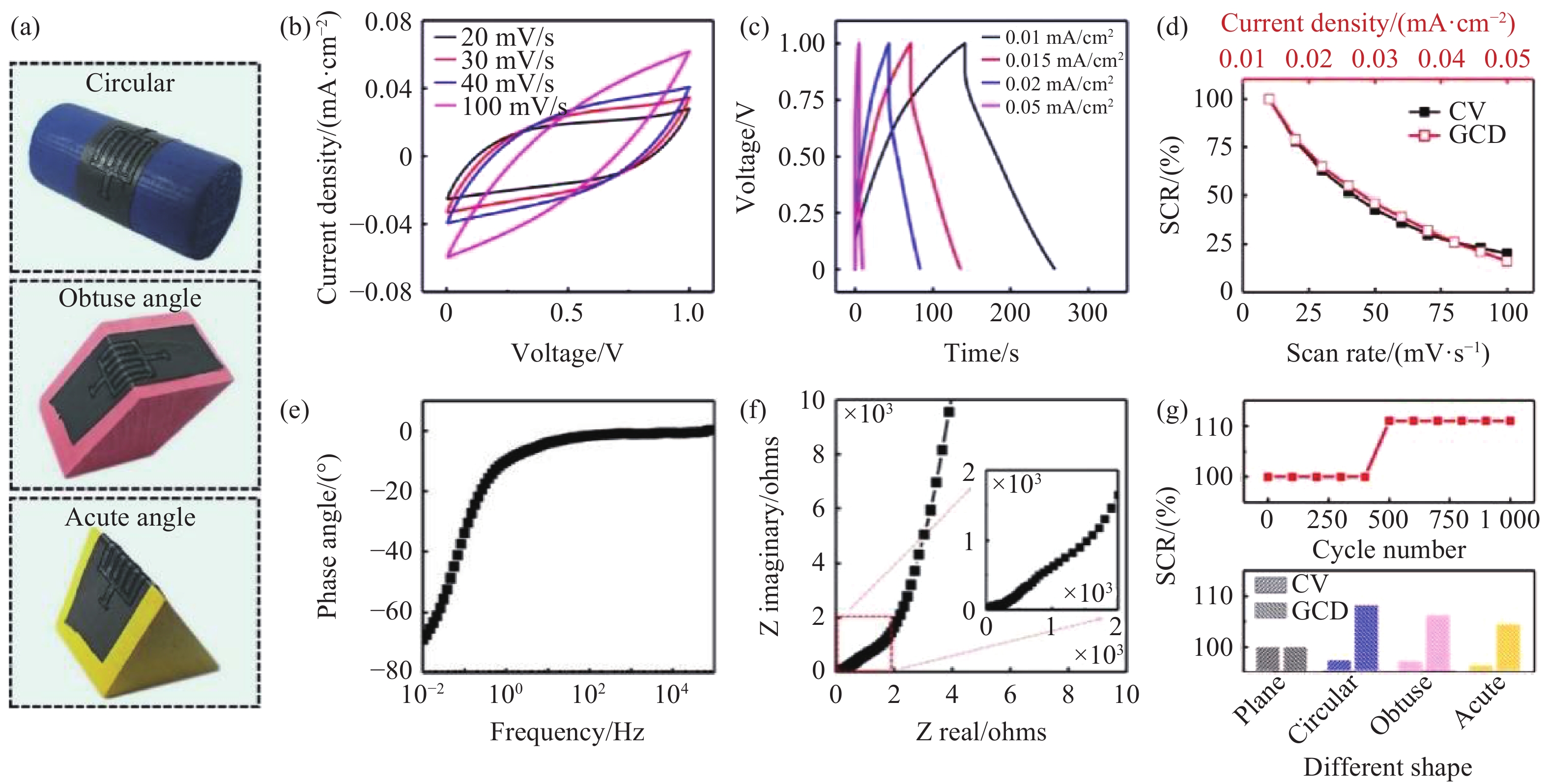
Figure 2. (a) OM images of our RGO FS-MSCs assembled on the attachments with different curvatures. (b)-(c) CV and GCD curves respectively measured under different scan rates and current densities, (d)-(f) specific capacitance retention (SCR), variation on frequency, and Nyquist plots of the devices. (g) SCR of devices after
1000 bending cycles (top) and the corresponding CV, GCD performance comparison at different bending conditions (bottom).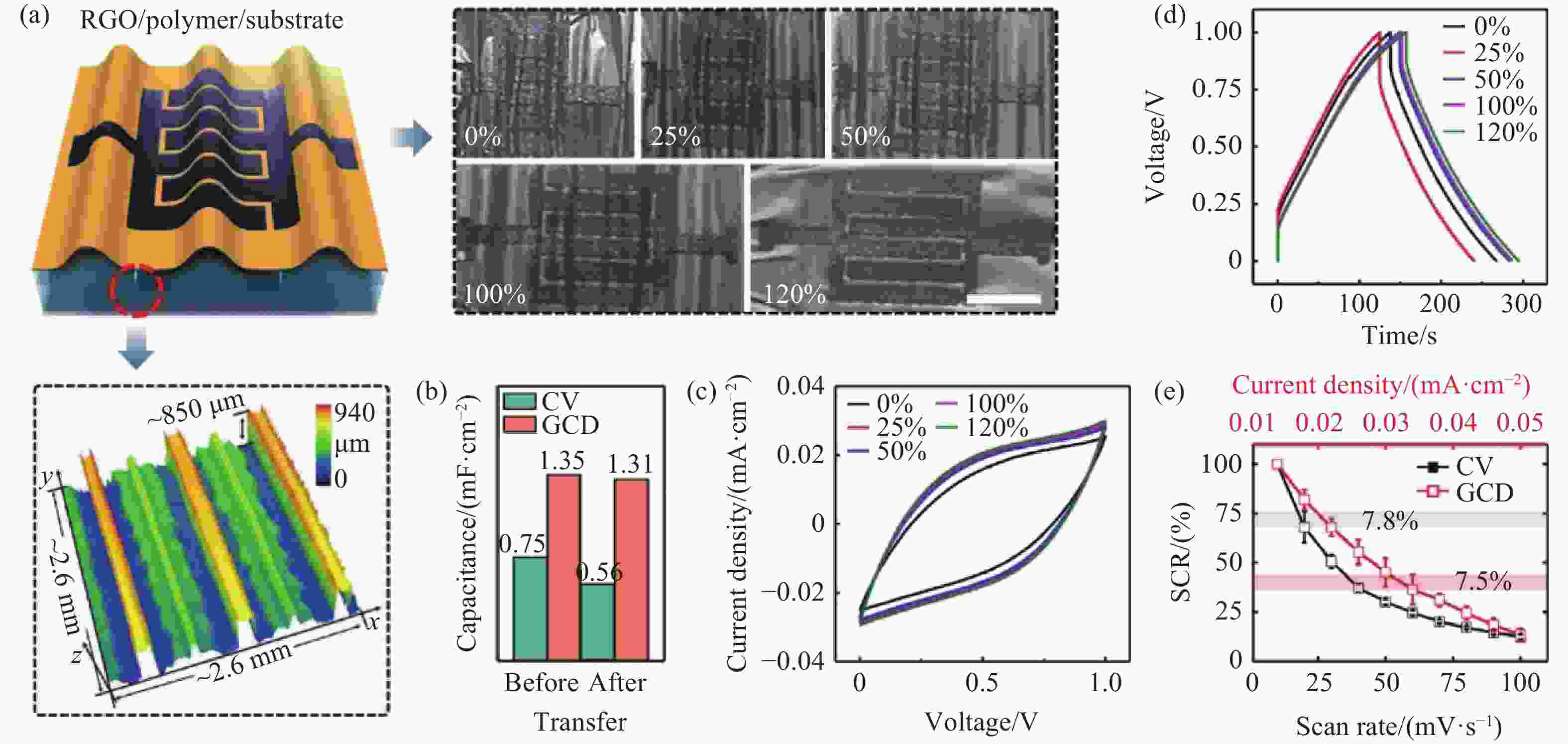
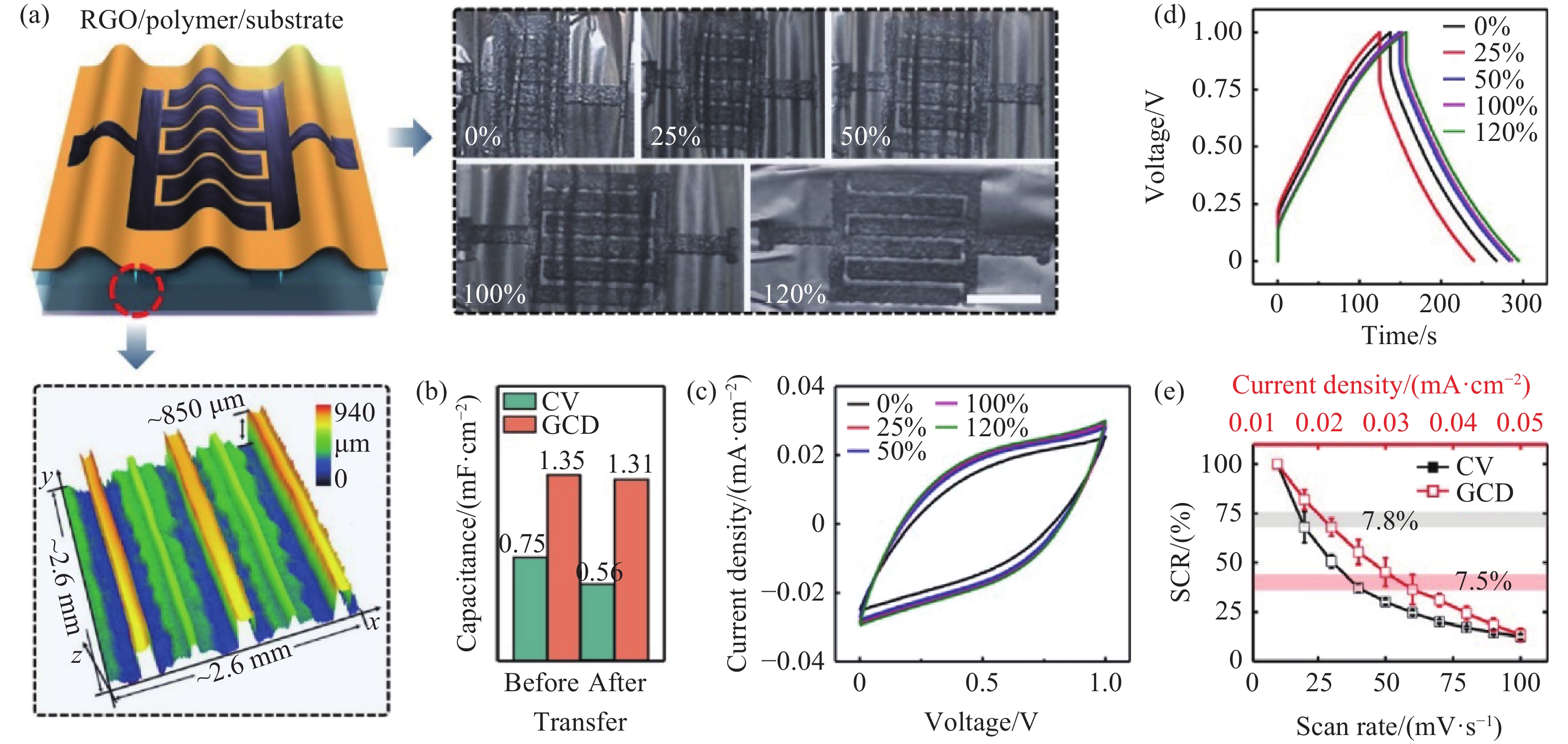
Figure 3. (a) FS-MSC schematic (top), 3D confocal laser scanning microscopy (CLSM) image of the structured substrate (bottom), and the OM images of the FS-MSCs at different tensile strain conditions. The scale is 3 mm. The 120% of the tensile strain corresponds to a stretching deformation of 220% of the initial length of sample. Other tensile strain conditions are defined according to the same criteria. (b) Cs values comparison calculated from CV (scan rate 20 mV/s) and GCD (current density 0.01 mA/cm2) curves before and after the RGO supercapacitor is transferred to an elastomeric substrate. (c)-(d) The CV (scan rate 20 mV/s) and GCD performance (current density 0.01 mA/cm2) of the devices under different tension conditions. (e) SCR of the devices with the increase of scan rate and current density.
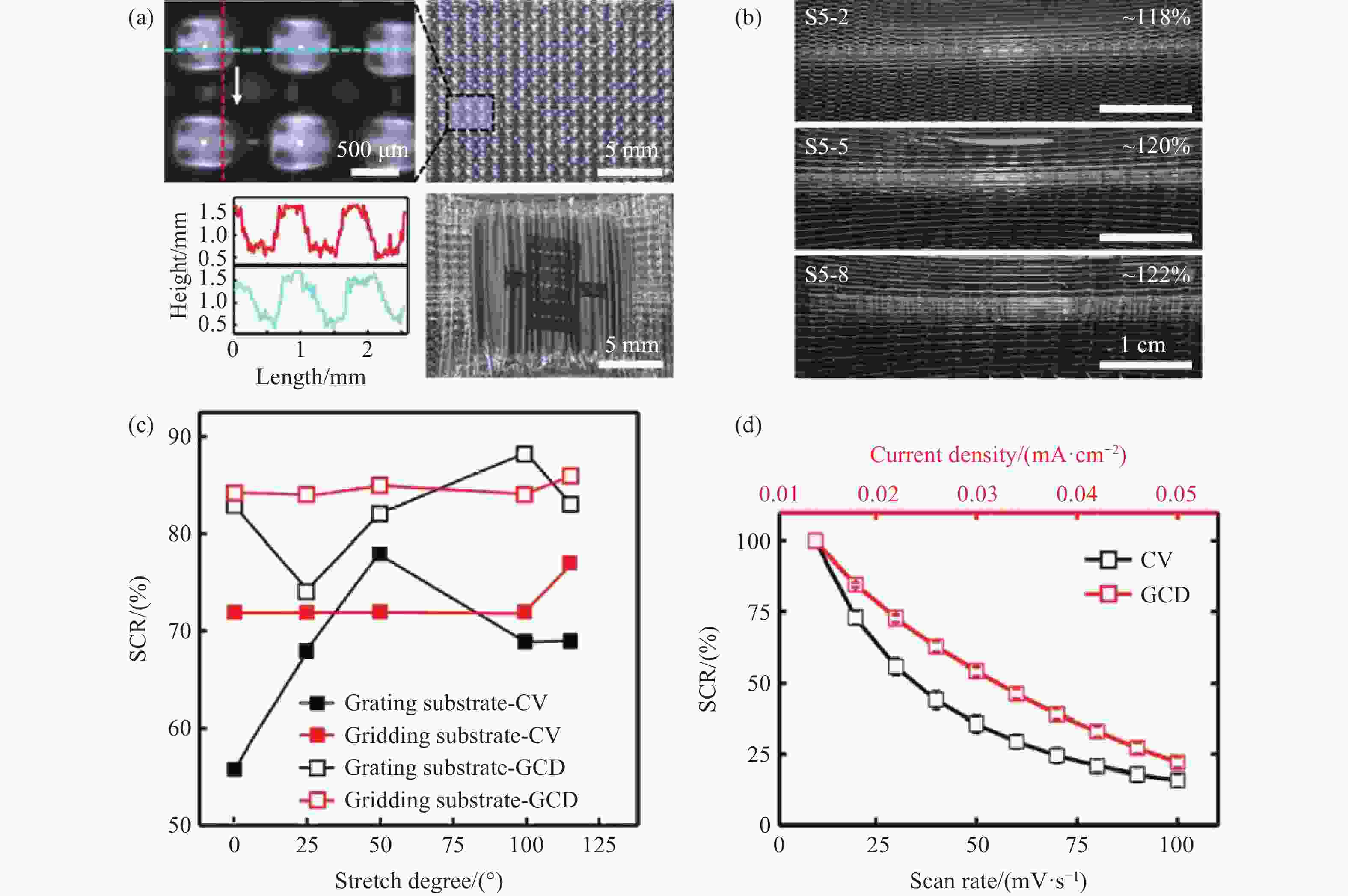
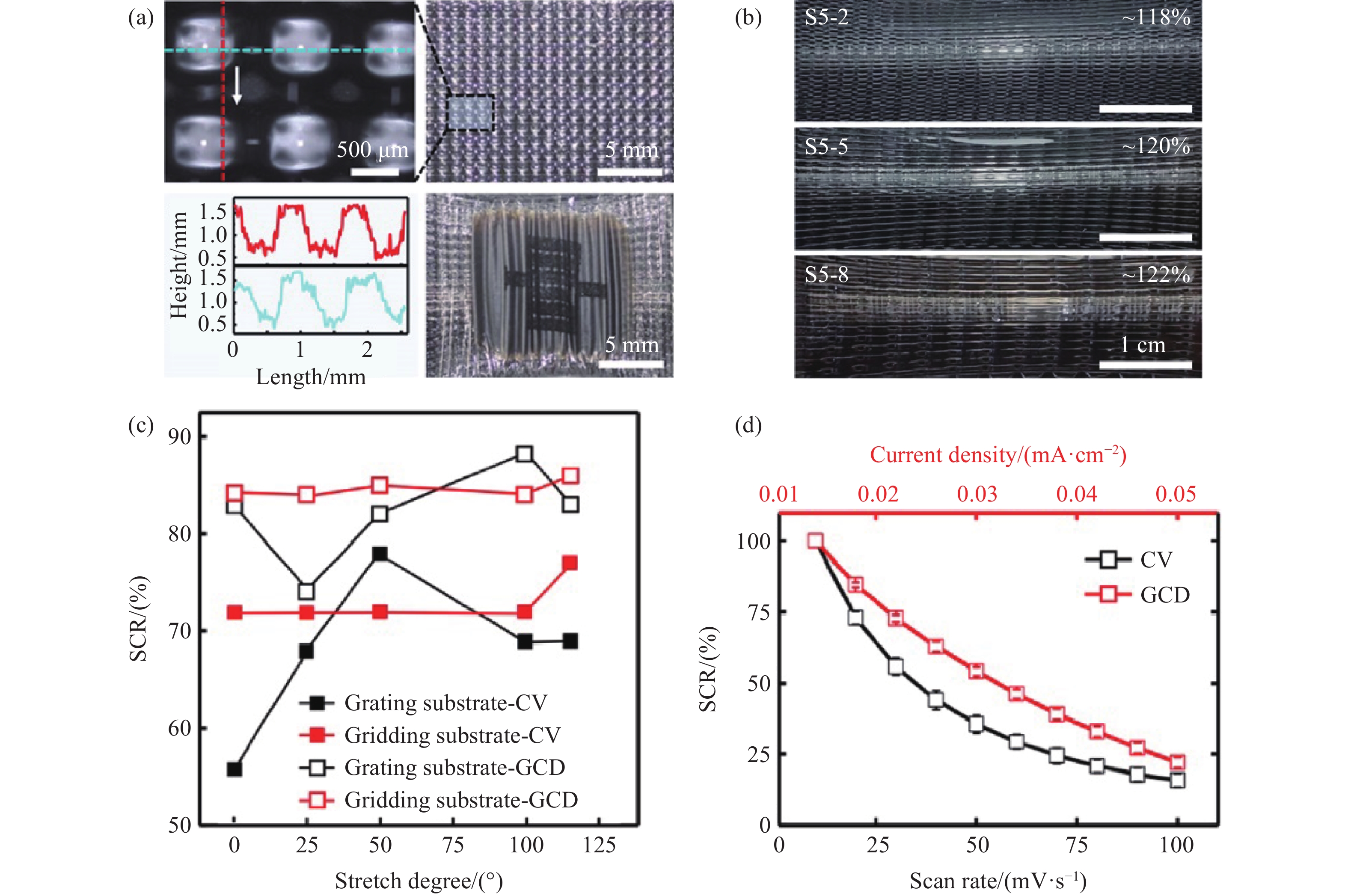
Figure 4. (a) OMs of the gridding substrate and the corresponding assembled RGO FS-MSC. (b) OMs of the S5-2, S5-5 and S5-8 substrates under pre-stretching. (c) SCR comparison of RGO FS-MSCs assembled on the groove and gridding substrates under different tensile conditions. (d) SCR comparison of S5-5 FS-MSC. The numerical errors are caused by the difference in tensile strength.
Table 1. Performance comparison between laser-processed graphene-based supercapacitors
Laser Wavelength (nm) Material Areal Capacitance (mF/cm2) Flexibility Stretchability Stability Reference UV 346 GO/leaves 34.68 99% retention
(0–60°)_ 99%@50k cycles
100%@20k (45°)[38] 355 GO-MG-(PANI)/PET/PI/PTFE 3.8 F _ 82%@20k cycles
86%@1k (150°)[39] 355 GO/SEBS 1.336 98% retention
(0–180°)20% 90%@1k bend
90%@1k (20%)[40] 355 CNT/
natural latex balloon13.5 F 400% 93%@12k cycles
97%@200 (20%)[9] VIS 400-450 FB-LIG/PI 49.81 99% retention
(0–180°)_ 97.56%@10k cycles
90.16%@10k (90°)[41] 405 Mxene-GO/PET 2.58 98% retention
(0–150°)_ 97.7%@10k cycles [42] 405 PEDOT-
GO/PET5.78 98% retention
(0–135°)_ 85.4%@5k cycles [43] NIR 800 GO-MnO2 128 F _ 95%@12k cycles
100%@0–180° bend[44] 1030 GO/PET 7.2 F/cm³ 95% retention
(0–180°)_ 96%@10k cycles [45] 1030 GO-RuO2/
PET2.35 F _ 90%@4k cycles [46] 1064 GO/PVA 88.32 95% retention
(0–180°)_ 82%@2k cycles
95%@5k (90°)[47] MIR 10600 GO 3.41 F _ 99%@1k cycles
(1%)[48] 10600 GO/PET 43.7 F _ 90%@3k cycles [49] 10600 LIG-CrOx/PI 13.48 99% retention
(0–90°)_ 85%@1.5k cycles [50] 10600 NiO-Co3O4-GO/WPU 2.4 100% retention
(±180°)280% 98.4%@10k
80.2%@1k
(100%)[51] 10600 GO/3M tape 1.34 96.5% retention
(>300°)120% 111%@1k
(>300°)This work  下载: 导出CSV
-
[1] TAMANG S, RAI S, BHUJEL R, et al. A concise review on GO, rGO and metal oxide/rGO composites: fabrication and their supercapacitor and catalytic applications[J]. Journal of Alloys and Compounds, 2023, 947: 169588. doi: 10.1016/j.jallcom.2023.169588 [2] ZHANG P P, WANG F X, YU M H, et al. Two-dimensional materials for miniaturized energy storage devices: from individual devices to smart integrated systems[J]. Chemical Society Reviews, 2018, 47(19): 7426-7451. doi: 10.1039/C8CS00561C [3] WANG S L, LIU N SH, SU J, et al. Highly stretchable and self-healable supercapacitor with reduced graphene oxide based fiber springs[J]. ACS Nano, 2017, 11(2): 2066-2074. doi: 10.1021/acsnano.6b08262 [4] KUMAR R, JOANNI E, SAHOO S, et al. An overview of recent progress in nanostructured carbon-based supercapacitor electrodes: from zero to bi-dimensional materials[J]. Carbon, 2022, 193: 298-338. doi: 10.1016/j.carbon.2022.03.023 [5] KIM K W, PARK S J, PARK S J, et al. Deformable micro-supercapacitor fabricated via laser ablation patterning of Graphene/liquid metal[J]. npj Flexible Electronics, 2024, 8(1): 18. doi: 10.1038/s41528-024-00306-2 [6] YANG ZH B, DENG J, CHEN X L, et al. A highly stretchable, fiber-shaped supercapacitor[J]. Angewandte Chemie International Edition, 2013, 52(50): 13453-13457. doi: 10.1002/anie.201307619 [7] SUN J F, HUANG Y, FU CH X, et al. High-performance stretchable yarn supercapacitor based on PPy@CNTs@urethane elastic fiber core spun yarn[J]. Nano Energy, 2016, 27: 230-237. doi: 10.1016/j.nanoen.2016.07.008 [8] XIAO H, WU ZH SH, CHEN L, et al. One-step device fabrication of phosphorene and graphene interdigital micro-supercapacitors with high energy density[J]. ACS Nano, 2017, 11(7): 7284-7292. doi: 10.1021/acsnano.7b03288 [9] WANG Y, ZHAO Y, HAN Y Y, et al. Fixture-free omnidirectional prestretching fabrication and integration of crumpled in-plane micro-supercapacitors[J]. Science Advances, 2022, 8(21): eabn8338. doi: 10.1126/sciadv.abn8338 [10] KALTENBRUNNER M, SEKITANI T, REEDER J, et al. An ultra-lightweight design for imperceptible plastic electronics[J]. Nature, 2013, 499(7459): 458-463. doi: 10.1038/nature12314 [11] WANG Y, LIU W W, XIN W, et al. Back-reflected performance-enhanced flexible perovskite photodetectors through substrate texturing with femtosecond laser[J]. ACS Applied Materials & Interfaces, 2020, 12(23): 26614-26623. doi: 10.1021/acsami.0c04124 [12] ZUO J Y, HAN D X, YAO H F, et al. Stretching the future: strategies and emerging trends in stretchable organic photovoltaic materials[J]. Energy & Environmental Science, 2025, 18(13): 6344-6365. doi: 10.1039/D5EE01504A [13] ENRICO A, BUCHMANN S, DE FERRARI F, et al. Cleanroom‐free direct laser micropatterning of polymers for organic electrochemical transistors in logic circuits and glucose biosensors[J]. Advanced Science, 2024, 11(27): 2307042. doi: 10.1002/advs.202307042 [14] KALRA A, LOWE A, AL-JUMAILY A M. Mechanical behaviour of skin: a review[J]. Journal of Material Science & Engineering, 2016, 5(4): 1000254. [15] AGACHE P G, MONNEUR C, LEVEQUE J L, et al. Mechanical properties and Young's modulus of human skin in vivo[J]. Archives of Dermatological Research, 1980, 269(3): 221-232. doi: 10.1007/BF00406415 [16] JIANG H B, LIU Y Q, ZHANG Y L, et al. Reed leaf-inspired graphene films with anisotropic superhydrophobicity[J]. ACS Applied Materials & Interfaces, 2018, 10(21): 18416-18425. doi: 10.1021/acsami.8b03738 [17] ZOU T T, ZHAO B, XIN W, et al. High-speed femtosecond laser plasmonic lithography and reduction of graphene oxide for anisotropic photoresponse[J]. Light: Science & Applications, 2020, 9(1): 69. doi: 10.1038/s41377-020-0311-2 [18] ZOU T T, ZHAO B, XIN W, et al. Birefringent response of graphene oxide film structurized via femtosecond laser[J]. Nano Research, 2022, 15(5): 4490-4499. doi: 10.1007/s12274-021-3505-x [19] KUMAR R, SAHOO S, JOANNI E, et al. Recent progress in the synthesis of graphene and derived materials for next generation electrodes of high performance lithium ion batteries[J]. Progress in Energy and Combustion Science, 2019, 75: 100786. doi: 10.1016/j.pecs.2019.100786 [20] KERSE C, KALAYCIOĞLU H, ELAHI P, et al. Ablation-cooled material removal with ultrafast bursts of pulses[J]. Nature, 2016, 537(7618): 84-88. doi: 10.1038/nature18619 [21] ZHAI T R, ZHANG X P, PANG ZH G, et al. Direct writing of polymer lasers using interference ablation[J]. Advanced Materials, 2011, 23(16): 1860-1864. doi: 10.1002/adma.201100250 [22] AHMAD Z, CABRAL J T. Navigating the labyrinth of isotropic wrinkling: design, fabrication, characterization, and applications[J]. Materials Horizons, 2026, 13(8): 3658-3696. doi: 10.1039/D6MH00047A [23] ZHAO CH, JIA X T, SHU K W, et al. Stretchability enhancement of buckled polypyrrole electrodes for stretchable supercapacitors via engineering substrate surface roughness[J]. Electrochimica Acta, 2020, 343: 136099. doi: 10.1016/j.electacta.2020.136099 [24] GUO L, ZHANG Y L, HAN D D, et al. Laser-mediated programmable N doping and simultaneous reduction of graphene oxides[J]. Advanced Optical Materials, 2014, 2(2): 120-125. doi: 10.1002/adom.201300401 [25] GUAN Y CH, DING Y, FANG Y Q, et al. Far-field femtosecond laser-driven λ/73 super-resolution fabrication of 2D van der Waals NbOI2 nanostructures in ambient air[J]. Nature Communications, 2025, 16(1): 4149. doi: 10.1038/s41467-025-59520-9 [26] JIANG H B, ZHANG Y L, HAN D D, et al. Bioinspired fabrication of superhydrophobic graphene films by two-beam laser interference[J]. Advanced Functional Materials, 2014, 24(29): 4595-4602. doi: 10.1002/adfm.201400296 [27] FU X Y, ZHANG Y L, JIANG H B, et al. Hierarchically structuring and synchronous photoreduction of graphene oxide films by laser holography for supercapacitors[J]. Optics Letters, 2019, 44(7): 1714-1717. doi: 10.1364/OL.44.001714 [28] FANG X X, HU F, LU J J, et al. Laser-induced graphene as an effective supporting structure for high performance Ge anode applied in Li-ion batteries[J]. Journal of Colloid and Interface Science, 2025, 688: 656-663. doi: 10.1016/j.jcis.2025.02.192 [29] HAN D D, ZHANG Y L, MA J N, et al. Sunlight-reduced graphene oxides as sensitive moisture sensors for smart device design[J]. Advanced Materials Technologies, 2017, 2(8): 1700045. doi: 10.1002/admt.201700045 [30] XU X J, LIN H CH, DING J R, et al. NiCoMn-LDH with core-shell heterostructures based on CoS nanotube arrays containing multiple ion diffusion channels for boosted supercapacitor applications[J]. Green Energy & Environment, 2025, 10(4): 780-792. doi: 10.1016/j.gee.2024.06.002 [31] HAN D D, ZHANG Y L, JIANG H B, et al. Moisture-responsive graphene paper prepared by self-controlled photoreduction[J]. Advanced Materials, 2015, 27(2): 332-338. doi: 10.1002/adma.201403587 [32] SHABANI SHAYEH J, EHSANI A, GANJALI M R, et al. Conductive polymer/reduced graphene oxide/Au nano particles as efficient composite materials in electrochemical supercapacitors[J]. Applied Surface Science, 2015, 353: 594-599. doi: 10.1016/j.apsusc.2015.06.066 [33] CHEN J CH, WANG Y M, CAO J Y, et al. Facile Co-electrodeposition method for high-performance supercapacitor based on reduced graphene oxide/polypyrrole composite film[J]. ACS Applied Materials & Interfaces, 2017, 9(23): 19831-19842. doi: 10.1021/acsami.7b03786 [34] ZANG X B, XU R Q, ZHANG Y Y, et al. All carbon coaxial supercapacitors based on hollow carbon nanotube sleeve structure[J]. Nanotechnology, 2015, 26(4): 045401. doi: 10.1088/0957-4484/26/4/045401 [35] FU X Y, ZHANG Y Y, MA CH J, et al. Programmable patterning fabrication of laser-induced graphene-MXene composite electrodes for flexible planar supercapacitors[J]. Optics Letters, 2022, 47(6): 1502-1505. doi: 10.1364/OL.447221 [36] NIU ZH Q, DONG H B, ZHU B W, et al. Highly stretchable, integrated supercapacitors based on single-walled carbon nanotube films with continuous reticulate architecture[J]. Advanced Materials, 2013, 25(7): 1058-1064. doi: 10.1002/adma.201204003 [37] LV ZH SH, LUO Y F, TANG Y X, et al. Editable supercapacitors with customizable stretchability based on mechanically strengthened ultralong MnO2 nanowire composite[J]. Advanced Materials, 2018, 30(2): 1704531. doi: 10.1002/adma.201704531 [38] LE T S D, LEE Y A, NAM H K, et al. Green flexible graphene–inorganic-hybrid micro‐supercapacitors made of fallen leaves enabled by ultrafast laser pulses[J]. Advanced Functional Materials, 2022, 32(20): 2107768. doi: 10.1002/adfm.202107768 [39] YE J L, TAN H B, WU SH L, et al. Direct laser writing of graphene made from chemical vapor deposition for flexible, integratable micro-supercapacitors with ultrahigh power output[J]. Advanced Materials, 2018, 30(21): 1801384. doi: 10.1002/adma.201801384 [40] KIM K W, PARK S J, PARK S J, et al. Deformable micro-supercapacitor fabricated via laser ablation patterning of graphene/liquid metal[J]. npj Flexible Electronics, 2024, 8(1): 18. [41] YUAN G Y, WAN T, BAQAIS A, et al. Boron and fluorine Co-doped laser-induced graphene towards high-performance micro-supercapacitors[J]. Carbon, 2023, 212: 118101. doi: 10.1016/j.carbon.2023.118101 [42] ZHU Y Y, NI ZH Y, GAO J, et al. Fabrication of flexible planar micro-supercapacitors using laser scribed graphene electrodes incorporated with MXene[J]. Journal of Physics and Chemistry of Solids, 2023, 183: 111619. doi: 10.1016/j.jpcs.2023.111619 [43] HU H W, GUO Y Y, ZHAO J. Manufacturing shape-controllable flexible PEDOT/rGO composite electrodes for planar micro-supercapacitors[J]. Materials, 2024, 17(9): 2144. doi: 10.3390/ma17092144 [44] YUAN Y J, JIANG L, LI X, et al. Laser photonic-reduction stamping for graphene-based micro-supercapacitors ultrafast fabrication[J]. Nature Communications, 2020, 11(1): 6185. doi: 10.1038/s41467-020-19985-2 [45] LI Q, DING Y, YANG L J, et al. Periodic nanopatterning and reduction of graphene oxide by femtosecond laser to construct high-performance micro-supercapacitors[J]. Carbon, 2021, 172: 144-153. doi: 10.1016/j.carbon.2020.09.096 [46] WANG L F, DING Y, LI J Y, et al. Femtosecond laser induced one-step nanopatterning and preparation of rGO/RuO2 electrodes for high-performance micro-supercapacitors[J]. Journal of Electroanalytical Chemistry, 2022, 919: 116501. doi: 10.1016/j.jelechem.2022.116501 [47] ZHAO Y R, DU J W, DU J J, et al. Realizing highly‐ordered laser‐reduced graphene for high‐performance flexible microsupercapacitor[J]. Small, 2023, 19(35): 2301546. doi: 10.1002/smll.202301546 [48] WANG Y N, WANG Y, ZHANG P P, et al. Laser‐induced freestanding graphene papers: a new route of scalable fabrication with tunable morphologies and properties for multifunctional devices and structures[J]. Small, 2018, 14(36): 1802350. [49] KWON S, YOON Y, AHN J, et al. Facile laser fabrication of high quality graphene-based microsupercapacitors with large capacitance[J]. Carbon, 2018, 137: 136-145. doi: 10.1016/j.carbon.2018.05.031 [50] YANG J, ZHENG Y Y, LIU W J, et al. MOF-derived graphene/chromium oxide hybrids via laser processing for enhanced planar micro-supercapacitors[J]. Applied Physics Letters, 2026, 128(1): 013904. doi: 10.1063/5.0312482 [51] WANG W T, LU L SH, XIE Y X, et al. A highly stretchable microsupercapacitor using laser-induced graphene/NiO/Co3O4 electrodes on a biodegradable waterborne polyurethane substrate[J]. Advanced Materials Technologies, 2020, 5(2): 1900903. doi: 10.1002/admt.201900903 -

 下载:
下载:

计量
- 文章访问数: 91
- HTML全文浏览量: 54
- PDF下载量: 7
- 被引次数: 0
