



Differential interference theory of vortex beam at interface reflection
doi: 10.37188/CO.EN-2026-0010
-
摘要:
基于弱值放大的弱测量技术为探测光子自旋霍尔效应中的微小自旋分裂提供了一种有效方法。然而,在强耦合或前选择和后选择近乎正交的条件下,其性能受到限制。本文基于微分干涉理论,建立了携带任意拓扑荷的涡旋光束在空气-玻璃界面部分反射下的自旋相关位移与放大位移之间的关系。该关系即使在强耦合条件下或前选择和后选择近乎正交时仍然有效,并且适用于任意入射线偏振态。本文系统分析了涡旋光束在空气-玻璃界面反射的特性,并阐明了入射角、拓扑荷、入射偏振态、后选择角和传播距离等关键参数对放大位移的影响。这项研究为涡旋光束在精密光学测量和光学微操控中的应用提供了重要的理论基础。
Abstract:Weak measurement technique based on weak-value amplification offers an effective method to detect the tiny spin splitting in the photonic spin Hall effect. However, its performance is constrained under conditions of strong coupling or near-orthogonality between the pre- and post-selected states. Based on differential interference theory, this work establishes a relation between the spin-dependent displacement and the amplified displacement for vortex beam with arbitrary topological charge under partial reflection at an air–glass interface. The relation remains valid even under strong-coupling conditions or when the pre- and post-selected states are nearly orthogonal, and is applicable for arbitrary incident linear polarizations. The corresponding characteristics of vortex beam reflected at an air–glass interface is systematically analyzed, and the influences of key parameters including the incident angle, topological charge, incident polarization state, post-selection angle, and propagation distance on the amplified displacement are elucidated. This study provides a valuable theoretical foundation for the applications of vortex beam in precision optical measurement and optical micromanipulation.
-
Key words:
- differential interference /
- weak measurement /
- OAM beam /
- the photonic spin Hall effect
-
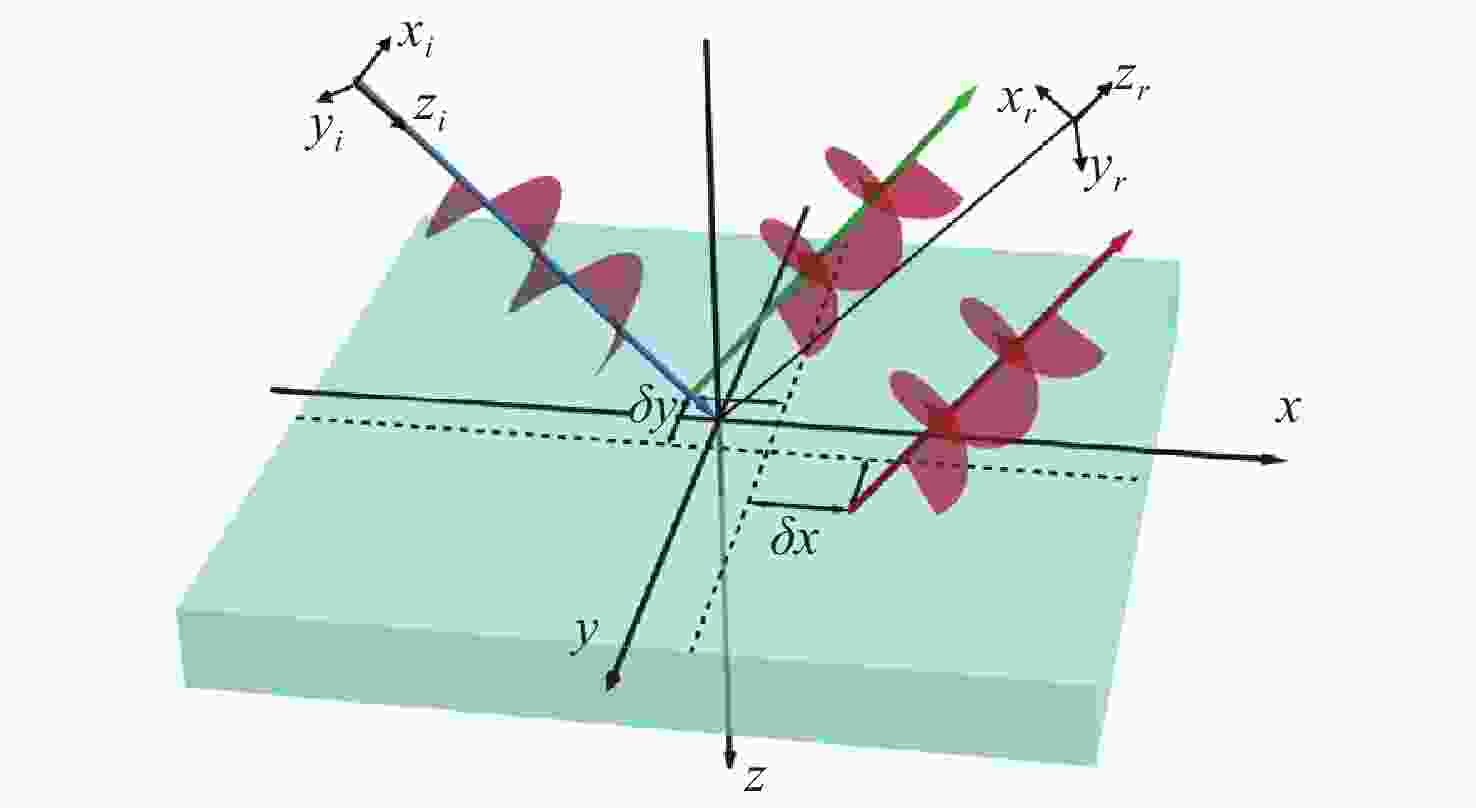
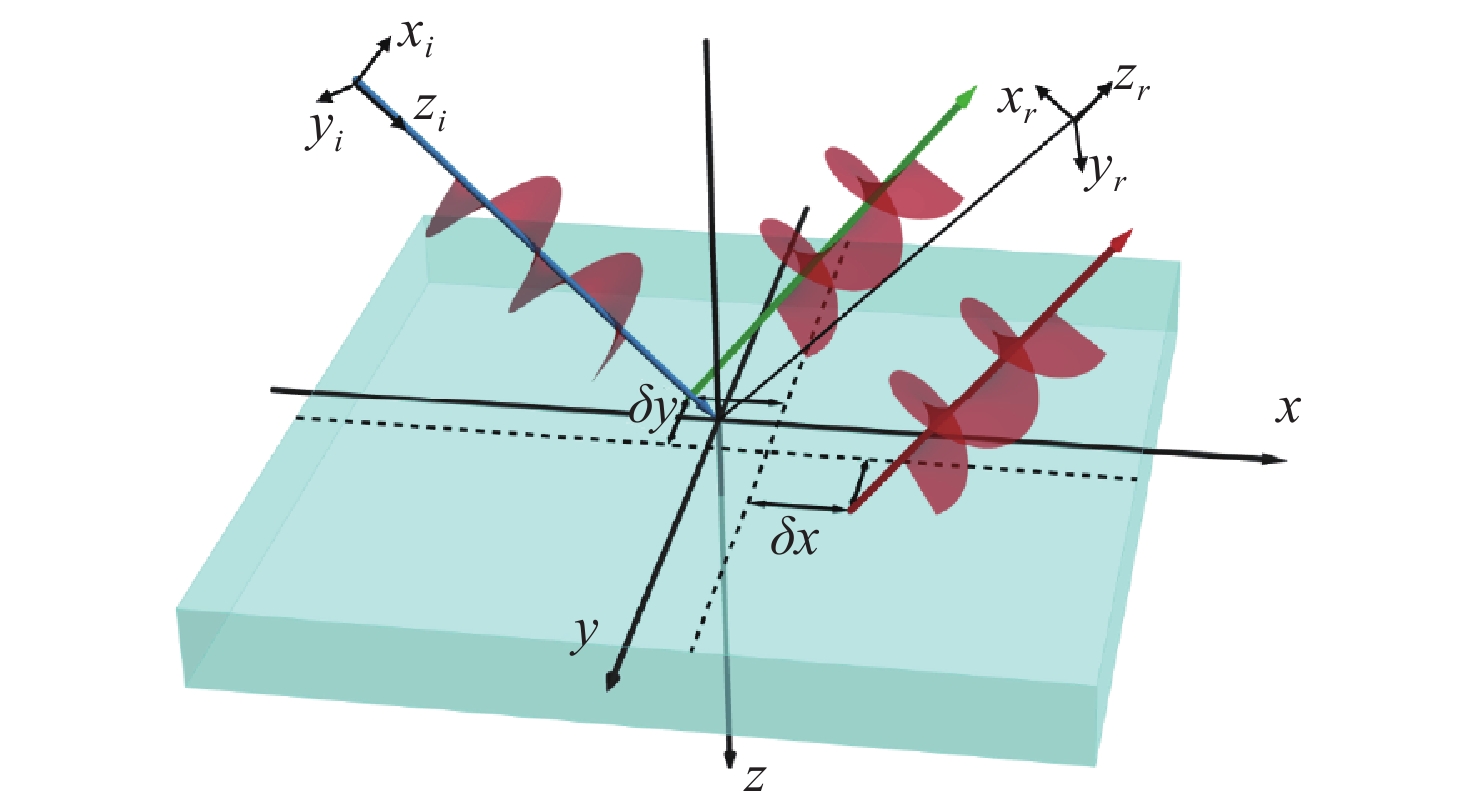
Figure 1. A schematic diagram of the transverse
$ {\delta }_{y} $ and longitudinal$ {\delta }_{x} $ spin splitting of an arbitrary linearly polarized Laguerre-Gaussian beam incident on an interface. Solid green and red lines indicate the left-handed and right-handed circularly polarized components in the reflected light, respectively, and dashed lines represent spin-independent global displacements.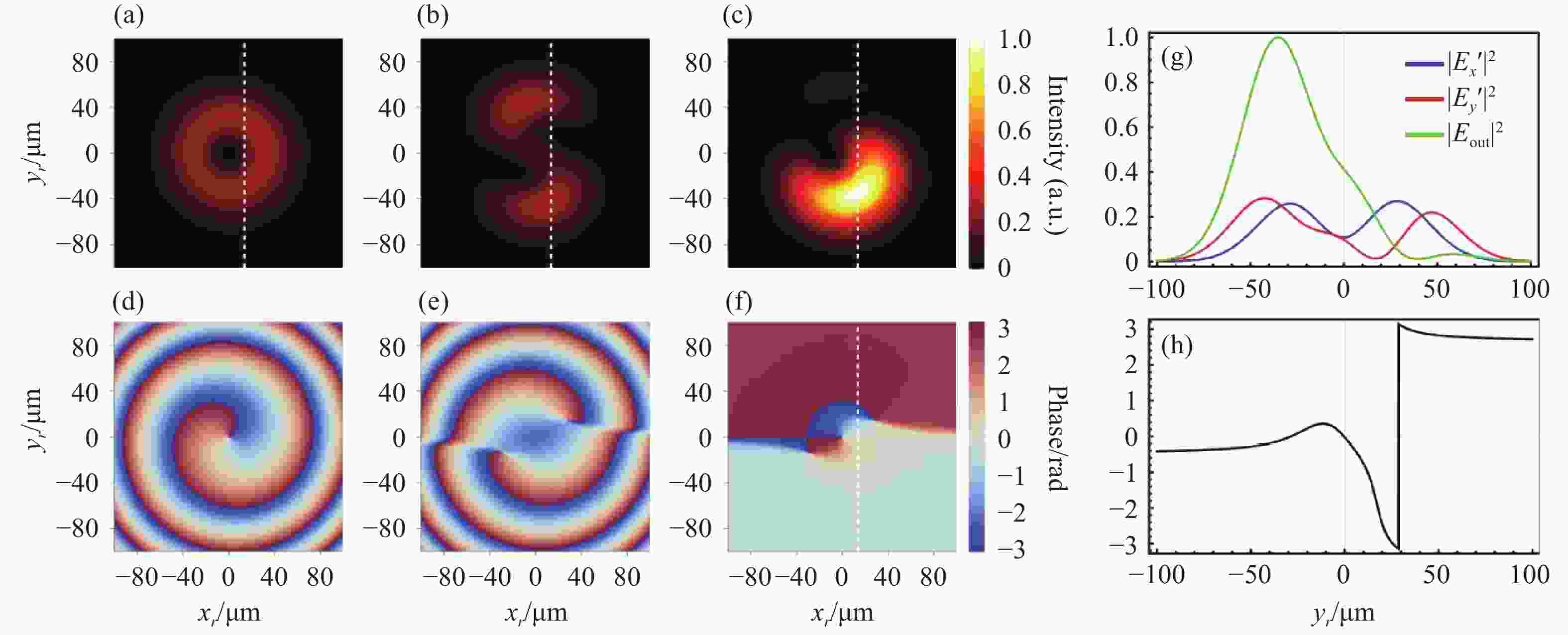
Figure 2. Differential interference diagram with
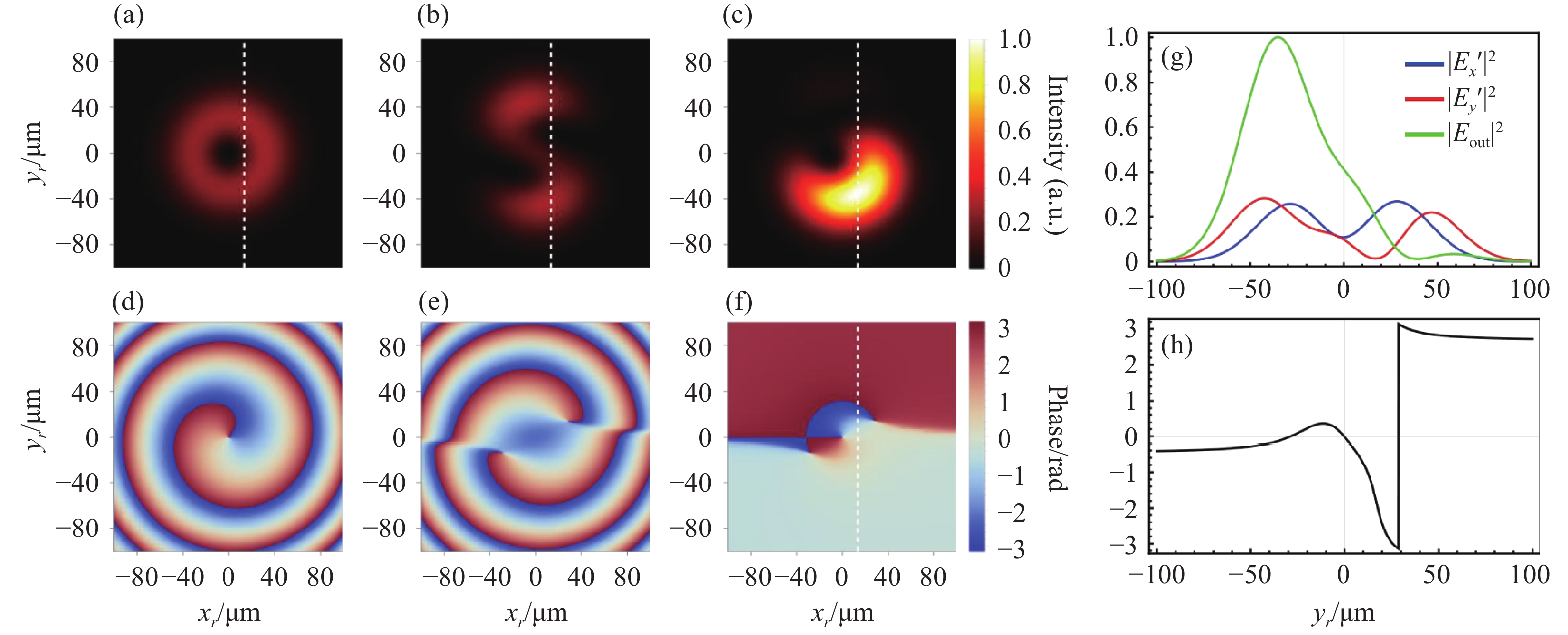
$ l=1 $ ,$ {\alpha }_{i}={0}{\text{°}} $ ,$ {\theta }_{i}=4{5}{\text{°}} $ ,$ {{\textit{z}}}_{r}=2{{\textit{z}}}_{R} $ , and$ \epsilon ={1}{\text{°}} $ . (a), (b) Normalized intensity of$ {\boldsymbol{E}}_{x}{{'}} $ and$ {\boldsymbol{E}}_{y}{{'}} $ , respectively. (c) Normalized intensity after interference between$ {\boldsymbol{E}}_{x}{{'}} $ and$ {\boldsymbol{E}}_{y}{{'}} $ . (d) (e) Phase distributions of$ {\boldsymbol{E}}_{x}{{'}} $ and$ {\boldsymbol{E}}_{y}{{'}} $ , respectively. (f) Phase difference between$ {\boldsymbol{E}}_{x}{{'}} $ and$ {\boldsymbol{E}}_{y}{{'}} $ . (g) Normalized intensity along the white dashed lines in (a), (b), and (c). (h) Phase distributions along the white dashed lines in (f).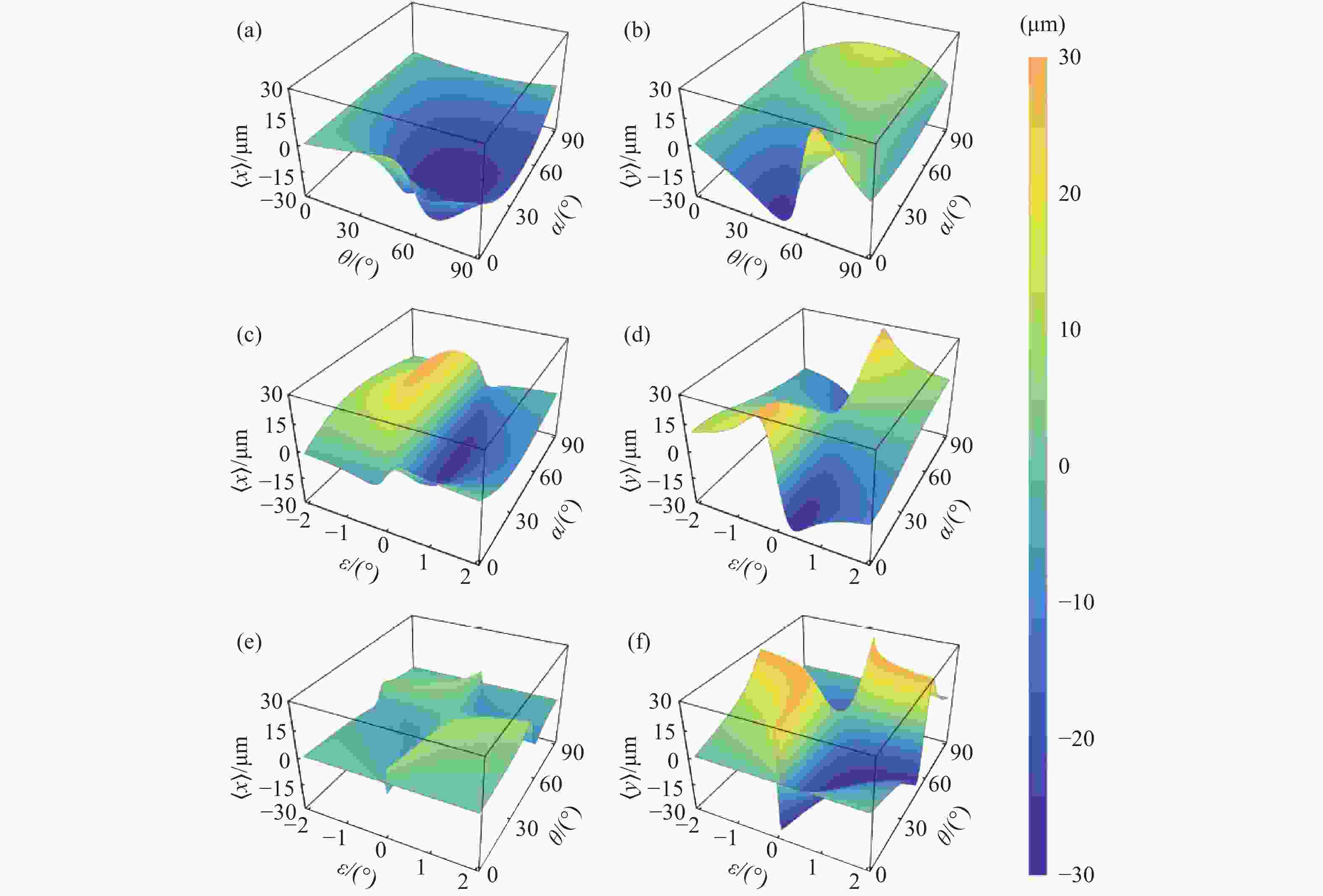
Figure 3. Amplified displacement for
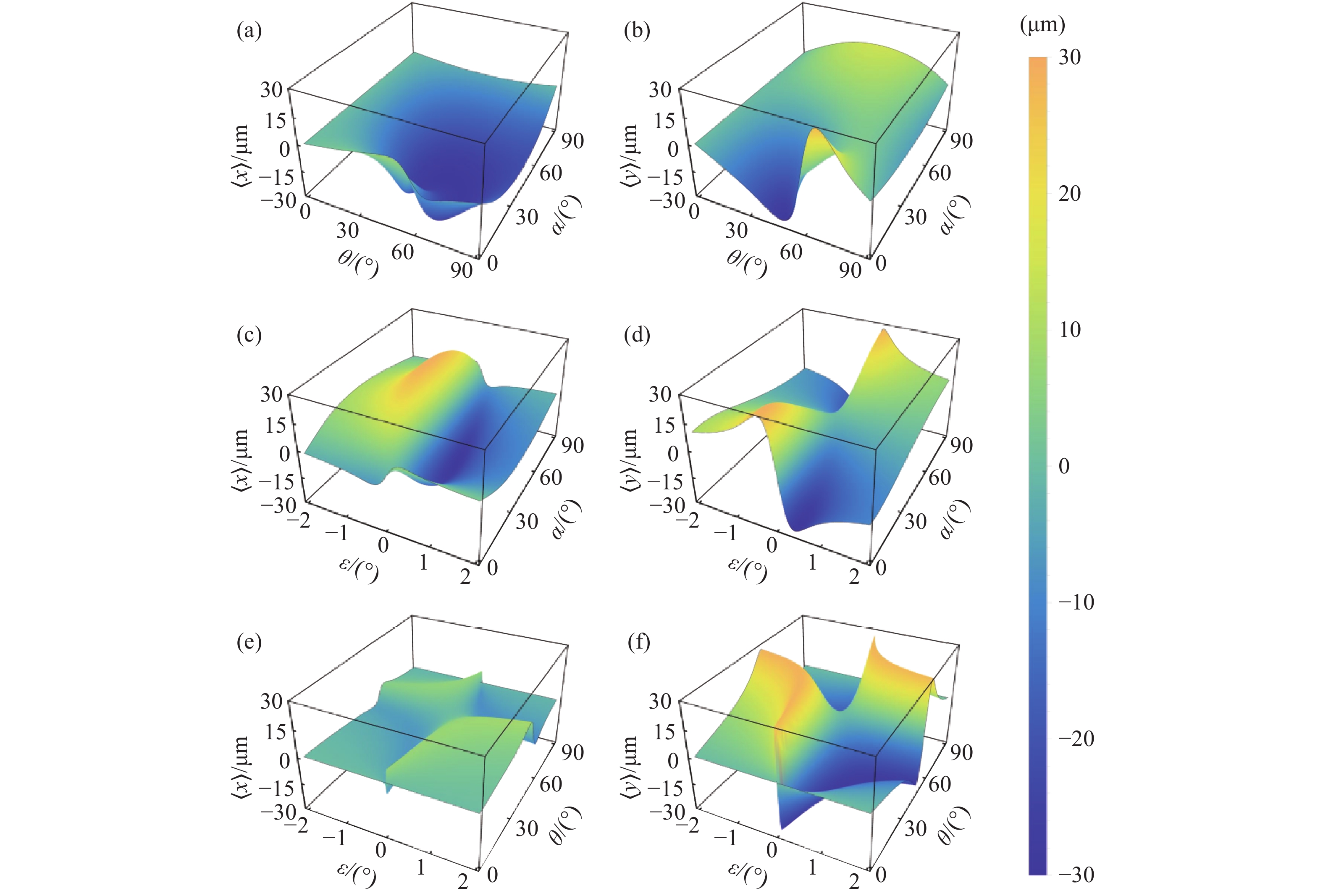
$ l=1 $ at$ {{\textit{z}}}_{r}=2{{\textit{z}}}_{R} $ : (a), (b) with$ \varepsilon ={1}{\text{°}} $ fixed; (c), (d) with$ \theta =4{5}{\text{°}} $ fixed; (e), (f) with$ {\alpha }_{i}={0}{\text{°}} $ fixed, in each pair, the$ {x}_{r} $ - and$ {y}_{r} $ -direction results are shown in the left and right panels, respectively.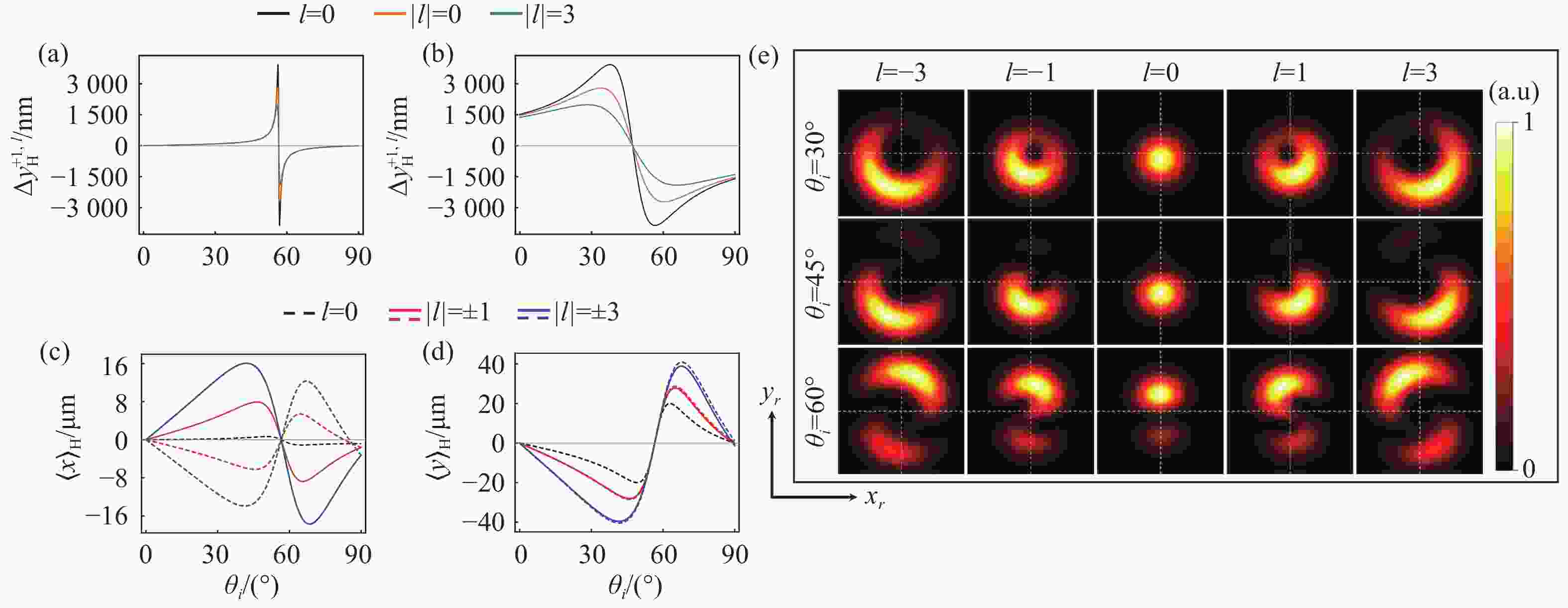
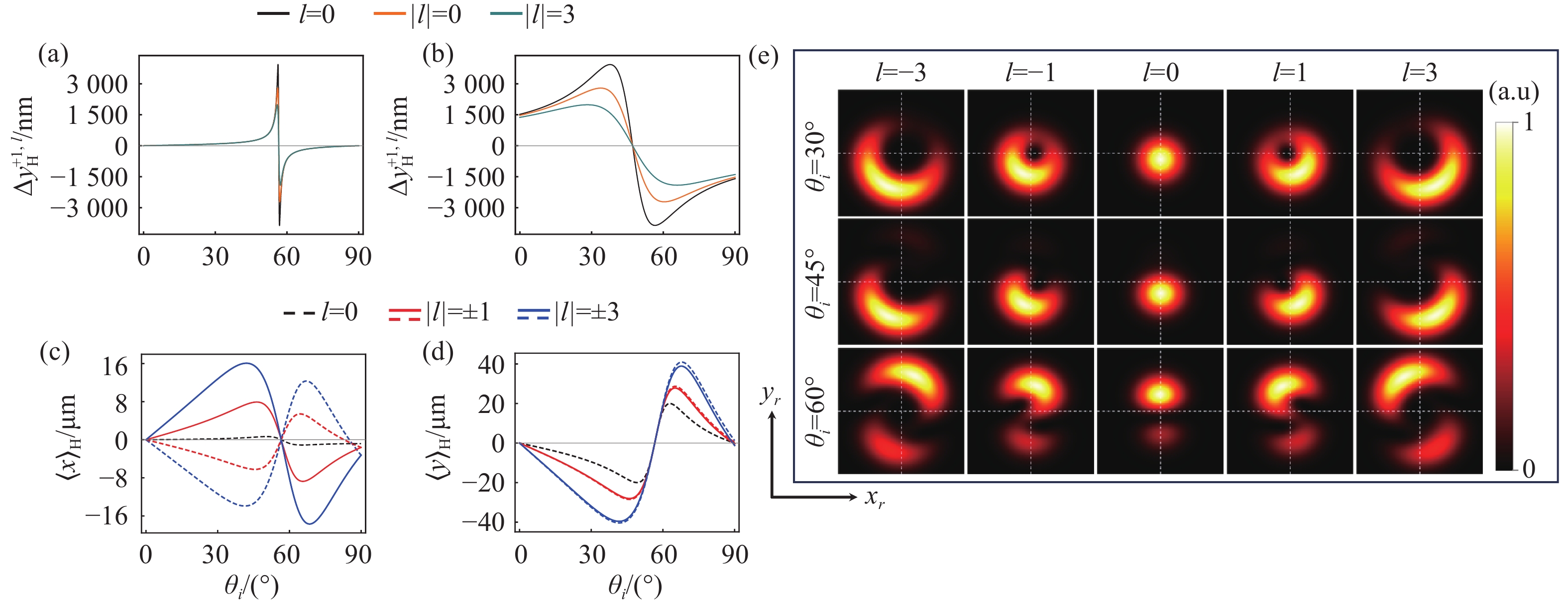
Figure 4. Initial and amplified displacements for vortex beams with
$ {\alpha }_{i}={0}{\text{°}} $ and$ l=0,\pm 1,\pm 3 $ , calculated at$ {{\textit{z}}}_{r}=2{{\textit{z}}}_{R} $ and$ \varepsilon =0.{1}{\text{°}} $ . (a), (b) Transverse initial displacement (left-handed component) versus$ {\theta }_{i} $ , respectively. (c), (d) Longitudinal and transverse amplified displacements versus$ {\theta }_{i} $ , respectively. (e) Intensity distributions for$ {\theta }_{i}=3{0}{\text{°}} $ ,$ 4{5}{\text{°}} $ , and$ 6{0}{\text{°}} $ .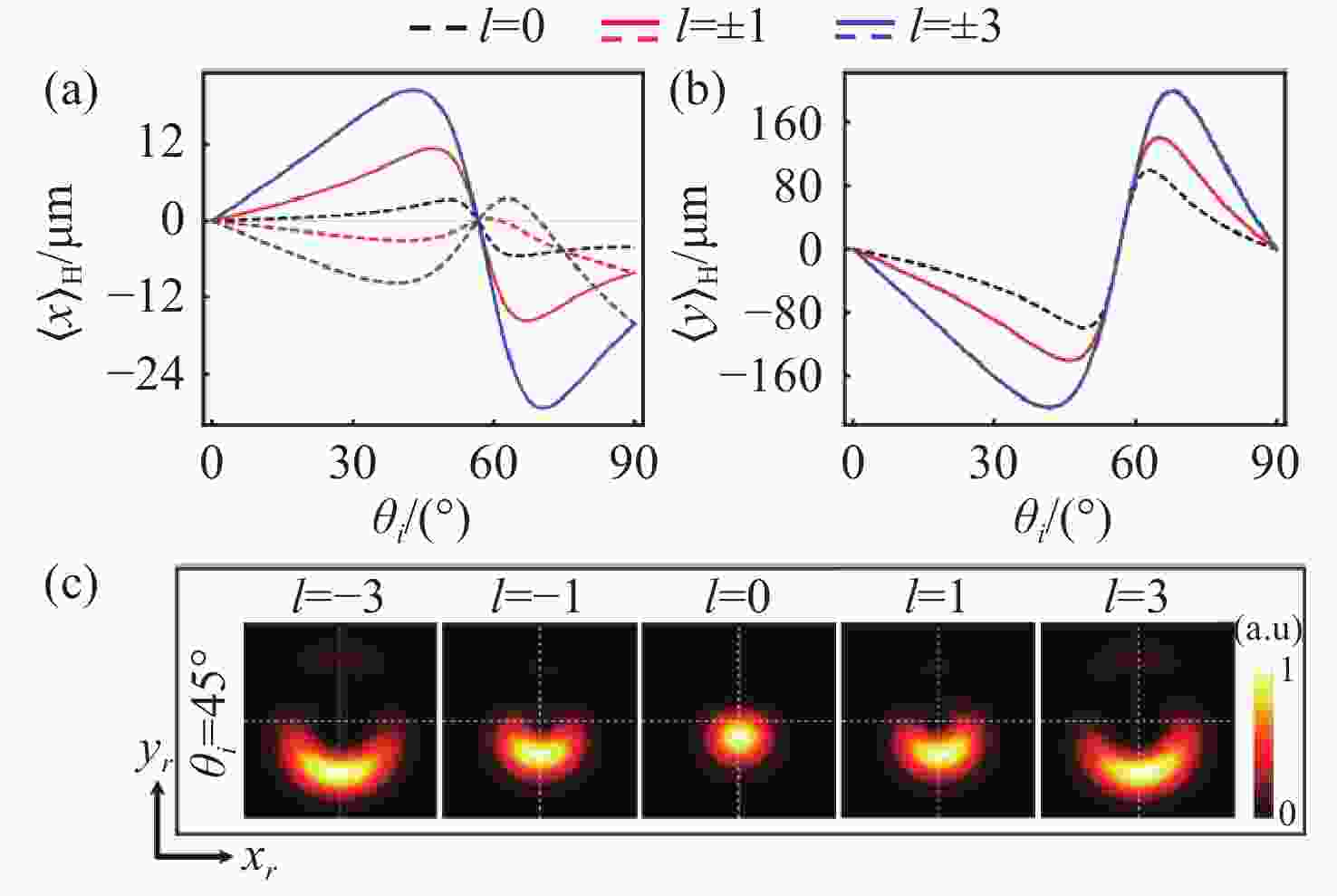
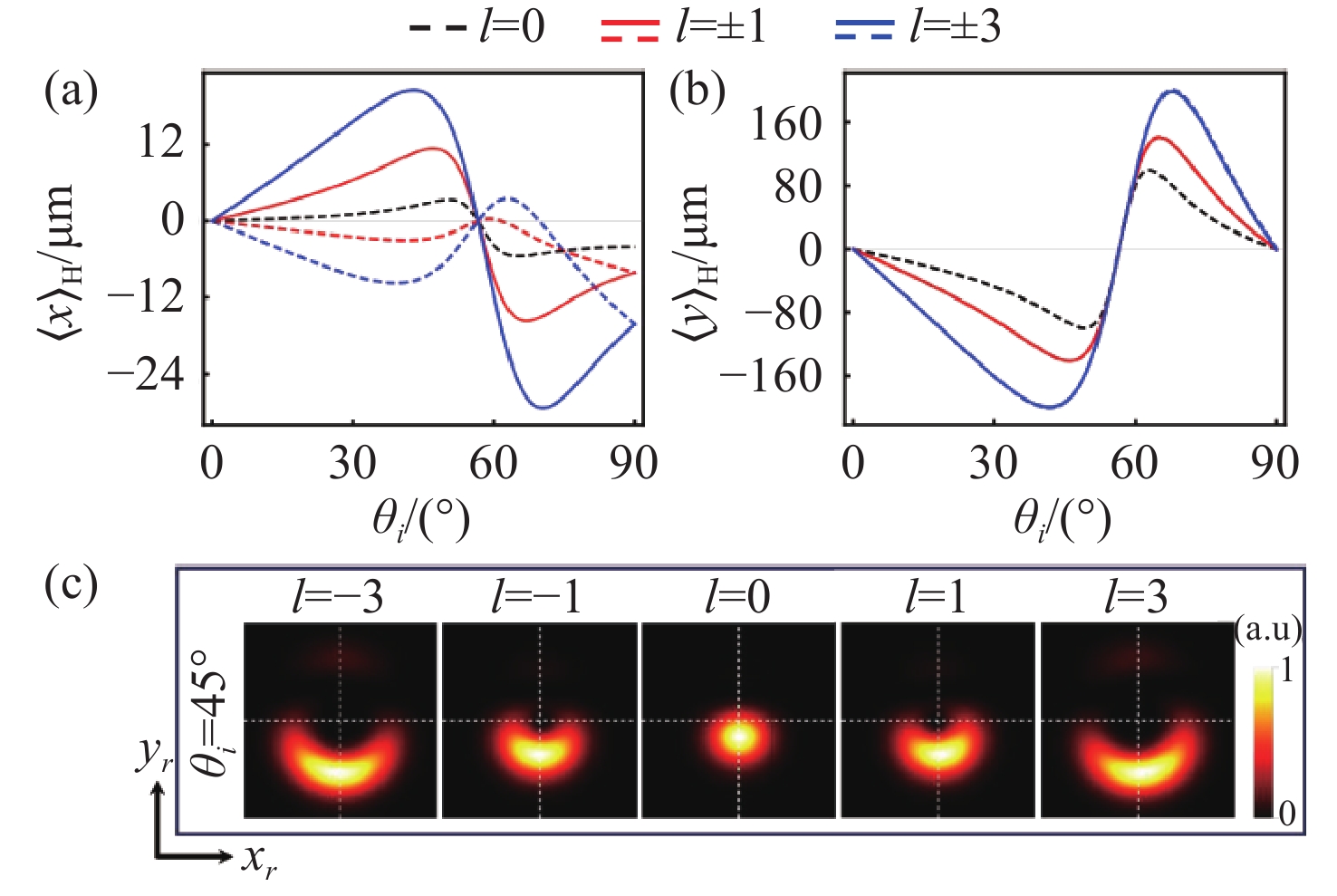
Figure 5. Amplified displacements at
$ {{\textit{z}}}_{r}=10{{\textit{z}}}_{R} $ with$ \varepsilon ={1}{\text{°}} $ , as functions of$ {\theta }_{i} $ for vortex beams with$ {\alpha }_{i}={0}{\text{°}} $ and$ l=0,\;\pm 1,\;\pm 3 $ . (a) Longitudinal and (b) transverse amplified displacement. (c) Intensity distribution at$ {\theta }_{i}=4{5}{\text{°}} $ .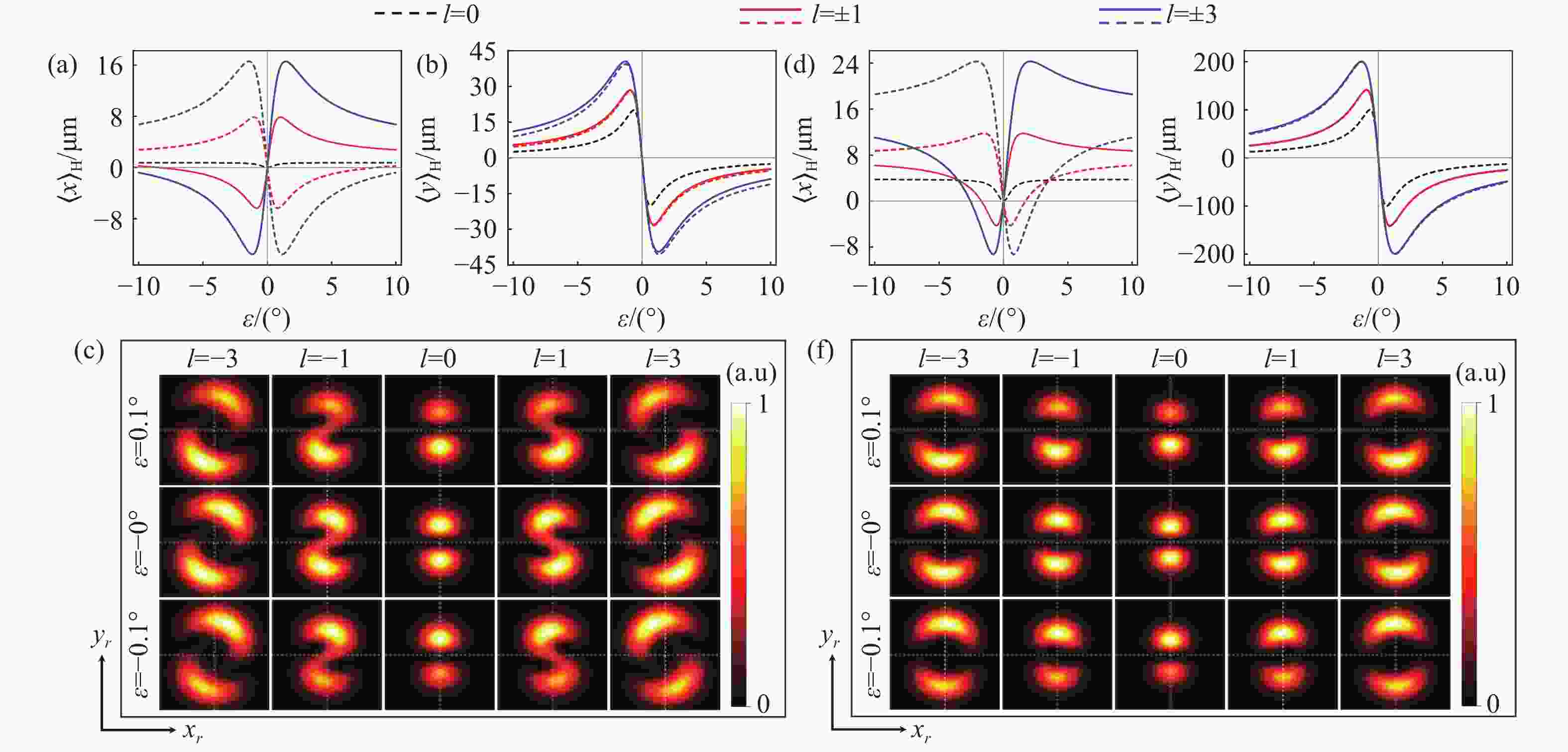
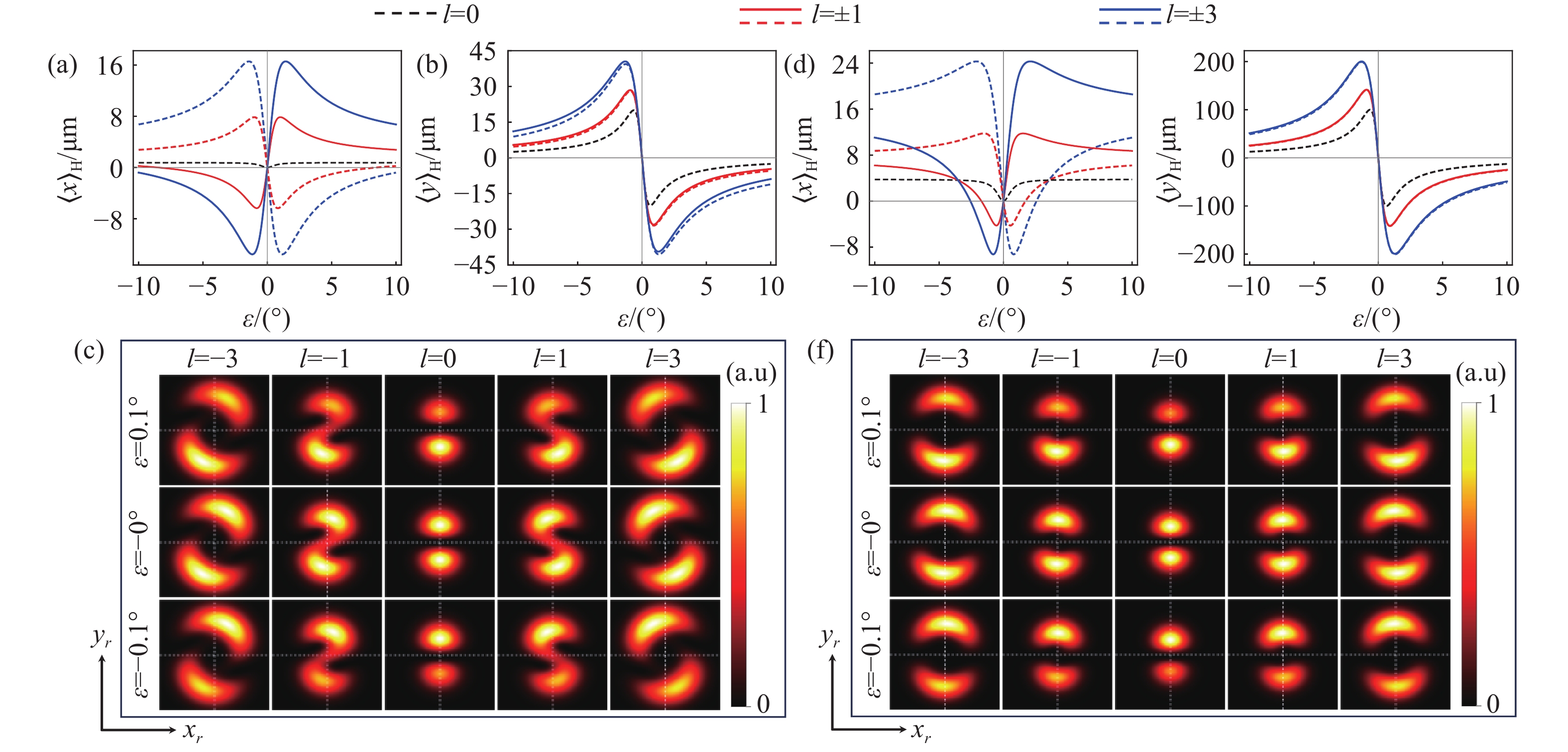
Figure 6. Amplified displacements versus post-selection angle
$ \varepsilon $ for vortex beams with$ l=0,\;\pm 1,\;\pm 3 $ , under$ {\alpha }_{i}={0}{\text{°}} $ and$ {\theta }_{i}=4{5}{\text{°}} $ . (a), (b) Longitudinal and transverse displacements at$ {{\textit{z}}}_{r}=2{{\textit{z}}}_{R} $ . (c) Intensity distributions at$ \varepsilon =0.{1}{\text{°}},\,{0}{\text{°}},\,-0.{1}{\text{°}} $ ($ {{\textit{z}}}_{r}=2{{\textit{z}}}_{R} $ ). (d), (e) Longitudinal and transverse displacements at$ {{\textit{z}}}_{r}=10{{\textit{z}}}_{R} $ . (f) Intensity distribution at$ {{\textit{z}}}_{r}=10{{\textit{z}}}_{R} $ . -
[1] ONODA M, MURAKAMI S, NAGAOSA N. Hall effect of light[J]. Physical Review Letters, 2004, 93(8): 083901. doi: 10.1103/PhysRevLett.93.083901 [2] BLIOKH K Y, BLIOKH Y P. Conservation of angular momentum, transverse shift, and spin Hall effect in reflection and refraction of an electromagnetic wave packet[J]. Physical Review Letters, 2006, 96(7): 073903. doi: 10.1103/PhysRevLett.96.073903 [3] LIU SH Q, CHEN SH ZH, WEN SH CH, et al. Photonic spin Hall effect: fundamentals and emergent applications[J]. Opto-Electronic Science, 2022, 1(7): 220007. [4] ZHANG Z, TAN Y W, LING X H, et al. Momentum-dependent Pancharatnam-Berry phase enabled in- and out-of-plane photonic spin-Hall shifts[J]. Optics & Laser Technology, 2024, 176: 110987. doi: 10.1016/j.optlastec.2024.110987 [5] LIANG M G, LI Q Y, SHOU Y CH, et al. Phase-sensitive wave function collapse in two-photon spin Hall effect[J]. Advanced Photonics, 2025, 7(6): 066009. doi: 10.1117/1.ap.7.6.066009 [6] LIU L Y, FENG ZH X, DENG D M, et al. Engineered photonic spin Hall effect of Gaussian beam in antisymmetric parity-time metamaterials[J]. Chinese Physics B, 2023, 32(9): 094201. doi: 10.1088/1674-1056/accb89 [7] XIE X L, CHENG H D, CHEN H F, et al. Photonic spin Hall effect by electro-optically induced Pancharatnam-Berry phases[J]. Physical Review Letters, 2025, 134(11): 113805. doi: 10.1103/PhysRevLett.134.113805 [8] WANG J J, SHI L, ZI J. Spin Hall effect of light via momentum-space topological vortices around bound states in the continuum[J]. Physical Review Letters, 2022, 129(23): 236101. doi: 10.1103/PhysRevLett.129.236101 [9] YANG Q, XU D Y, CHEN SH ZH, et al. Reconstruction of wave function via spin-orbit interaction of light[J]. Physical Review Applied, 2023, 20(5): 054011. doi: 10.1103/PhysRevApplied.20.054011 [10] LI Q Y, LIANG M G, LIU SH Q, et al. Phase reconstruction via metasurface-integrated quantum analog operation[J]. Opto-Electronic Advances, 2025, 8(4): 240239. doi: 10.29026/oea.2025.240239 [11] ZHU T F, LOU Y J, ZHOU Y H, et al. Generalized spatial differentiation from the spin Hall effect of light and its application in image processing of edge detection[J]. Physical Review Applied, 2019, 11(3): 034043. doi: 10.1103/PhysRevApplied.11.034043 [12] HE SH SH, SHOU Y CH, XU D Y, et al. High-order photonic spin Hall effect and its application in high-contrast imaging[J]. Physical Review Applied, 2024, 21(3): 034045. doi: 10.1103/PhysRevApplied.21.034045 [13] LIU J W, LUO H L. Metasurface differential optics: from classical to quantum[J]. Review of Opto-Electronics, 2026, 1(1): 260001. [14] HOSTEN O, KWIAT P. Observation of the spin Hall effect of light via weak measurements[J]. Science, 2008, 319(5864): 787-790. doi: 10.1126/science.1152697 [15] CHEN SH ZH, ZHOU X X, MI CH Q, et al. Modified weak measurements for the detection of the photonic spin Hall effect[J]. Physical Review A, 2015, 91(6): 062105. doi: 10.1103/PhysRevA.91.062105 [16] YANG Y J, REN Y X, CHEN M ZH, et al. Optical trapping with structured light: a review[J]. Advanced Photonics, 2021, 3(3): 034001. [17] MANDAL S, DEY D C, SETT A, et al. Photonic spin splitting with orbital angular momentum pointer states via modified weak measurement[J]. Physical Review A, 2025, 112(3): 033511. doi: 10.1103/y8r5-pkqy [18] LUO H L, ZHOU X X, SHU W X, et al. Enhanced and switchable spin Hall effect of light near the Brewster angle on reflection[J]. Physical Review A, 2011, 84(4): 043806. doi: 10.1103/PhysRevA.84.043806 [19] BLIOKH K Y. Geometrical optics of beams with vortices: berry phase and orbital angular momentum Hall effect[J]. Physical Review Letters, 2006, 97(4): 043901. doi: 10.1103/PhysRevLett.97.043901 [20] ZHANG J, ZHOU X X, LING X H, et al. Orbit-orbit interaction and photonic orbital Hall effect in reflection of a light beam[J]. Chinese Physics B, 2014, 23(6): 064215. doi: 10.1088/1674-1056/23/6/064215 [21] GOSWAMI S, PAL M, NANDI A, et al. Simultaneous weak value amplification of angular Goos–Hänchen and Imbert–Fedorov shifts in partial reflection[J]. Optics Letters, 2014, 39(21): 6229-6232. doi: 10.1364/OL.39.006229 [22] TANG L T, YANG Q, LIU J W, et al. Observation of the spin Hall effect of light via differential interference[J]. Physical Review Applied, 2025, 23(6): 064037. doi: 10.1103/336f-8yqr [23] QIN Z R, ZHANG R H, ZHANG L T, et al. Optimized weak measurement model for in-plane and out-of-plane splitting shifts of Photonic Spin Hall effect[J]. Optics Communications, 2024, 557: 130283. doi: 10.1016/j.optcom.2024.130283 [24] WANG Y, SHOU Y CH, LIU J W, et al. Noncommutative metasurfaces enabled diverse quantum path entanglement of structured photons[J]. Opto-Electronic Science, 2025, 4(10): 250006. doi: 10.29026/oes.2025.250006 [25] CHEN Y H, PONOMARENKO S A. Phase-space nonseparability, partial coherence, and optical beam shifts[J]. Physical Review Letters, 2025, 135(19): 193801. doi: 10.1103/cnvj-6w6f -


 下载:
下载:










计量
- 文章访问数: 215
- HTML全文浏览量: 88
- PDF下载量: 14
- 被引次数: 0
