



Packaging of low-environmental-sensitivity whispering gallery mode resonators for practical applications
doi: 10.37188/CO.EN-2026-0003
-
摘要:
为解决回音壁模式谐振器(WGMR)在实际应用中因环境敏感导致的长期稳定性差、环境鲁棒性不足等问题,本文提出一种新型棱镜耦合封装策略,旨在显著提升其工程实用性与可靠性。首先,介绍一种全固态光学胶合工艺,结合主动温控与气密封装技术,构成完整的封装方案。其次,对独立的WGMR模块进行详尽的综合性表征测试,主要评估其温度敏感性与加速度敏感性。最后,将该封装模块分别应用于光学频率参考源和非线性光子学平台中,测试其短期频率稳定性和产生光学频率梳的性能。实验结果表明:封装模块的温度敏感性低于10−7/°C;其低频Z轴加速度敏感性低于10−10/g;作为光学频率参考时,在2 ms积分时间内实现了2×10⁻¹³ 的短期频率稳定性;作为非线性平台,在100 mW泵浦功率下成功产生了克尔孤子微梳。该棱镜耦合封装方案具有紧凑、坚固、稳定的特点,其关键性能指标可满足高可靠性的应用需求。该方案显著增强了WGMR在窄线宽激光器、便携式微梳等实际场景中的即时应用能力,有力推动了WGMR技术从实验室研究走向实际部署。
Abstract:We presents a novel prism-coupled packaging strategy for whispering gallery mode resonators (WGMRs). Utilizing an all-solid-state optical adhesive process combined with active temperature control and hermetic sealing, the proposed package scheme exhibits exceptional long-term stability and environmental robustness. The standalone WGMR module was fully characterized, demonstrating a temperature sensitivity below 10−7/°C and a low-frequency Z-axis acceleration sensitivity below 10−10/g. Furthermore, the application of this module was explored as a stable optical frequency reference and a nonlinear photonic platform, achieving a short-term frequency stability of 2×10⁻¹³ at 2 ms and generating Kerr soliton microcombs with a pump power of 100 mW. This compact, robust, and stable packaging solution significantly enhances the immediate applicability of WGMRs in real-world applications such as narrow-linewidth lasers and portable microcombs, thereby facilitating the transition of WGMR technology from laboratory research to practical deployment.
-
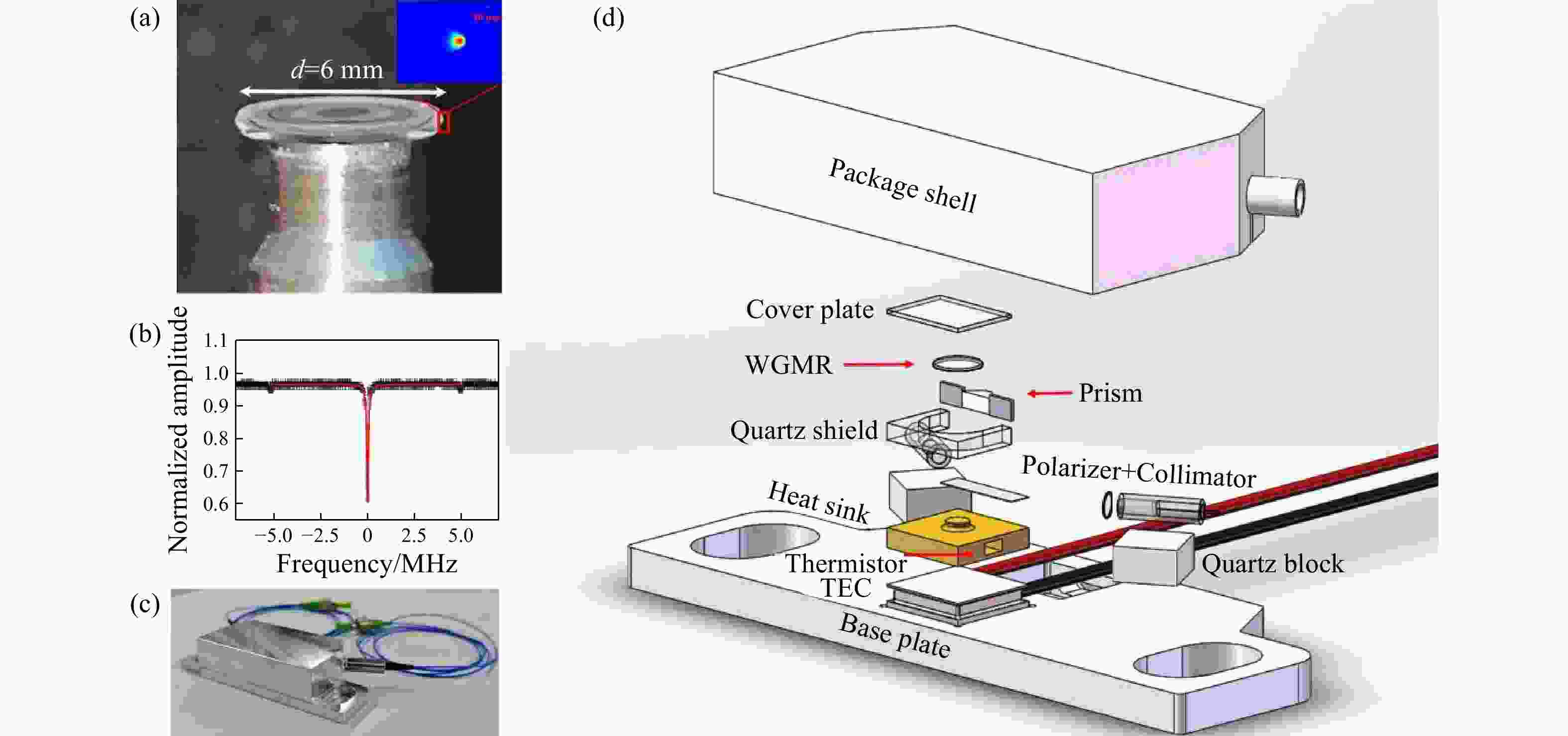
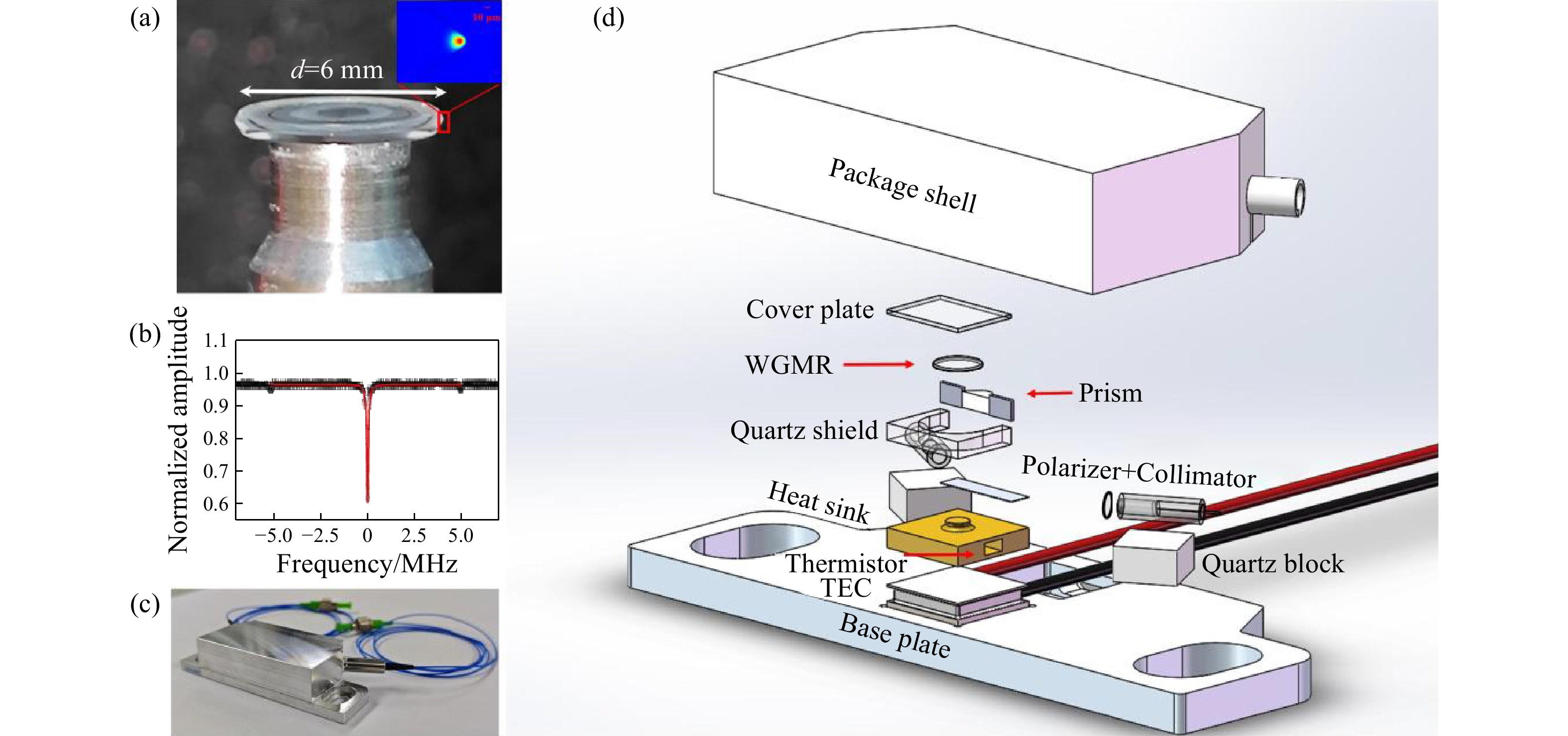
Figure 1. (a) MgF2 WGMR image and mode profile. (b) Cavity linewidth measurement at critical coupling. (c) Photo of WGMR packaging based on prism coupling. (d) Schematic diagram of the MgF2 WGMR-prism coupling packaged structure
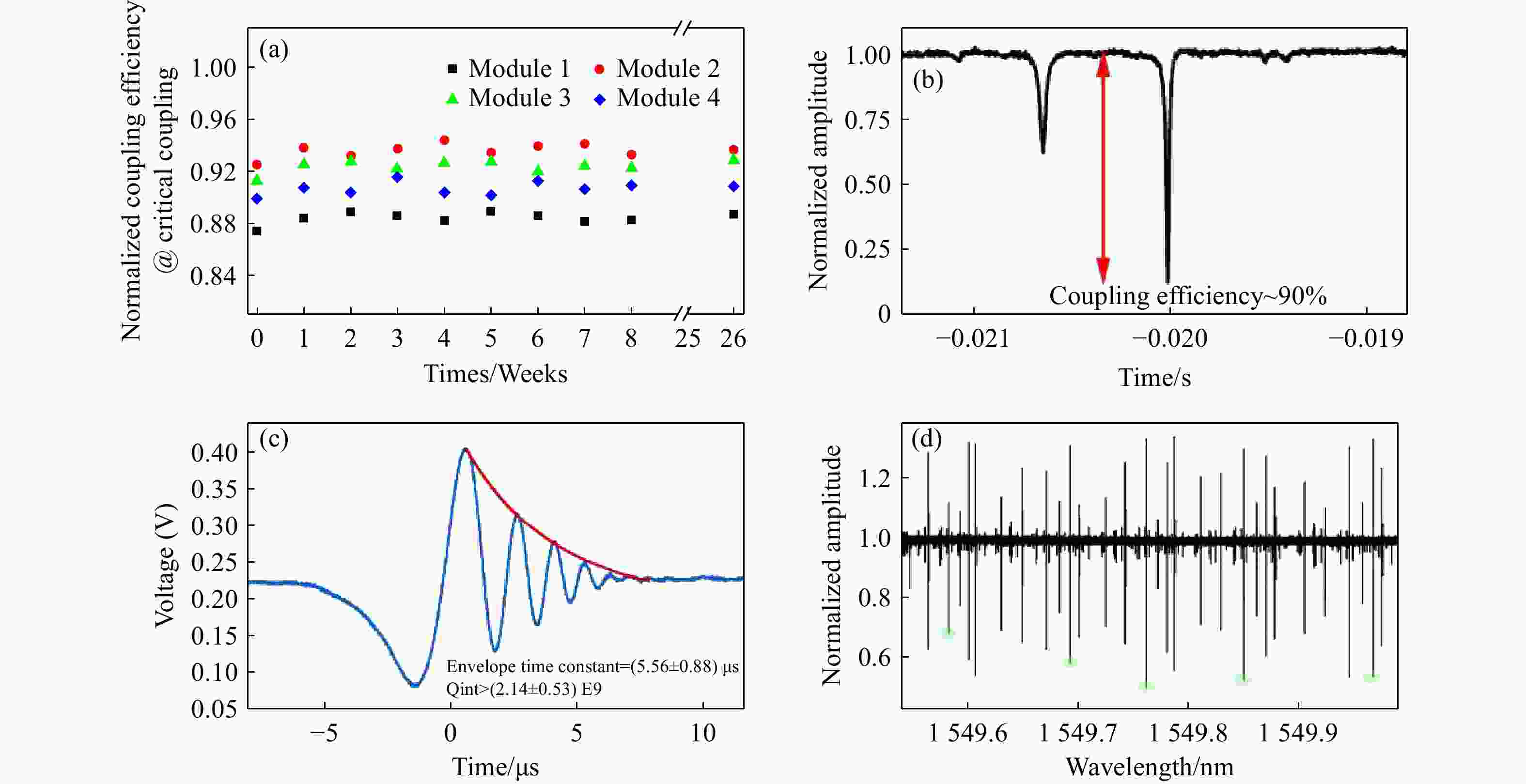
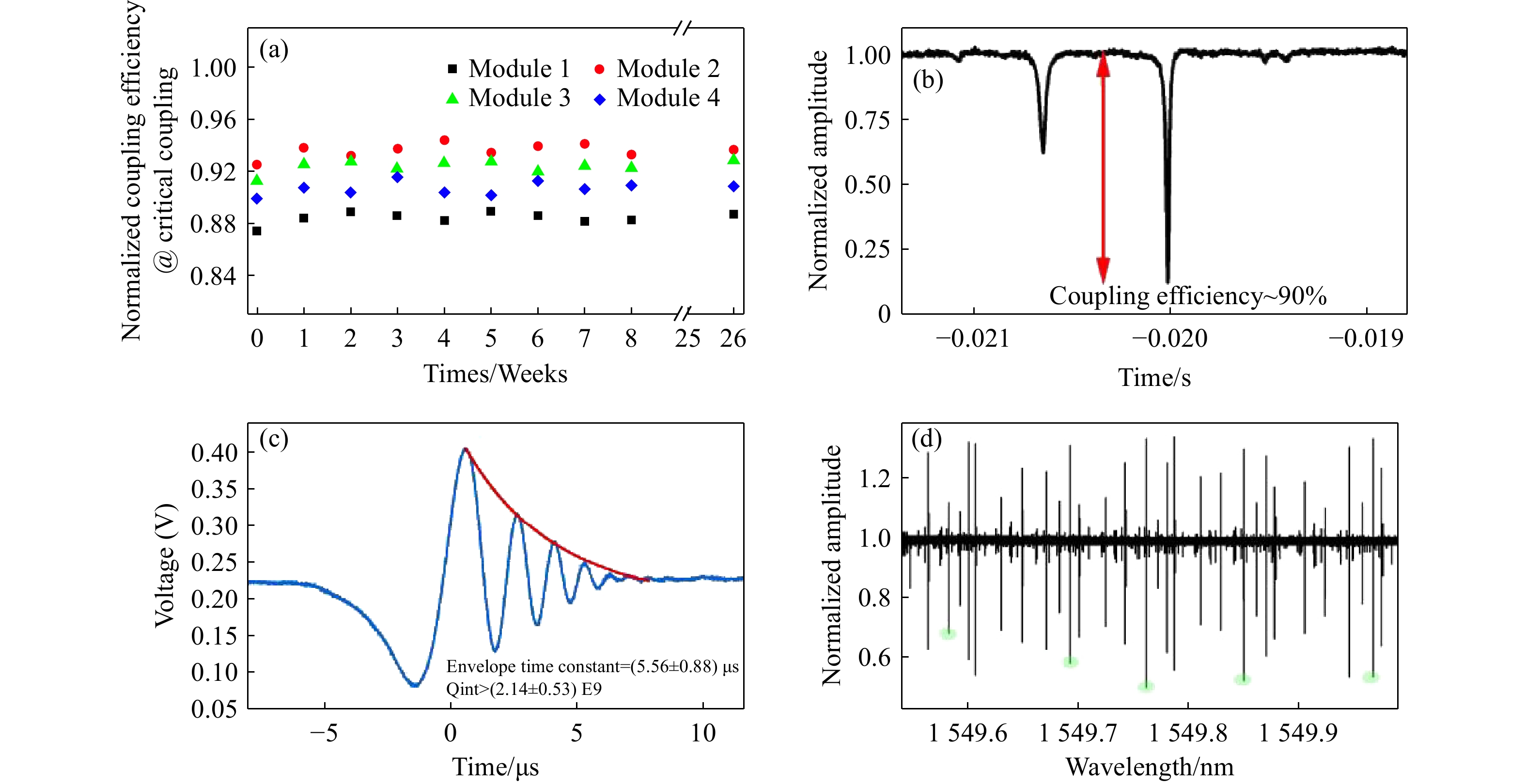
Figure 2. (a) Long-term consistency test of the coupling efficiency for four modules. (b) Modules achieved a coupling efficiency of approximately 90%. (c) Intrinsic Q-factor measurement of Module #4 under critical coupling conditions. (d) Broad-range laser transmission spectrum of the WGMR module
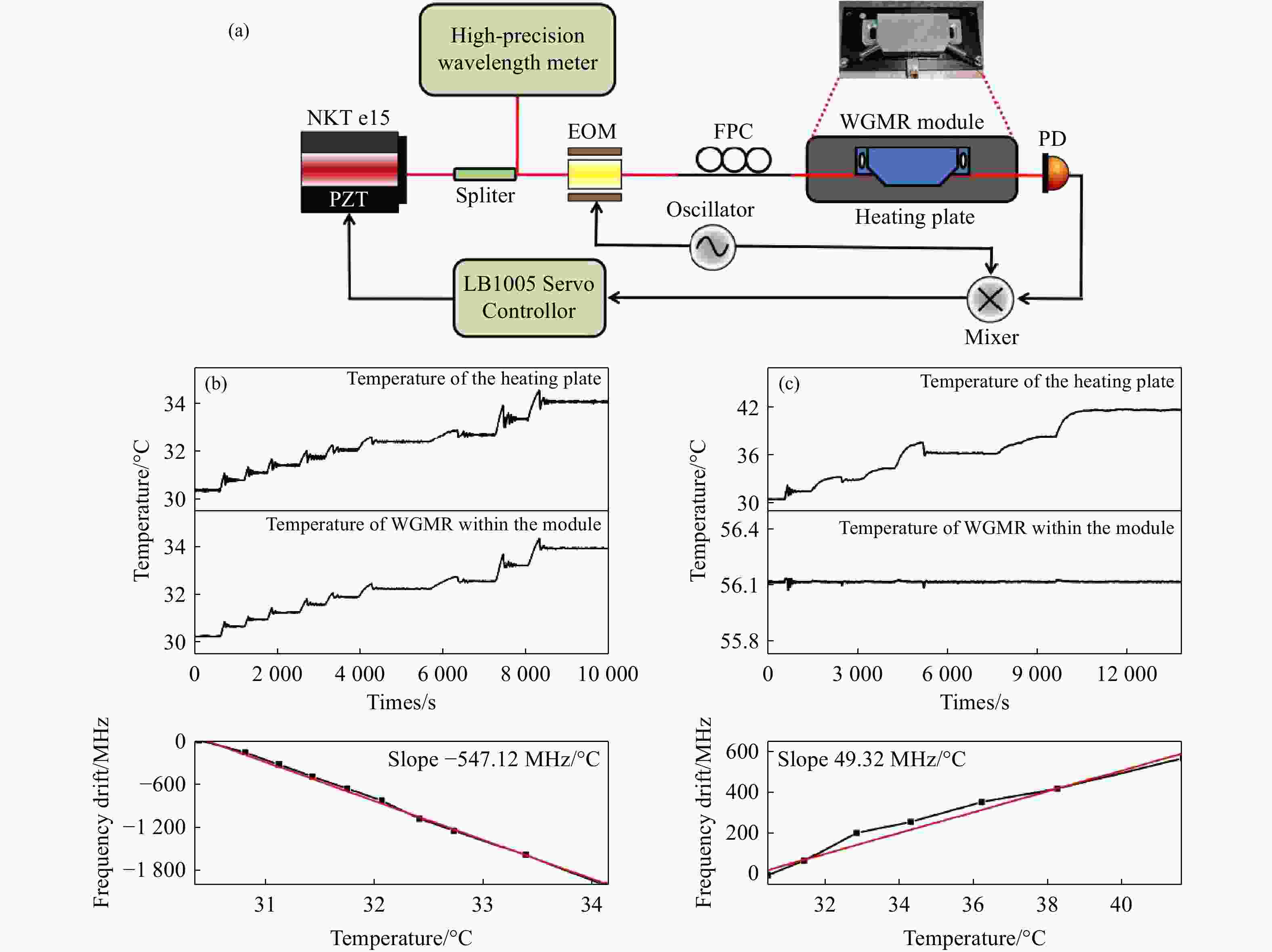
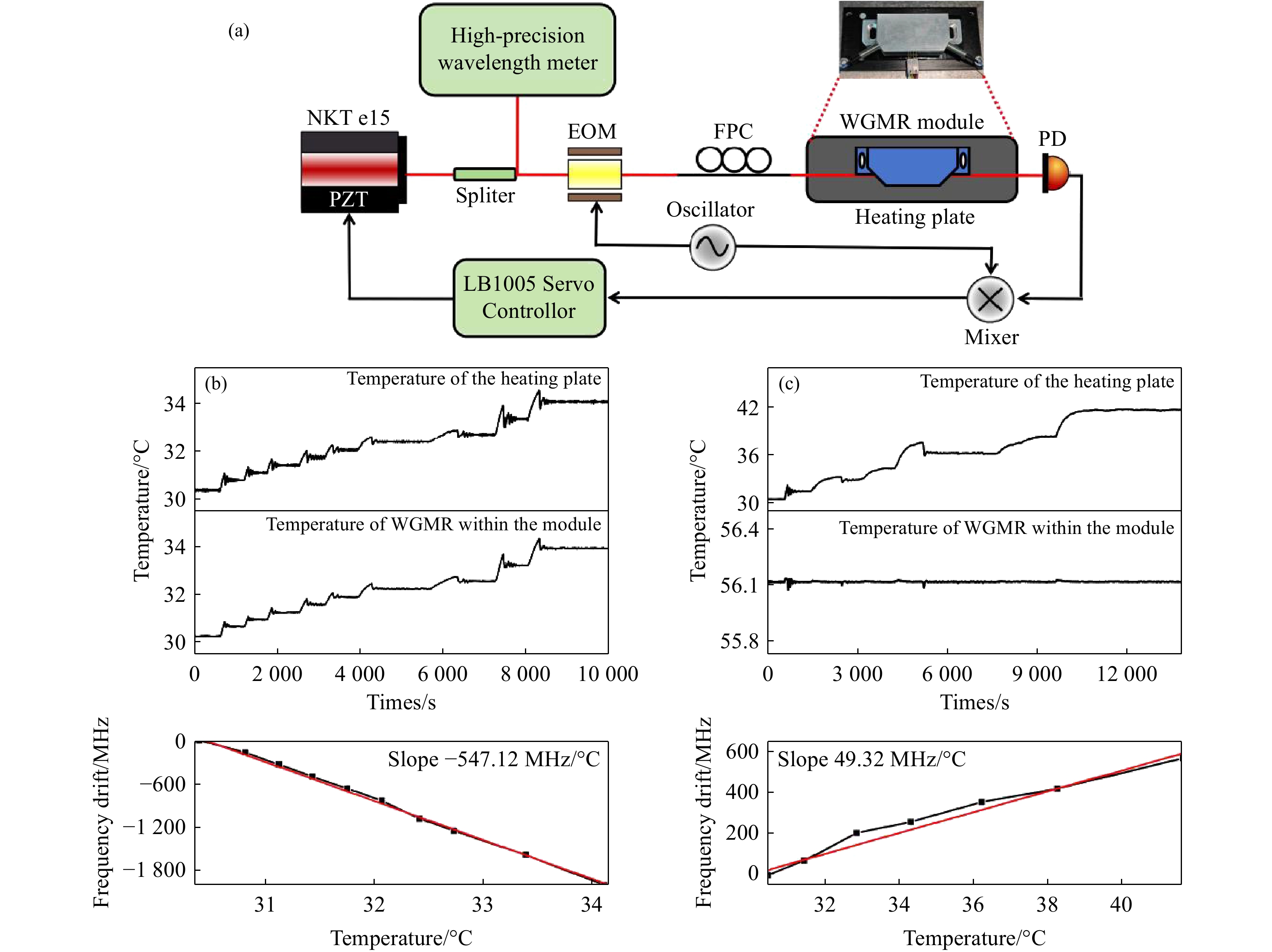
Figure 3. Frequency-temperature sensitivity characterization of crystalline WGMR module cavity. (a) Experimental setup. (b) Temperature sensitivity measurement of WGMR package during free-running. (c) Temperature sensitivity measurement of WGMR package under active temperature control
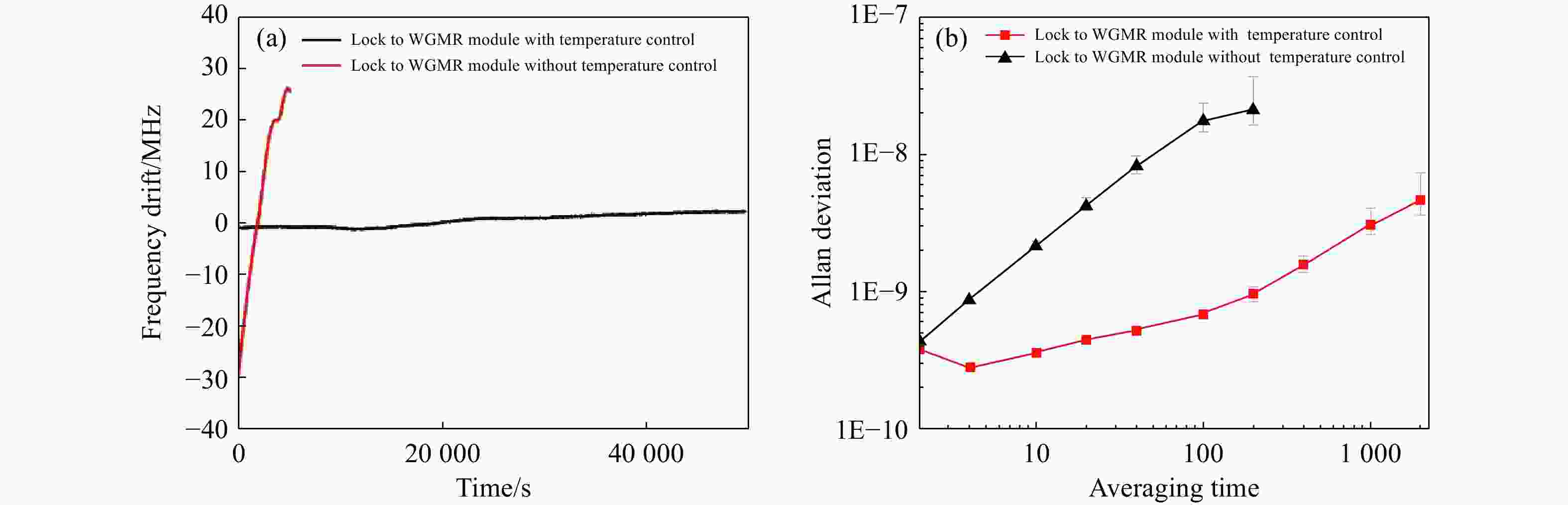
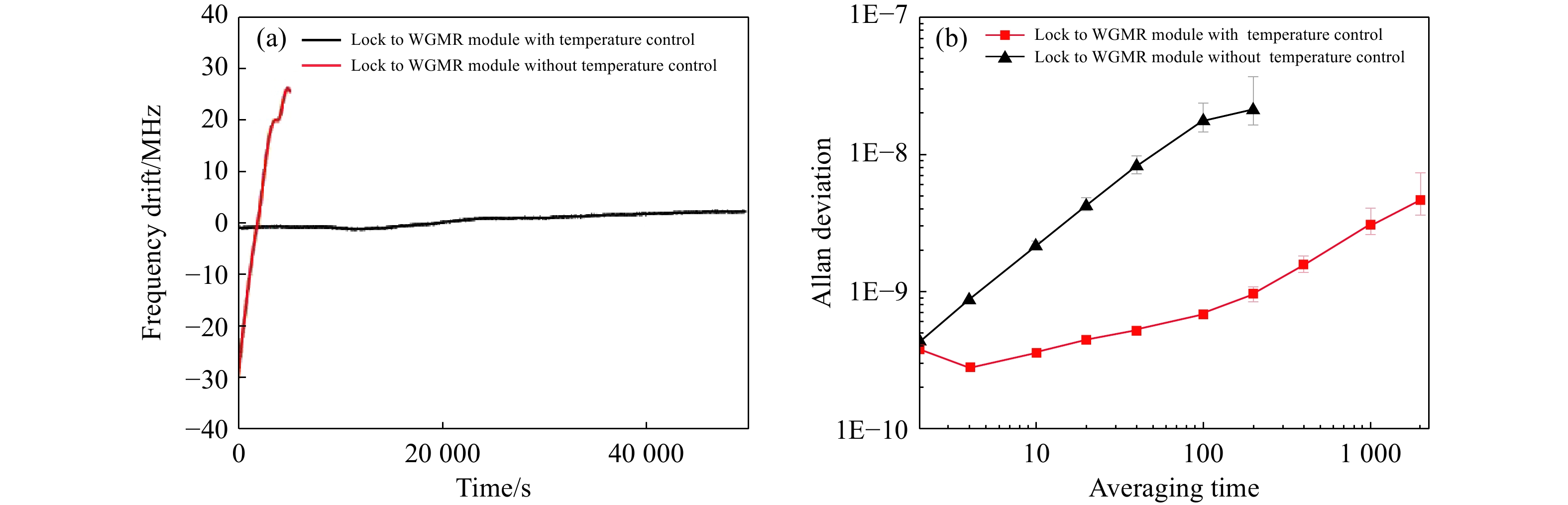
Figure 4. (a) The frequency drift of the laser locked to the cavity with (black curve) and without (red curve) active temperature control. (b) The corresponding frequency stability of the locked laser
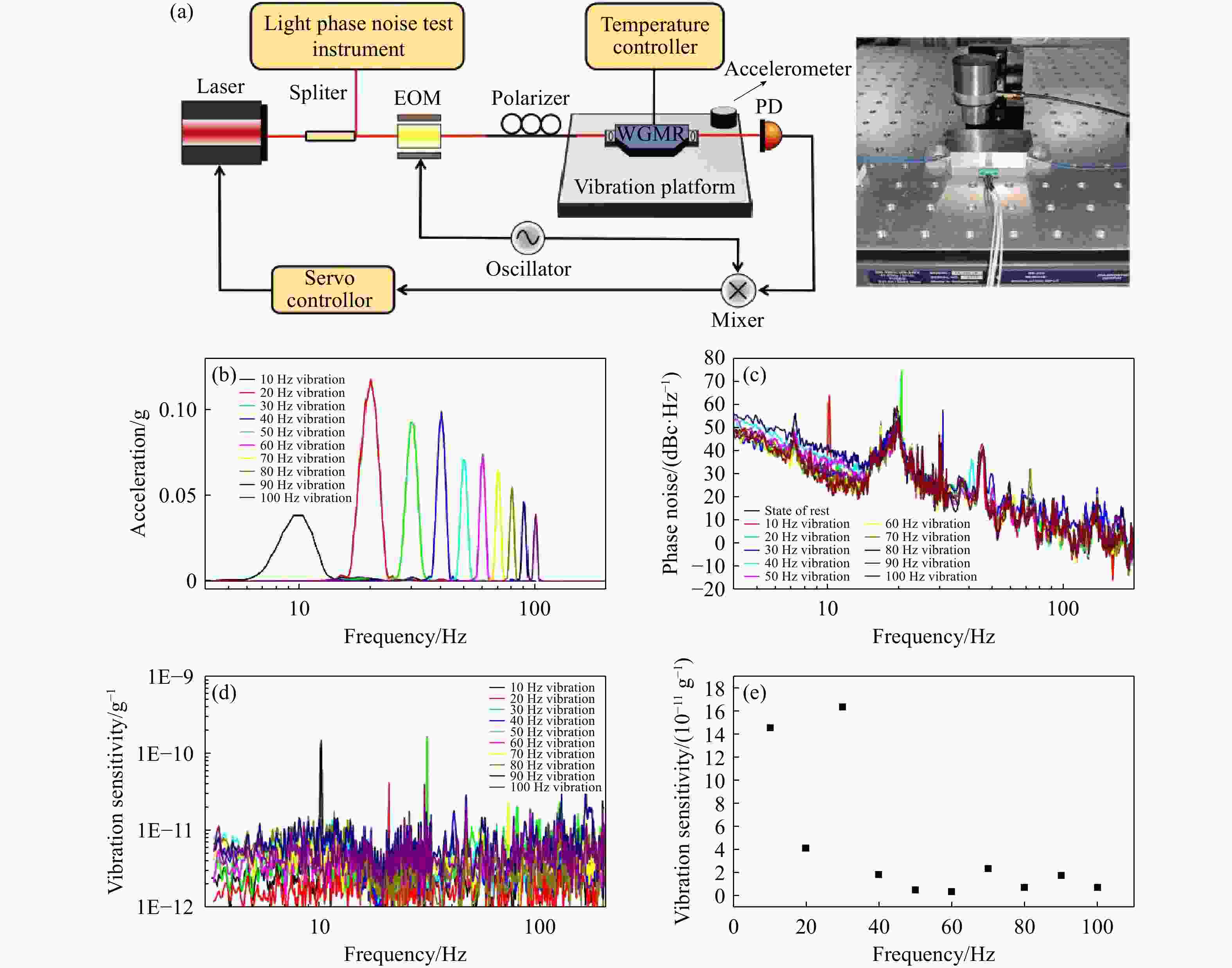
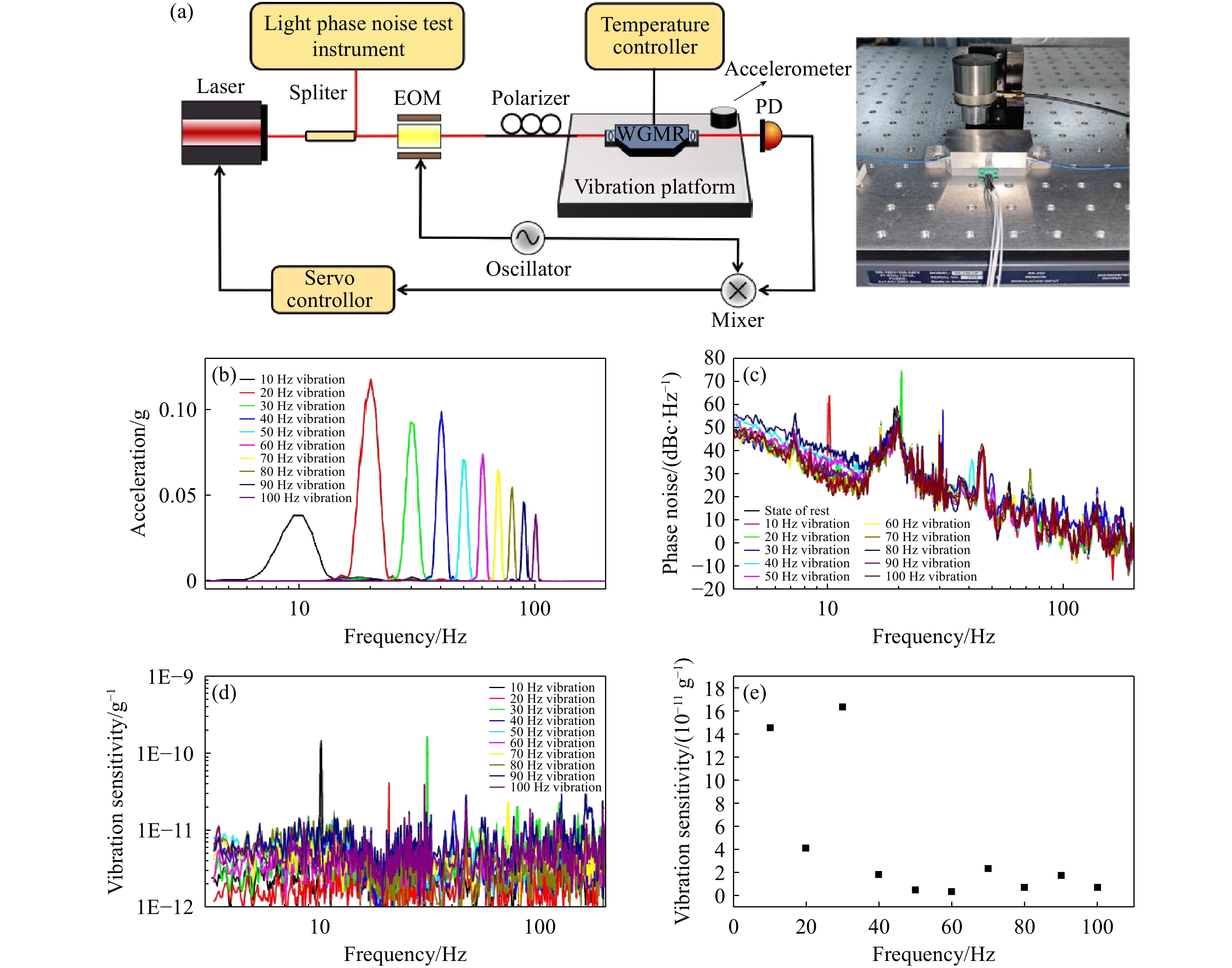
Figure 5. Frequency-acceleration sensitivity characterization of crystalline WGMR module cavity. (a) Experimental setup. (b) The acceleration applied to the WGMR module measured by the accelerometer. (c) Under vibration excitation, the phase noise of the WGMR-locked laser, measured by a phase noise characterization system. (d) The acceleration sensitivity of the WGMR module, derived from vibration-induced laser phase noise conversion. (e) The single-point acceleration sensitivity of the WGMR module from (d)
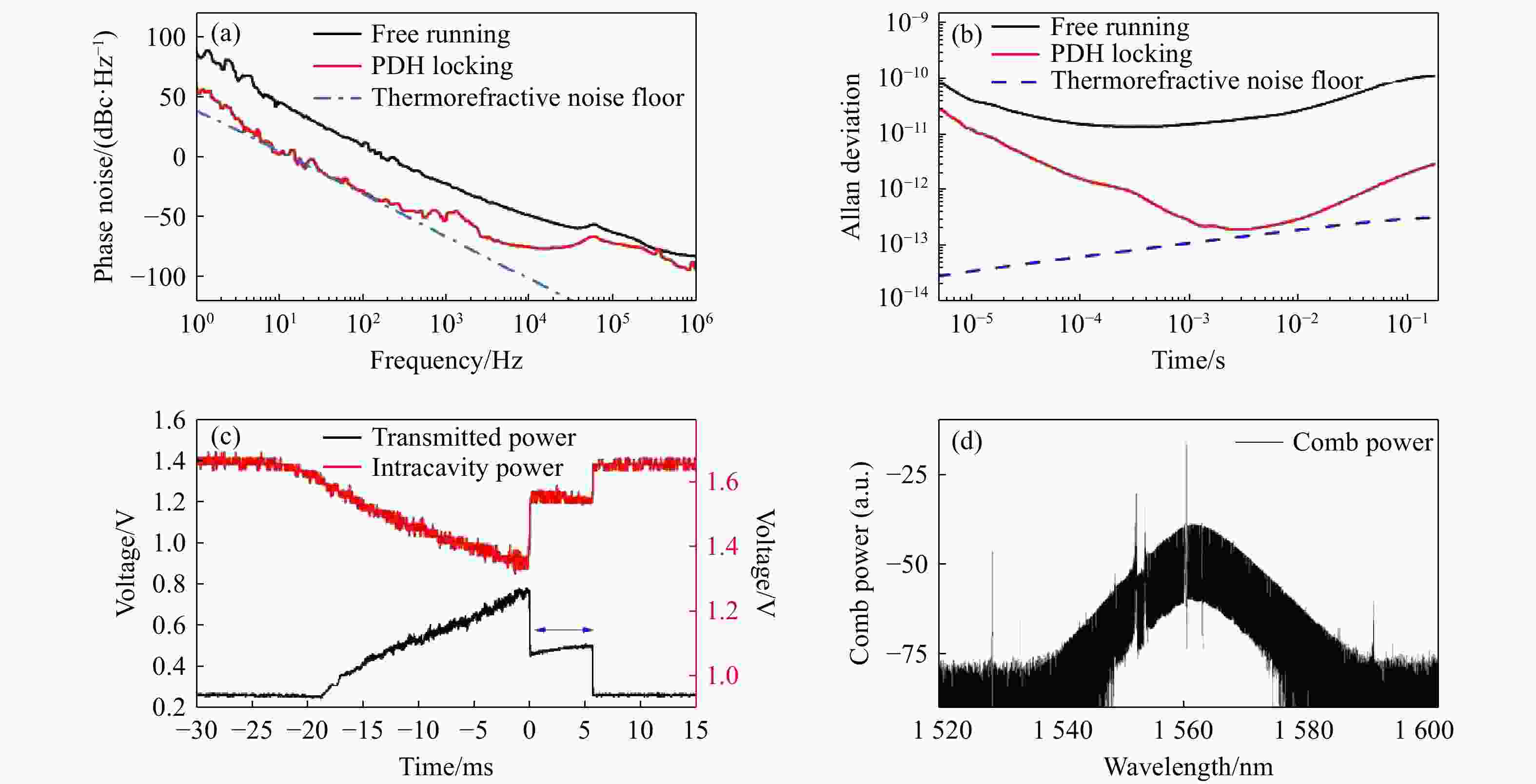
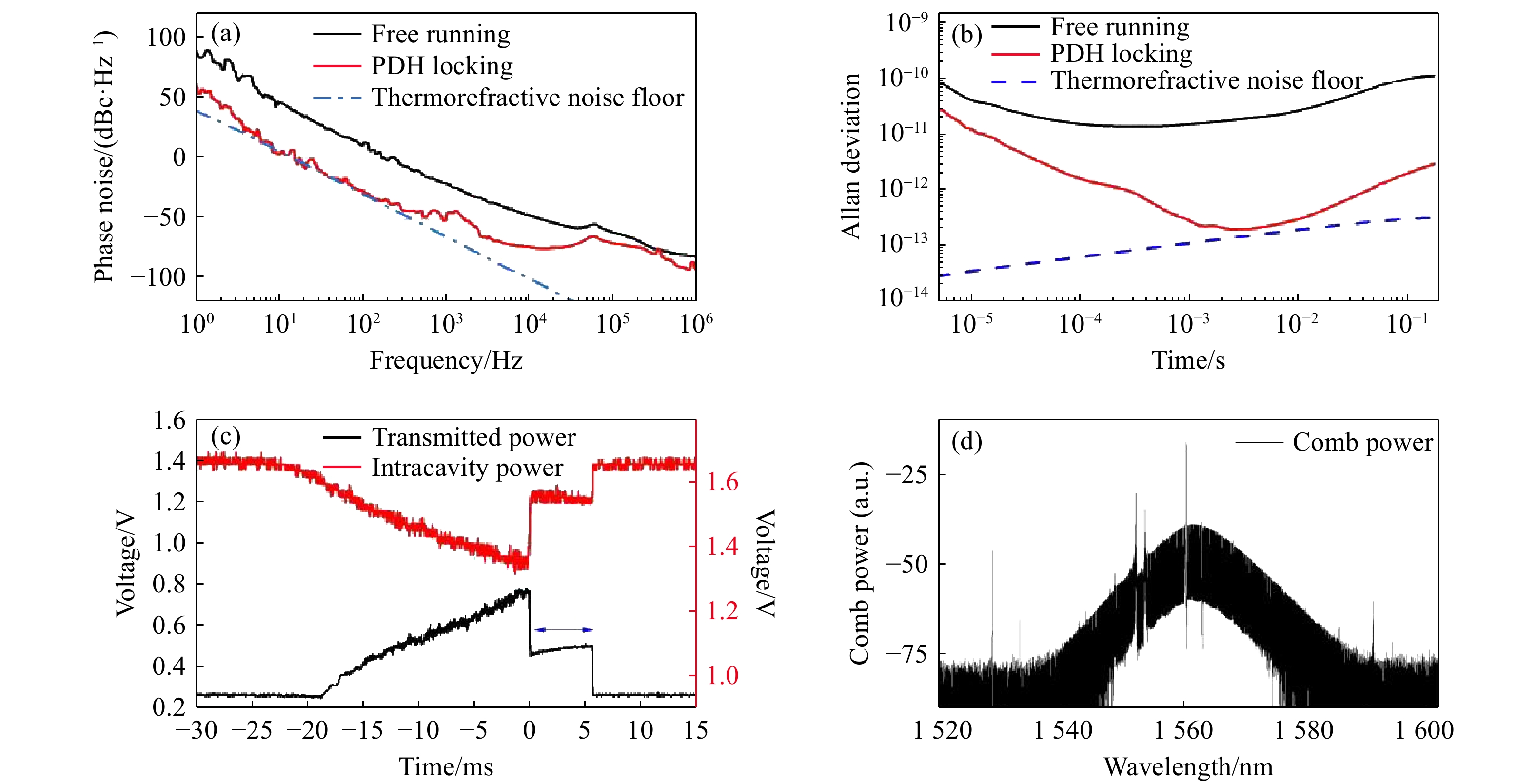
Figure 6. The dual functionality of the WGMR module as an optical frequency reference and a nonlinear Kerr frequency comb source. (a) The phase noise of a domestic DFB laser in free-running operation (black curve) and when locked to the WGMR module via the PDH technique (red curve). (b) The corresponding frequency stability (Allan deviation) derived from the phase noise. The locked stability (red curve) reaches 2×10⁻¹³ at 2 ms. (c) and (d) the optical spectra of the single-soliton state and Kerr soliton comb generated at an input power of 100 mW
-
[1] KONDRATIEV N M, LOBANOV V E, SHITIKOV A E, et al. Recent advances in laser self-injection locking to high-Q microresonators[J]. Frontiers of Physics, 2023, 18(2): 21305. [2] GUGLIANDOLO G, TABANDEH S, ROSSO L, et al. Whispering gallery mode resonators for precision temperature metrology applications[J]. Sensors, 2021, 21(8): 2844. doi: 10.3390/s21082844 [3] VOGT D W, JONES A H, LEONHARDT R. Thermal tuning of silicon terahertz whispering-gallery mode resonators[J]. Applied Physics Letters, 2018, 113(1): 011101. [4] KANG ZH F, CHEN T C, ZHANG J, et al. Packaging of WGM resonator coupled with tapered fiber for various application scenarios[J]. Optics & Laser Technology, 2024, 177: 111127. doi: 10.1016/j.optlastec.2024.111127 [5] ZHANG F X, HUANGFU SH N, JI SH Q, et al. High robustness, billion Q packaged microcavity devices for soliton microcombs[J]. Chinese Optics Letters, 2025, 23(2): 022601. [6] WANG X ZH, NIEDERMAYER G, LIN G B, et al. Polarization-maintaining property of tapered polarization-maintaining fibers[J]. Applied Optics, 2013, 52(8): 1550-1554. [7] CHRISTENSEN J T, AZEEM F, TRAINOR L S, et al. Distance calibration via Newton’s rings in yttrium lithium fluoride whispering gallery mode resonators[J]. Optics Letters, 2022, 47(23): 6053-6056. [8] BERNESCHI S, FARNESI D, FRIGENTI G, et al. From laboratory to prototype: the last-mile issue in whispering gallery mode resonator-based devices[J]. Optical Materials, 2025, 167: 117248. [9] BAUMGARTEL L, THOMPSON R, STREKALOV D, et al. Whispering gallery mode resonators as optical reference cavities[C]. Proceedings of the 2011 Joint Conference of the IEEE International Frequency Control and the European Frequency and Time Forum (FCS) Proceedings, IEEE, 2011: 1-4. [10] ILCHENKO V S, SAVCHENKOV A A, MATSKO A B, et al. Generation of Kerr frequency combs in a sapphire whispering gallery mode microresonator[J]. Optical Engineering, 2014, 53(12): 122607. [11] ZHANG W, BAYNES F, DIDDAMS S A, et al. Microrod optical frequency reference in the ambient environment[J]. Physical Review Applied, 2019, 12(2): 024010. [12] SAVCHENKOV A A, ELIYAHU D, HEIST B, et al. On acceleration sensitivity of 2 μm whispering gallery mode-based semiconductor self-injection locked laser[J]. Applied Optics, 2019, 58(9): 2138-2145. -

 下载:
下载:

计量
- 文章访问数: 219
- HTML全文浏览量: 124
- PDF下载量: 22
- 被引次数: 0
